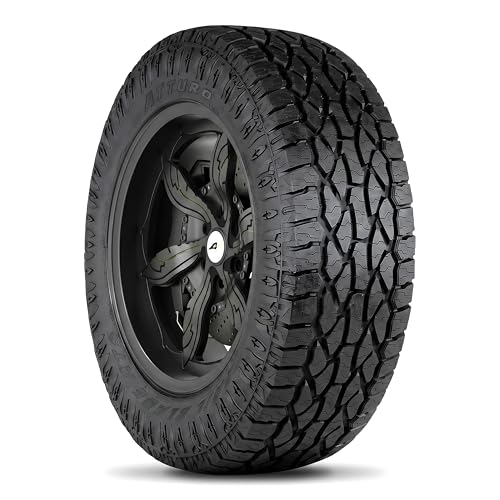
All-terrain tires sit right in the sweet spot for most truck and SUV owners who split their miles between daily paved commutes and the occasional gravel road, job site, trailhead, or snowy morning. They trade a little of the quiet and long wear of a highway tire for extra grip on loose surfaces, and they stop short of the aggressive, noisy tread of a dedicated mud-terrain. This guide rounds up light-truck and SUV all-terrain tires worth shortlisting, with the sizes, load ratings, and tread types pulled straight from each current listing so you can match them to your own vehicle.
How we chose these all-terrain tires
This is an editorial roundup built from current Amazon listings, not a hands-on test. We did not drive on, measure, or bench these tires ourselves, so every size, load index, speed symbol, load range, and treadwear figure you see here is a listing claim from the seller. What we did do is read the fitments carefully and keep the list focused on genuine light-truck and SUV all-terrain tires in real road sizes such as 275/60R20, 265/70R17, and 245/65R17. We deliberately left out ATV, UTV, and lawn tires, which share the words all terrain but are not street-legal replacements for a truck or SUV tire. From there we picked a spread that covers a popular all-rounder, a premium benchmark, a value option, and sizes aimed at trucks, SUVs, and crossovers.
Our top picks: all-terrain tires
Each pick below lists the size and load information exactly as the seller shows it. Several listings are for a single tire while others are sold as a set of four, so read the Set line carefully and plan to buy enough tires to replace all four corners together. Prices change constantly, so we do not quote them here; check the live listing for current availability.
What to look for in all-terrain tires
All-terrain versus mud-terrain versus all-season
An all-season tire is tuned mostly for pavement: quiet, long wearing, and fuel friendly, with modest grip on dirt or snow. A mud-terrain tire goes the other way with big, blocky tread and reinforced sidewalls for rock and deep mud, at the cost of road noise, ride comfort, and tread life. An all-terrain tire splits the difference, which is why it is the default upgrade for so many trucks and SUVs. If more than roughly four in five of your miles are on pavement, an A/T like the ones here is usually the right call rather than a mud-terrain.
Reading the size and the load and speed rating
A size like 275/60R20 reads as section width in millimeters, then the aspect ratio, then R for radial, then the wheel diameter in inches. The number and letter after it, such as 116T, are the load index and the speed symbol. An LT prefix and a load range such as SL, XL, or E tell you how much weight the tire is built to carry and how stiff the sidewall is. Heavier trucks that tow or haul generally want a higher load range, while lighter crossovers are fine on standard or XL ratings. Always match these markings to what your vehicle calls for rather than guessing.
Matching your truck or SUV
The single most important step is to match the tire to your exact vehicle. Your correct size, load index, and speed rating are printed on the driver door placard and in the owner manual, and the current size is molded into your existing sidewall. A 20 inch truck tire like a 275/60R20 will not fit a crossover that came on 225/65R17, so use the picks here as a starting point and then filter by the size your vehicle actually takes.
Treadlife, road noise, and other tradeoffs
All-terrain tread blocks and wider voids add grip on loose surfaces but can add road noise and, on some designs, shorten tread life compared with a pure highway tire. A UTQG treadwear grade on a listing, such as the 600AA shown on one pick here, is a manufacturer rating that helps you compare within a brand, but it is still a claim rather than a guarantee of how long a tire will last on your vehicle. Think about how much comfort and quiet you are willing to trade for off-road ability.
Snow rating, buying as a set, and professional fitting
If winter traction matters, look for a three-peak mountain snowflake symbol on the listing or sidewall, which indicates a tire that meets a severe snow service standard; only trust it when the listing actually states it. Whenever you can, replace all four tires at once so tread depth and grip stay even, which is why the set-of-four listings here can be convenient. Finally, have your tires professionally mounted, balanced, and fitted by a tire shop, and ask them to set the correct pressure and reset any sensors. Proper fitting is a safety step, not an optional extra.
Fitment note
Tire size must match your vehicle exactly. Before you buy any tire on this list, check the sidewall of your current tires and the placard on the driver door jamb, and buy the matching size, load index, and speed rating. Do not mix sizes or load ranges across the axle, and have the tires professionally fitted. The treadlife, traction, load, and snow figures mentioned throughout this guide are listing claims from the sellers and are not results we measured.
The bottom line
For most drivers the Prinx HiCountry A/T2 is the easiest all-rounder to start with when the 275/60R20 size fits, the BFGoodrich All-Terrain T/A KO2 is the premium benchmark for a heavier light-truck build, and the Finalist and Accelera set-of-four listings make it simple to replace all four tires at once on an SUV. Whichever you choose, let your door placard have the final word on size and load rating, confirm the fitment on the live listing, and get the tires professionally mounted and balanced before you hit the road or the trail.