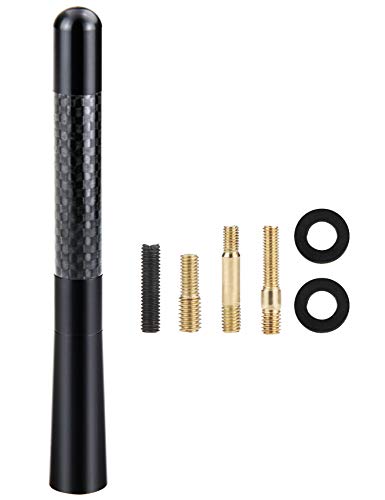
A good replacement car antenna should do three quiet things well: thread cleanly into your existing base, pull in AM and FM stations without constant static, and stay short enough to survive an automatic car wash. After comparing the current crop of popular replacement masts on Amazon, the Sylvil Car Short Antenna is our top pick for most drivers, because its stubby aluminum and carbon fiber build keeps reception usable while clearing low garage doors and brush rollers. If your priority is maximum range on rural highways, a longer roof mast still has an edge, and we cover that trade off in detail below.
Why a replacement antenna is worth getting right
The factory antenna is one of the first parts to snap off a parked car. A low branch, a careless brush roller, or a curious passerby can bend or shear the mast, and suddenly your radio hisses on anything but the strongest local station. The good news is that the mast is almost always a separate screw in part, so you rarely need to replace the whole base or the cable buried in the fender. That makes the antenna one of the cheapest and most satisfying fixes on a car.
The catch is that antennas are not truly universal, even when a listing says so. Thread sizes vary, mounting angles differ, and a mast that looks right in photos can still refuse to seat properly if the pitch of the screw does not match your base. Length matters too. A tall mast gathers more signal, which helps if you live far from broadcast towers, but it is also the part most likely to catch on a garage lip or a wash tunnel. A very short stubby mast slips under almost anything, at the cost of a little fringe reception. The right choice depends on where you drive and what you are willing to trade.
How we evaluated these products
We build this list by studying the car antennas currently sold on Amazon and comparing them on the details that actually predict a good fit: stated length, thread and mounting style, material, and the bands each one is designed to receive. We read the fitment notes, cross check the described construction, and weigh how each mast balances reception against everyday clearance. We have not physically installed and driven with every unit on this page, so we do not claim hands on bench results or pretend to have measured signal strength in a lab. Instead we focus on what the listings disclose and on the practical questions a buyer has to answer before ordering.
Our editorial ratings reflect how well each antenna suits a clear use case, not a controlled trial. A stubby carbon fiber mast earns its place for drivers who mostly want their factory look back without car wash worry, while a longer roof mast earns its place for people who chase distant stations. We flag who each pick is really for so you are matching the antenna to your situation rather than to a headline number.
What to look for in a car antenna
Thread size and fitment. This is the single most important detail and the one most likely to trip you up. Before you buy, confirm the thread size and mounting style your vehicle uses, ideally by unscrewing your old mast and checking it or looking up your model. A universal listing still has to match your base, and the wrong pitch simply will not seat. When in doubt, verify the fitment for your exact make, model, and year rather than trusting the word universal alone.
Length: reception versus clearance. Longer masts generally pull in weaker and more distant stations, which is why a 16 inch roof antenna reads better on a rural commute than a one or two inch stub. Shorter masts, including the popular four to seven inch rubber and carbon designs, trade a little fringe reception for the ability to clear garages, low ceilings, and automatic car washes without snapping. Be honest with yourself about where you drive. City listeners rarely notice the difference, while anyone who regularly loses a station on the edge of town should lean longer.
Material and durability. Aluminum and carbon fiber masts feel solid and resist bending, while flexible rubber and spiral designs shrug off brush rollers and spring back instead of breaking. Look for waterproofing if your car lives outdoors, since the seal at the base is where corrosion tends to start. A rigid mast looks closer to the slim factory part, while a rubber one is more forgiving in tight spaces.
AM and FM reception. Most replacement masts are passive, meaning they do not amplify signal, so the honest expectation is reception close to your factory antenna rather than a dramatic upgrade. A shorter antenna may slightly reduce weak signal and fringe reception compared with a full length mast, which is a reasonable trade for the convenience of a stubby profile. If strong reception is critical to you, favor length and a quality conductor over a tiny decorative stub.
Installation. Most of these are a quick job: unscrew the old mast by hand, thread in the new one, and snug it down. Kits that include adapter screws make life easier across different bases, and hidden windshield styles exist for drivers who want to delete the external mast entirely, though those depend on a clear glass path and a compatible head unit. If you want a plug and play swap, a direct mast replacement is simpler than a hidden install.
The bottom line
For most drivers the sweet spot is a short, well built mast that restores the factory look and clears the car wash, which is why the Sylvil short antenna leads our list. If you need to reach distant towers, step up to a longer roof mast and accept a little less clearance. If you simply want the cheapest honest fix, a flexible rubber stub will quietly do the job. Whatever you choose, measure twice on thread size and length before you order, and browse the rest of our exterior car accessories guides if you are refreshing more than just the antenna.