Grease and lubricants look interchangeable on the shelf, but they are not. A tube that is perfect for a squeaky metal hinge can swell a rubber seal, and a food-grade silicone that is ideal for an O-ring does little for a heavy metal gear. The single most useful habit is to match the lubricant to the job and the material it touches. This roundup gathers grease and lubricants that each do one thing well, so you can pick the right one instead of hoping a general-purpose can covers everything.
Our picks cover the four families most home and automotive users reach for: silicone grease for rubber, plastic and seals, white lithium grease for metal-on-metal parts, a dedicated brake lubricant for brake hardware, and food-grade silicone for sanitary and plumbing seals. Prices change constantly and vary by size, so we leave cost out of this guide and focus on what each product is built for.
How we evaluated these products
These are editorial picks drawn from current Amazon listings, not laboratory results. We compared what each listing states about its base formula, its intended applications, its container and applicator, and its material compatibility. We looked for products that name a clear job rather than promising to lubricate everything, and we favored formulas whose stated use matches a real need: brake grease that names caliper hardware, silicone that names rubber and plastic, lithium that names hinges and bearings. Any temperature, waterproofing or compatibility statement below is a listing claim from the manufacturer, not something we verified ourselves. Always read the product page and your vehicle or equipment maker's guidance before you apply anything.
Our top picks: grease and lubricants
1. KEZE 92003 Silicone Grease with PTFE (Top Pick). This silicone grease with PTFE is the most broadly useful tube on our list because its listing names the exact parts most people struggle to lubricate safely: rubber seals, plastic gears, sliding door and window tracks, plumbing faucet O-rings and 3D printer parts. Silicone is the family that is generally friendly to rubber and plastic, where petroleum greases can cause swelling, and the added PTFE is marketed for smoother sliding on plastic-on-plastic and plastic-on-metal contacts. If you keep one non-metal lubricant in the drawer, a silicone PTFE grease like this covers the widest range of seals and sliding parts.
2. AstraVox White Lithium Grease (Best White Lithium). White lithium grease is the classic answer for metal-on-metal parts, and this multi-purpose tube is aimed squarely at that job. It is the grease to reach for on door hinges, latches, bearings, gears and other bare-metal pivots where you want a thick, clinging film that resists being flung or washed off. Lithium grease is not the right choice for most rubber or plastic, so keep it for the metal work and let a silicone handle your seals.
3. AGS SIL-Glyde Silicone Brake Grease (Best Brake Lube). Brake hardware deserves a lubricant made for it, and AGS is a recognized name in brake service products. This brush-top silicone brake grease is listed for brake caliper hardware and the metal-to-rubber and metal-to-metal contact points of a brake assembly, where ordinary grease can attack rubber boots or wash away under heat. The brush-top container makes it easy to place a thin film exactly on slide pins and contact surfaces. Use it only where the brake service procedure calls for lubricant, and follow your vehicle maker's instructions.
4. KEZE Waterproof Food Grade Silicone Plumbers Grease (Best Food-Grade). When a seal has to stay clean, this food-grade silicone plumbers grease is built for O-rings, faucet cartridges and sanitary fittings. Its listing describes it as waterproof and food grade, which is the category you want for drinking-water plumbing, coffee and kitchen equipment seals, and any O-ring that should not be dosed with an automotive grease. Silicone keeps rubber O-rings supple and helps them seat and slide without sticking.
5. Wissxna Food Grade Silicone Grease, 2 Tubes (Best for O-Rings and Valves). This food-grade silicone comes as a pair of small tubes aimed at keeping valves and O-rings from sticking, which is exactly the kind of occasional, small-dose job most people have. The small-tube format suits a toolkit, a filter housing, a faucet repair or a sanitary fitting you only service now and then, so you are not opening a large container for a dab of grease. Like our other food-grade pick, it is a listing-stated food grade silicone, not an automotive grease.
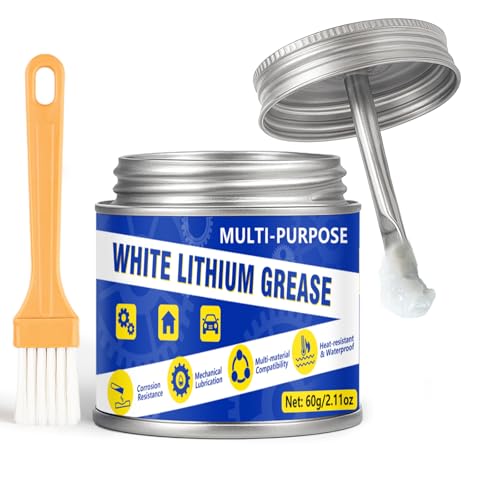
6. White Lithium Grease 60 ML with Brush (Best Value). For general metal lubrication around the home and garage, this white lithium grease pairs a familiar formula with a built-in brush applicator. The brush makes it simple to coat garage door tracks and rollers, hinges, wheel bearings, gears and rails without squeezing grease all over your fingers. It is a sensible everyday pick for the metal-on-metal jobs that come up most often, and the applicator keeps application tidy and controlled.
What to look for in grease and lubricants
Silicone vs lithium vs brake lube vs food-grade. The four families on this list are not ranked against each other because they do different jobs. Silicone grease is the general choice for rubber, plastic, seals and sliding tracks. White lithium grease is the workhorse for bare metal-on-metal parts such as hinges, bearings and gears, where you want a thick clinging film. Brake lubricant is a specialized product for brake hardware and should be used only there. Food-grade silicone is for sanitary and plumbing seals where the grease may contact water or food and must stay clean. Buying one of each covers far more ground than buying two of the same.
Match it to the job and the material. The material you are lubricating usually decides the family. Rubber and plastic point you toward silicone, because petroleum and some lithium greases can swell or soften rubber over time. Bare metal points you toward lithium. Brake parts point you toward a brake-specific product. A sanitary or potable-water seal points you toward food grade. When a listing names your exact part, that is a strong signal you have the right product.
Temperature and water resistance. If a part runs hot or sits in water, check the listing for any stated temperature range and any waterproof or water-resistant claim, and treat those as the manufacturer's listing claims. Brake areas get hot, marine and outdoor parts get wet, and the wrong grease can thin out, wash away or break down. Choosing a formula whose listing names your conditions reduces the guesswork.
Application form: grease, brush-top or spray. Form affects how neatly you can work. A plain tube gives precise small doses for O-rings and tight spots. A brush-top container, like the brake grease and the brush-equipped lithium here, lays a thin even film on pins, tracks and hinges. Sprays reach deep or hidden parts but are harder to keep off nearby surfaces. Pick the form that matches the part you are servicing.
Compatibility with rubber and plastic, and quantity. If rubber or plastic is involved, silicone is usually the safer family, but still confirm the listing states it is suitable for your material. On quantity, small tubes suit occasional repairs and travel kits, while larger containers make sense for frequent maintenance. Buying a size you will actually use before it dries out or separates is part of getting value.
A note on using these safely
The golden rule with grease and lubricants is simple: use the right product for the job and follow the instructions. Put brake lubricant only on brake hardware the service procedure specifies, keep silicone for rubber, plastic and seals, keep white lithium for metal-on-metal parts, and keep food-grade silicone for sanitary and plumbing seals. Always follow the product label and your vehicle or equipment maker's guidance, especially for anything related to brakes or other safety-critical systems. Compatibility, temperature and waterproof statements in this guide are listing claims from the manufacturers, so verify them against the product page and your own application before you apply.
The bottom line
There is no single best grease, only the best grease for a given part. A silicone PTFE grease covers your seals and sliding plastic, a white lithium handles bare metal, a dedicated brake grease serves brake hardware, and a food-grade silicone takes care of sanitary and plumbing O-rings. Stock the two or three families that match the work you actually do, label them clearly, and you will reach for the right tube every time instead of guessing.