Dual Action Polishers
Best Dual Action Polishers for Swirl Free Paint Correction
7 picks compared
9 min read
ProductPickly is reader-supported. When you buy through links on our site, we may earn an affiliate commission at no extra cost to you. It never changes our picks.
The short answerThe best dual action polisher for most people is a forgiving variable speed machine like the Meguiar's MT300, because a dual action both spins and wobbles the pad on an offset, so it backs off under pressure instead of digging in and burning the paint the way a rotary can. That safety margin is why detailers hand beginners a dual action, and why holding steady pad speed, as the MT300's Digital Torque Management does, matters more than raw power for a first machine. The chosen picks below span beginner kits, long throw machines, a high power unit and a compact cordless tool, so you can match the orbit, pad size and speed range to your car rather than guessing from a spec sheet.
?How we pickedWe compare published specifications, safety certifications and thousands of verified owner reviews, and we do not physically test every unit. Read the full process in our review methodology.
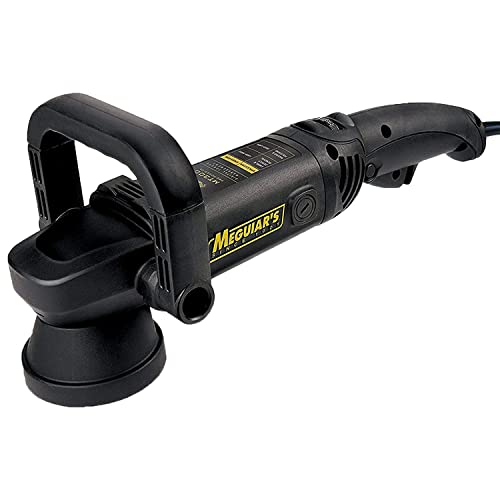
Meguiar's MT300 Variable Speed Dual Action Polisher with Digital Torque Management
★★★★★ 4.7 / 5 Editor's pick
The MT300 is the machine most detailers hand a beginner, because its Digital Torque Management holds the pad speed steady as you lean into a panel instead of letting the motor bog down. That consistency is what makes a dual action forgiving, so you get even correction across a door without hot spots, which is why it is our overall pick.
Type Variable speed DASpeed 3000 to 7500 OPMFeature Digital Torque ManagementThrow About 8 mm
- Digital torque control keeps pad speed steady under pressure
- Smooth short throw gives tight control for first timers
- Built by a detailing brand with wide pad and plate support
- Sold as the tool only, so pads and plate are a separate buy
- Short throw covers large flat panels slower than a long throw
Best for: First time polishers who want a forgiving machine that holds speed as they learn.
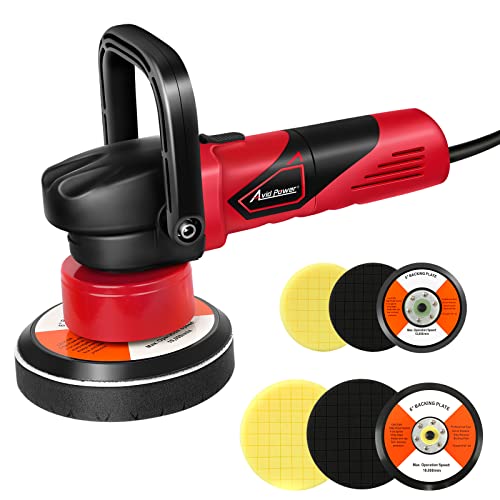
AVID POWER 5 inch and 6 inch Dual Action DA Polisher Kit, 6 Speed Random Orbital Buffer
★★★★★ 4.4 / 5 Best for beginners
This AVID POWER kit arrives ready to work with both a 5 inch and a 6 inch backing plate, so you can run smaller pads for trim and larger pads for panels out of one box. The six speed dial and short throw make it an easy first machine, and buying the plates and pads together removes the usual guesswork for a new detailer.
Backing plates 5 in and 6 inSpeed 6 variable settingsType Random orbital DAThrow Short throw
- Ships with both 5 in and 6 in plates for pad flexibility
- Six speed dial covers spreading, cutting and finishing
- Complete starter kit so there is little extra to source
- Short throw means slower coverage on big flat panels
- Entry grade motor is happier with light to medium correction
Best for: New detailers who want one affordable kit that covers both pad sizes.
AUTIWOZ 6 Inch Dual Action Polisher, 15 mm Random Orbital Car Polisher, 6 Variable Speeds
★★★★★ 4.5 / 5 Best long throw
The AUTIWOZ steps up to a 15 mm orbit, which is the sweet spot many detailers reach for once they are past their first weekend. That longer throw clears a bonnet or roof noticeably faster than an 8 mm machine while staying easy to steer, and the six speed range lets you dial it back for finishing passes.
Pad size 6 inOrbit 15 mmSpeed 1800 to 4800 RPMUse Detailing and waxing
- 15 mm throw clears large panels faster than a short throw
- Six variable speeds from spreading up to correction
- 6 in pad size suits bonnets, roofs and doors
- A longer throw is slightly harder to keep flat on tight curves
- Larger orbit can feel busier in the hands at high speed
Best for: Detailers who want quicker coverage on big panels without jumping to a 21 mm machine.
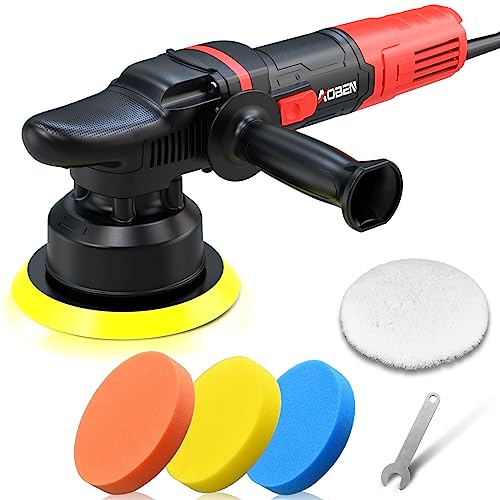
AOBEN 6 Inch Dual Action Polisher Kit, 1000 to 4500 RPM, Detachable Handle, 4 Buffing Pads
★★★★★ 4.4 / 5 Best value kit
AOBEN packs this 6 inch machine with four buffing pads and a detachable handle, so you can start correcting and waxing the day it lands without a second order. The 1000 to 4500 RPM range is gentle at the low end for spreading compound, and the included pads cover the common cutting and finishing jobs most home users face.
Pad size 6 inSpeed 1000 to 4500 RPMPads 4 buffing padsHandle Detachable
- Four pads included so you can start the same day
- Low end speed is gentle for spreading compound
- Detachable handle swaps sides or comes off in tight spots
- Short throw trades panel speed for control
- Supplied pads will eventually need replacing for heavy use
Best for: Home users who want a 6 in machine and pads in one affordable bundle.
LDHTHOPI Dual Action Polisher, 980W, 9 mm Random Orbital Buffer, 2800 to 5800 RPM, 8 Pads
★★★★★ 4.3 / 5 Most power
With a 980 W motor and a top speed near 5800 RPM, the LDHTHOPI has the most muscle on this list for working through heavier oxidation and stubborn swirls. The 9 mm orbit keeps it controllable rather than wild, and the eight detachable pads give you a stack of cutting and finishing faces before you need to restock.
Power 980 WOrbit 9 mmSpeed 2800 to 5800 RPMPads 8 detachable
- Strong 980 W motor for heavier correction work
- Eight pads cover cutting through to finishing
- 9 mm orbit stays controllable for the power on tap
- High top speed demands a careful hand on edges and trim
- More power and pads add weight over a basic starter unit
Best for: Users tackling heavier oxidation who want power and a full pad set.
BATOCA S5 Cordless Mini Car Polisher, Rotary and Dual Action Buffer and Sander
★★★★★ 4.3 / 5 Best cordless
The BATOCA S5 is a mini cordless unit that switches between rotary and dual action, built for the spots a full size machine cannot reach such as pillars, mirrors and badge recesses. It is a companion tool rather than a one machine solution, and the cordless body lets you touch up a scratch without dragging out a lead.
Power Cordless batteryModes Rotary and dual actionBuild Mini and compactUse Spot correction
- Cordless body reaches anywhere with no lead to manage
- Switches between rotary and dual action modes
- Compact head gets into pillars, mirrors and badges
- Battery runtime limits a full vehicle in one session
- Mini size is for spots, not correcting whole panels
Best for: Detailers who want a cordless spot tool for tight areas a big machine misses.
AOBEN 5 Inch Dual Action Polisher, 16 mm Long Orbit, 1000 to 5500 RPM, 7 Buffing Pads
★★★★★ 4.2 / 5 Best for tight spaces
This AOBEN pairs a smaller 5 inch pad with a long 16 mm orbit, an unusual mix that gives you faster coverage from a head that still fits into tighter areas than a 6 inch machine. Seven pads come in the box, and the wide 1000 to 5500 RPM range spans gentle spreading through to faster correction.
Pad size 5 inOrbit 16 mm long orbitSpeed 1000 to 5500 RPMPads 7 buffing pads
- 5 in head fits tighter areas than a 6 in machine
- Long 16 mm orbit still covers ground quickly
- Seven pads and a wide speed range included
- Long throw on a small pad can feel lively at high speed
- Smaller pad face covers large flat panels more slowly
Best for: Buyers who want long throw speed from a smaller head for tighter panels.
The best dual action polisher is the one that lets you correct swirls and add gloss without the risk of burning your paint, and for most people that means a controllable variable speed machine rather than the most powerful one on the shelf. If you want a single answer, the Meguiar's MT300 is our top pick, because its digital torque management holds the pad speed steady under pressure, which is exactly what a first time polisher needs. The picks below span beginner kits, long throw machines and a compact cordless unit, so you can match the orbit, pad size and speed range to your car and your confidence instead of guessing from a spec sheet.
Why a dual action is beginner safe next to a rotary
The reason a dual action polisher is the machine detailers put in a beginner's hands comes down to how it moves the pad. A rotary spins the pad on one fixed axis, so it cuts quickly but also builds heat quickly, and if you pause over an edge or a raised body line it can strike through the clear coat in seconds. A dual action spins the pad and, at the same time, wobbles it around an offset, which spreads the motion out and keeps the heat low. The practical payoff is that when you lean into the machine, the pad tends to stall and skip rather than dig in, so a mistake usually means a slower result instead of damaged paint. You give up some outright cutting speed for that forgiveness, which is the right trade for home and hobby work where control matters more than shaving minutes off a professional job.
Orbit throw and pad size, what 8 mm, 15 mm and 21 mm mean
The orbit, often called the throw, is how far the pad swings on each wobble, and it quietly decides how the machine feels. A short 8 mm throw, like the one on the Meguiar's MT300, keeps everything tight and controllable, which is ideal for spot correction, pillars and a first weekend, but it covers a large flat panel slowly. A 15 mm orbit, as on the AUTIWOZ here, is the popular middle ground that clears a bonnet or roof noticeably faster while still being easy to keep flat. A 21 mm throw moves the most product per pass and suits big panels, but the longer swing can wander on tight curves and rewards a steadier hand. Pad size works alongside the throw. A 6 inch pad covers ground faster and is the common default, while a 5 inch pad fits tighter areas and concentrates pressure on a stubborn spot, which is why the AOBEN 5 inch pairs a long 16 mm throw with a smaller head.
Variable speed and grip over a long session
Every machine here offers variable speed for a reason, because a single speed cannot do the whole job well. You start low to spread the compound so it does not fling off the pad, raise the speed to do the actual cutting, then drop it again for a gentle finishing pass or to work in a wax. A six setting dial, which the AVID POWER, AOBEN and LDHTHOPI all carry, gives you enough steps to find the right one for each stage rather than jumping between extremes. Grip and comfort matter more than they sound, because correcting a full car is a long session of vibration through your hands and wrists. A detachable or side handle, like the one AOBEN includes, lets you brace the machine with two hands and swap sides to reach awkward panels, and a body that balances well will leave you far less tired than raw numbers on a box suggest.
Kits with pads and backing plates, what you actually need to start
The polisher itself only carries the pad, so what comes in the box decides how soon you can actually work. To correct paint you need pads, a backing plate that matches the pad size, and a compound or polish to do the cutting, since the machine supplies the motion and the pad and product supply the abrasion. Kits like the AOBEN 6 inch, which ships with four pads, and the AVID POWER, which includes both 5 inch and 6 inch plates, remove most of that shopping list and are the reason a bundle is a sensible first buy. Be a little wary of counting pads as the main selling point, though, because a stack of thin pads is no substitute for a couple of good cutting and finishing faces. Whatever you choose, wash and clay the paint before you polish, because grinding trapped grit into the clear coat causes the exact swirls you bought the machine to remove.
Questions people ask
What is the best dual action polisher?
For most people the Meguiar's MT300 is the best choice, because its Digital Torque Management holds the pad speed steady as you press into a panel, and that consistency is exactly what makes a dual action forgiving for someone still learning. If you would rather buy everything in one box, the AVID POWER kit ships with both 5 in and 6 in backing plates and six speeds, which makes it the easiest complete starting point.
Is a dual action polisher safe for beginners?
Yes, and that is the whole point of the design. A dual action machine spins the pad while also oscillating it on an offset, so when you lean on it the pad tends to stall and skip rather than dig in and build heat. That built in forgiveness is why detailers steer beginners toward a dual action instead of a rotary, which spins on a fixed axis and can strike through paint on an edge in seconds if you pause in the wrong place.
What is the difference between a dual action and a rotary polisher?
A rotary spins the pad on one fixed axis, so it cuts fast and generates heat fast, which makes it powerful but unforgiving in untrained hands. A dual action both spins and wobbles the pad on an offset, spreading the movement so heat stays lower and the pad backs off under pressure. You give up some outright cutting speed, but you gain a wide safety margin, which is the right trade for home and hobby detailing.
Should I choose an 8 mm, 15 mm or 21 mm orbit?
The orbit, or throw, is how far the pad swings on each wobble. An 8 mm short throw gives the tightest control and suits spot work, pillars and first timers, but it covers large panels slowly. A 15 mm orbit, like the AUTIWOZ here, is the popular middle ground that clears bonnets and roofs faster while staying controllable. A 21 mm throw covers the most ground per pass but can wander on tight curves, so it rewards a steadier hand.
Is a 5 inch or 6 inch pad better?
A 6 inch pad covers flat panels faster and is the common default, which is why machines like the AUTIWOZ and the AOBEN 6 inch run it. A 5 inch pad has a smaller face, so it fits tighter areas and concentrates pressure for stubborn spots, at the cost of slower coverage on big panels. Several kits, such as the AVID POWER, include both plate sizes so you are not locked into one.
Can a dual action polisher remove scratches and swirls?
A dual action will clear swirls, haze, light oxidation and the fine scratches that do not catch your fingernail, which is the bulk of what most paint needs. Deeper scratches that you can feel usually sit below the clear coat, and chasing those hard enough to level them risks thinning the paint, so a dual action is not the right tool for them. Match the pad and compound to the defect and work in small sections for the best result.
Do I need a cordless dual action polisher?
Only for convenience in specific situations. A cordless unit like the BATOCA S5 mini is excellent for touching up a scratch or reaching pillars and mirrors without dragging out a lead, so it works well as a second tool. For correcting a whole car you will usually still want a mains machine, because the steady power and unlimited runtime matter more over a long session than cordless freedom does.
What do I need besides the polisher to start?
At a minimum you need pads, a backing plate that matches your pad size, and a compound or polish to do the actual cutting and finishing, since the machine only carries the pad. A clean wash and some microfiber towels matter too, because polishing grit into the paint causes the marring you are trying to remove. Kits like the AOBEN 6 inch and the AVID POWER include pads and plates, which shortens the shopping list when you are starting out.
The bottom lineSo which one?
For a dual action polisher that suits most people, the Meguiar's MT300 is our pick, because its Digital Torque Management holds pad speed steady under pressure and that consistency is what makes a dual action forgiving while you learn. The AVID POWER kit is the easiest complete starting point with both plate sizes in the box, the AUTIWOZ 15 mm clears big panels faster, and the LDHTHOPI brings the most power for heavier oxidation. The AOBEN 6 inch is the value bundle with pads included, the BATOCA S5 mini is the cordless tool for spots a big machine cannot reach, and the AOBEN 5 inch pairs a long throw with a smaller head for tighter panels. Match the orbit, pad size and speed range to your car and your confidence, wash the paint properly first, and any of these will correct swirls and add gloss without the burn risk of a rotary.