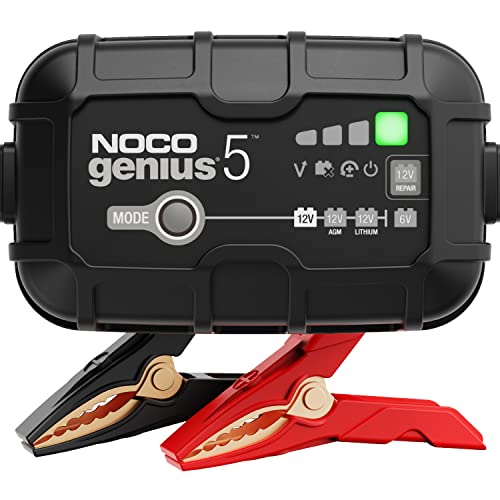
A typical 50Ah battery charged from 50% discharge takes about 4-5 hours with a 10A charger, 24-25 hours with a 2A charger, and under 1 hour with a 50A charger (if the battery can handle it).
Why Charging Time Varies So Much
You plug in a charger and expect a full battery in a couple of hours, but reality often differs. Charging time depends on three main factors: charger amperage (how much current it delivers), battery capacity (measured in amp-hours, Ah), and the battery's state of discharge (how empty it is). Understanding these variables helps you plan and avoid unnecessary waiting.
Let's break down the math. A battery's capacity tells you how many amps it can supply for one hour. For example, a 50Ah battery can deliver 1 amp for 50 hours or 5 amps for 10 hours. To recharge, you need to put back the same amount of energy you took out, plus a bit extra because charging isn't 100% efficient (typically 10-20% loss).
State of discharge matters just as much. A battery that's only 20% empty needs far less time than one that's 80% empty. Most car batteries are discharged only partially when you have a dead battery from leaving lights on, but a deeply discharged battery (below 11.5 volts) may need special attention.
How to Calculate Your Charging Time
Here's a simple formula: Charging time (hours) = (Battery Ah x Depth of Discharge) / Charger Amps. Add 10-20% for efficiency loss. For example, a 60Ah battery at 50% discharge needs 30Ah of charge. With a 10A charger, that's 3 hours, plus 0.3-0.6 hours for losses, so about 3.5 hours.
But charger amperage isn't constant. Many chargers taper off as the battery fills, so the last 20% takes longer. Smart chargers automatically reduce current to prevent overcharging, which extends the final stage.
Charging Time Estimates for Common Chargers
2A Trickle Charger
Best for maintaining a battery or slow overnight charging. For a 50Ah battery at 50% discharge, you need 25Ah. At 2A, that's 12.5 hours, plus losses, so 14-15 hours. For a fully discharged battery (50Ah), expect 25-30 hours. These chargers are safe to leave connected for days, but they're not for quick top-ups.
10A Standard Charger
The most common home charger. For the same 50Ah battery at 50% discharge, 25Ah / 10A = 2.5 hours, plus losses, so about 3 hours. For a full recharge from empty, 5-6 hours. This is a good balance of speed and safety for most drivers.
50A Fast Charger
Typically used by professionals or for jump-starting. A 50Ah battery at 50% discharge could theoretically charge in 30 minutes, but fast charging generates heat and stress. Most manufacturers recommend not exceeding 20-30A for standard lead-acid batteries. Use 50A only for a quick boost, then switch to a lower rate to finish.
Tips for Faster Charging
- Check the battery's voltage first. If it's below 11.5 volts, a smart charger may need to recover it slowly before normal charging. Some chargers have a desulfation mode that can help.
- Use the highest amperage your battery can handle. Check the battery label for its recommended charge rate (usually 10-20% of its Ah rating). For a 50Ah battery, that's 5-10A. Going higher risks damage.
- Charge in a warm environment. Cold batteries accept charge slower. If your garage is freezing, move the battery to a warmer area (but never charge near flames).
- Clean the terminals. Corrosion creates resistance, slowing the charge. Disconnect, clean with baking soda and water, and reconnect tightly.
- Use a smart charger. It monitors the battery and adjusts current, so you don't have to guess. Many have a "fast" mode that speeds up the bulk phase.
- Don't charge a frozen battery. If the electrolyte is frozen, charging can cause it to crack. Let it thaw first.
When to Replace Your Battery
If your battery takes unusually long to charge or never reaches full voltage, it may be nearing the end of its life. Typical signs include:
- Voltage stays below 12.4 volts after a full charge.
- The battery is more than 4-5 years old.
- You need jump-starts frequently.
- The case is swollen, cracked, or leaking.
- Specific gravity readings (if you have a hydrometer) are low.
In those cases, no charger will fix it. Replace the battery with a new one. Check the current price on Amazon for reliable options.
Remember, charging time is not a one-size-fits-all answer. Use the formula and estimates above as a guide, but always respect your battery's limits. A little patience now saves you from buying a new battery sooner than necessary.
