Motorcycle Battery Tenders
Best Motorcycle Battery Tenders for Keeping a Bike Ready to Ride
7 picks compared
9 min read
ProductPickly is reader-supported. When you buy through links on our site, we may earn an affiliate commission at no extra cost to you. It never changes our picks.
The short answerA motorcycle battery tender is a smart charger you leave connected between rides, and its job is to top the battery up and then hold it there with a float charge instead of overcharging it. The Battery Tender Junior 12V 750mA is our overall pick because it is a proven, fully automatic maintainer that switches to float on its own and ships with a quick-connect harness. For a stronger charge on a bigger battery there is the Battery Tender Plus 1.25A, for lithium bikes the switchable Battery Tender Junior 800mA, and for a tight budget the MOTOPOWER 1.5A does the core job. Match the tender to your battery chemistry and how many volts your bike runs, then leave it on the quick-connect lead over winter.
?How we pickedWe compare published specifications, safety certifications and thousands of verified owner reviews, and we do not physically test every unit. Read the full process in our review methodology.
Battery Tender Junior 12V 750mA Charger and Maintainer
★★★★★ 4.7 / 5 Best overall
The Battery Tender Junior is the maintainer most riders reach for first because it charges a 12V battery and then drops to a steady float that holds the charge without cooking the cells. It is fully automatic and includes a ring-terminal quick-connect harness, so you wire it to the bike once and just clip the tender on whenever it is parked.
Output 12V, 750mAMode Automatic charge then floatBattery type 12V lead-acidLeads Ring-terminal quick-connect included
- Fully automatic switch to float, so it can stay connected
- Quick-connect harness makes reattaching quick
- Long-standing, widely stocked powersports maintainer
- 0.75A is slow for reviving a very flat battery
- 12V lead-acid only, not a lithium charger
Best for: everyday maintaining of a 12V motorcycle battery
Battery Tender Plus 12V 1.25A Charger and Maintainer
★★★★★ 4.6 / 5 More charging power
The Plus steps the output up to 1.25A, which recharges a larger or more drained 12V battery noticeably faster than the Junior before settling into the same float behavior. It suits touring bikes, cruisers, and anyone whose battery has to run heated gear or extra lighting between top-ups.
Output 12V, 1.25AMode Automatic four-step chargingBattery type 12V lead-acidLeads Alligator clips and ring terminals
- Higher amperage recharges bigger batteries sooner
- Switches to float to hold the charge safely
- Comes with both clip and ring-terminal leads
- Overkill for a small scooter battery
- 12V lead-acid only
Best for: larger 12V batteries that need a faster recharge
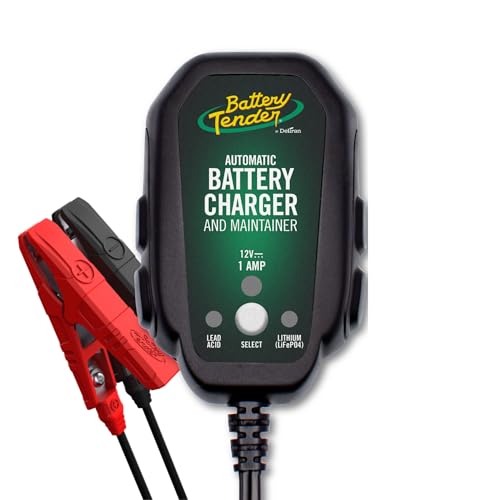
Battery Tender Junior 12V 800mA Lead-Acid and Lithium Charger
★★★★★ 4.6 / 5 Best for lithium
This version of the Junior adds a switch so you can select a lead-acid or a lithium charging profile, which matters because lithium batteries want a different voltage curve. If your bike came with or was upgraded to a lithium battery, this is the pick that keeps you from running a lead-acid charger on cells that do not want one.
Output 12V, 800mAChemistry Lead-acid or lithium (selectable)Mode Automatic charge then maintainLeads Quick-connect harness included
- Switchable profile handles lead-acid and lithium
- Correct lithium curve helps protect those cells
- Same trusted quick-connect system
- You must set the correct mode for your battery
- 0.8A is modest for a large drained battery
Best for: bikes running a lithium battery
Battery Tender 6V/12V 2A Lead-Acid and Lithium Charger
★★★★★ 4.5 / 5 Most versatile
This selectable tender covers both 6V and 12V batteries and both lead-acid and lithium chemistries, with 2A on tap for a quicker charge than the smaller maintainers. It is the one to buy if your garage mixes an older 6V classic with a modern 12V bike, since a single unit covers them all.
Output 6V or 12V, 2AChemistry Lead-acid or lithium (selectable)Mode Automatic charge then floatBest use Multiple bikes and voltages
- Handles both 6V and 12V batteries
- Selectable lead-acid or lithium modes
- 2A charges faster than 1A maintainers
- More settings to get right before connecting
- More capability than a single-bike owner needs
Best for: garages with a mix of 6V and 12V bikes
MOTOPOWER MP00206A 12V 1.5A Automatic Battery Maintainer
★★★★★ 4.4 / 5 Best budget pick
The MOTOPOWER MP00206A covers the core maintainer job at a lower cost, charging a 12V battery automatically and then holding it with a float so it does not overcharge. It is the sensible choice when you want a set-and-forget tender for a commuter or second bike without spending on extra modes.
Output 12V, 1.5AMode Fully automatic maintainBattery type 12V lead-acidUse Cars, motorcycles, ATVs, powersports
- Low cost for a genuine smart maintainer
- Automatic float means it can stay plugged in
- 1.5A charges a little quicker than 0.75A units
- 12V lead-acid only, no lithium profile
- Simpler feature set than the premium tenders
Best for: a low-cost set-and-forget 12V maintainer
MOTOPOWER MP00205B 12V 1A Maintainer with Desulfator
★★★★★ 4.4 / 5 For neglected batteries
This MOTOPOWER adds a desulfation stage that targets the sulfate buildup that forms on a battery left flat for a long time, plus timer protection to end a stalled charge. It is the pick for a battery that has been sitting neglected and needs recovery attempts rather than just routine floating.
Output 12V, 1000mAFeatures Desulfation, timer protectionMode Automatic charge then maintainBattery type 12V lead-acid
- Desulfation stage aims at long-sat batteries
- Timer protection stops a charge that will not complete
- Still floats for routine maintaining
- Desulfation cannot save a truly dead battery
- 12V lead-acid only
Best for: reviving a battery left flat over a long layup
Unocho 6V/12V 1.5A Smart Trickle Charger and Maintainer
★★★★★ 4.3 / 5 Budget 6V/12V
The Unocho is a low-cost smart charger that switches between 6V and 12V and floats a range of lead-acid battery types including AGM, gel, and standard wet cells. It is a practical backup or shed charger when you want 6V and 12V coverage without paying for a name-brand unit.
Output 6V or 12V, 1.5ABattery type AGM, gel, SLA, wet lead-acidMode Automatic float chargeUse Motorcycle, mower, ATV, boat
- Covers 6V and 12V at a low price
- Works with several lead-acid battery types
- Automatic float for hands-off maintaining
- Less established than the big brands
- No lithium charging profile
Best for: a low-cost charger for mixed 6V and 12V lead-acid batteries
A motorcycle battery tender earns its keep when it holds a parked bike ready to start without overcharging the battery, then reattaches in seconds the next time you ride. This guide sorts our picks by how much charging current they deliver and which battery chemistries and voltages they support, so you can match one to your bike rather than guess.
Why batteries die from sitting and what a maintainer does
Every lead-acid battery loses charge on its own, and most modern bikes add a small constant draw for the clock, alarm, or engine control memory. Leave a motorcycle parked for a few weeks and those two drains quietly flatten the battery, and a battery that sits partly discharged also begins to sulfate, which permanently eats into its capacity. A maintainer, or tender, counters this by charging the battery back to full and then holding it there with a float charge that supplies only the tiny current needed to offset self-discharge. That is the key difference from an old-style trickle charger: a smart tender regulates itself and switches to float, so it is safe to leave connected for the whole off-season instead of slowly cooking the cells.
Lead-acid versus lithium and why compatibility matters
Most bikes still ship with a 12V lead-acid battery, whether flooded, AGM, or gel, and any of the standard maintainers here will float those correctly. A growing number of riders have switched to lithium (LiFePO4) batteries for their lighter weight, and that is where compatibility becomes important. Lithium cells want a different charging voltage and a different top-of-charge behavior, so a lead-acid-only tender is not the right tool for them. If your bike runs lithium, choose a switchable unit such as the Battery Tender Junior 800mA or the 6V/12V 2A charger and set it to the lithium profile before connecting. Older classics may still use a 6V battery, in which case a 6V/12V selectable tender covers both. When in doubt, confirm your battery type on its label and match the tender to it.
Reading the amps, the float stage, and quick-connect leads
The amperage rating tells you how fast a tender can recharge, not how well it maintains. For simply holding a healthy battery full, well under one amp is enough, which is why 750mA and 800mA units dominate this category. Step up to 1.25A or 2A only if you regularly need to recharge a drained or larger battery in a reasonable time. What every good tender shares is an automatic float stage: once the battery is full, the charger backs off to a regulated maintenance current so it can stay connected indefinitely. A quick-connect harness is the other feature worth having. You bolt its ring terminals to the battery once, and from then on you clip the tender on and off through an accessible plug without removing panels, which makes it far more likely you will actually keep the battery on charge.
Using a tender safely through the off-season
Connect a tender in a dry, ventilated space, since a charging battery can vent a small amount of gas. Attach the positive lead first and the negative second, and keep the charger unplugged from the wall until the clips or plug are connected, then power it on. Check that the voltage and chemistry settings match your battery before you start, especially on switchable units, and use the manufacturer harness so reconnecting is simple. Over a long winter layup you can leave a smart maintainer connected the entire time and just glance at its status light now and then. If a battery is already deeply flat or old, a desulfation-capable unit like the MOTOPOWER MP00205B can attempt recovery, but no charger revives a truly dead battery, so treat replacement as the honest answer when maintaining no longer holds a charge.
Questions people ask
What does a motorcycle battery tender actually do?
A tender, or maintainer, is a smart charger you leave connected while the bike is parked. It charges the battery back up and then switches to a float charge that supplies just enough current to offset the battery's natural self-discharge. That keeps the battery full without overcharging, which is what a plain trickle charger risks if left on too long.
Why does a battery go flat just from sitting?
Every lead-acid battery slowly self-discharges even when nothing is switched on, and most bikes also draw a small parasitic current for clocks, alarms, or the ECU memory. Over weeks of sitting that adds up, and a battery left partly discharged also starts to sulfate, which permanently reduces its capacity. A maintainer offsets both by holding the charge topped up.
Is a tender the same as a trickle charger?
Not quite. A basic trickle charger pushes a constant low current and can overcharge a battery if you forget it. A modern tender or smart maintainer monitors the battery and switches to a regulated float once it is full, so it is safe to leave connected for weeks or months. The picks here are smart maintainers, not dumb trickle chargers.
Can I use a lead-acid tender on a lithium motorcycle battery?
You should not, unless the charger has a lithium mode. Lithium (LiFePO4) batteries want a different voltage profile, and a lead-acid charger's float stage can be wrong for them. Pick a switchable model such as the Battery Tender Junior 800mA or the 6V/12V 2A unit, and set it to lithium before you connect it.
How many amps do I need for a motorcycle battery?
For simply maintaining a charged battery, less than 1A is plenty, which is why 750mA and 800mA maintainers are so common. If you often need to recharge a drained or larger battery, a 1.25A to 2A unit does that job faster. Higher amperage is about recharge speed, not about how well it holds a float.
Should I leave the tender connected all winter?
Yes, that is the intended use for a smart maintainer. Because it floats rather than trickles, it can stay connected for the whole off-season and keep the battery ready to ride. Connect it in a dry, ventilated spot, use the quick-connect harness so reattaching is easy, and check on it periodically.
What is a quick-connect harness and why does it help?
It is a lead with ring terminals that you bolt to the battery once, ending in an SAE plug that hangs somewhere accessible. After that you clip the tender on and off in seconds without removing panels or touching the terminals each time. Most of the Battery Tender units include one, and compatible harnesses are sold separately.
How do I connect a tender safely?
Connect the positive lead first, then the negative, keep the charger unplugged from the wall until the clips are on, and work in a ventilated area away from sparks since charging batteries can vent gas. Check that the tender's chemistry and voltage setting match your battery before powering it on, and read the manual for your specific model.
The bottom lineSo which one?
The Battery Tender Junior 12V 750mA is our overall pick because it is a proven, fully automatic maintainer that floats a 12V battery safely and comes ready to wire with a quick-connect harness. Choose by need from there: the Battery Tender Plus 1.25A for faster recharging of a larger battery, the switchable Junior 800mA or the 6V/12V 2A unit for lithium and mixed-voltage garages, and the MOTOPOWER 1.5A for the budget-minded. Match the tender to your battery chemistry and voltage, then leave it connected between rides so the bike is always ready.