Motorcycle Bluetooth Intercoms
Best Motorcycle Bluetooth Intercoms for Rider-to-Rider Communication
7 picks compared
9 min read
ProductPickly is reader-supported. When you buy through links on our site, we may earn an affiliate commission at no extra cost to you. It never changes our picks.
The short answerFor most riders the Sena 60S EVO is the standout pick, a system that combines a mesh network with standard Bluetooth so a group can join or leave a ride without re-pairing each helmet. If you mainly ride two-up or with one buddy, the Cardo FREECOM 2X is a simpler two-rider Bluetooth choice, while the Cardo Spirit HD is our pick when music and call clarity matter thanks to its 40mm speakers. The slim Cardo Spirit suits helmets with shallow ear pockets, the JESIMAIK two-pack is the value option that covers two helmets in one box, the XGP fits riders who also use ATVs and snowmobiles, and the generic helmet intercom is a low-cost way to try rider communication. Choose by connection type, helmet fit, and how often you ride in a group rather than by the biggest range number on the box.
?How we pickedWe compare published specifications, safety certifications and thousands of verified owner reviews, and we do not physically test every unit. Read the full process in our review methodology.
Sena 60S EVO Motorcycle Bluetooth Communication Headset
★★★★★ 4.6 / 5 Best overall
This is the system we would reach for first because it pairs a mesh network with standard Bluetooth, so a group can drop in and out of a ride without pairing each helmet one by one. It sits at the premium end of the list and is aimed at riders who ride in groups often rather than the occasional two-up trip.
Connection Mesh network plus BluetoothGroup size Built for larger mesh groupsAudio Dual helmet speakers and boom or wired micGood to know Premium tier, more system than a solo rider needs
- Mesh lets riders join or leave a group without re-pairing
- Also falls back to standard Bluetooth for phone and passenger
- Strong choice for regular group riding
- Priced and specced above what a solo rider needs
- Mesh benefits only show when others run compatible units
Best for: regular group riders who want mesh and Bluetooth in one unit
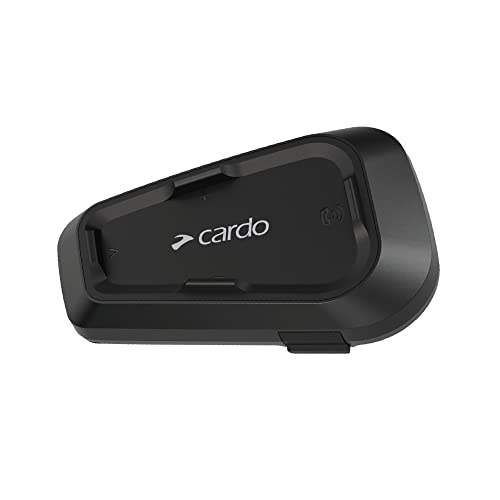
Cardo FREECOM 2X Motorcycle Bluetooth Communication System
★★★★★ 4.5 / 5 Best two-rider Bluetooth
A focused Bluetooth unit built for talking between two helmets, which covers most riders who ride with one regular passenger or a single riding buddy. It skips the larger mesh group features of pricier systems and keeps the setup simple, with 40mm speakers and universal pairing to a second brand of headset.
Connection Bluetooth, rider-to-rider intercomIntercom Designed around two-way rider talkSpeakers 40mm helmet speakersGood to know Universal Bluetooth pairs with other brands
- Simple two-rider intercom without mesh complexity
- 40mm speakers for clearer audio at speed
- Universal Bluetooth links to other brand headsets
- Not built for large group intercom chains
- Bluetooth range is shorter than a mesh system
Best for: two-up riders or a single riding buddy on Bluetooth
Cardo Spirit HD Motorcycle Bluetooth Communication Headset
★★★★★ 4.4 / 5 Best for sound
The step up from the base Spirit trades the slim speakers for larger 40mm HD drivers, which is the main reason to pick it if music and call clarity matter to you. It keeps the same easy two-way Bluetooth and waterproof build, so it suits riders who want better audio without moving to a full mesh system.
Connection Two-way BluetoothSpeakers 40mm HD helmet speakersWeatherproofing Rated waterproof by the brandGood to know Universal Bluetooth connectivity
- Larger 40mm HD speakers for fuller sound
- Waterproof rating for wet-weather riding
- Two-way Bluetooth for rider-to-rider talk
- Bigger speakers need enough helmet ear-pocket depth
- Bluetooth only, no mesh group mode
Best for: riders who care most about music and call clarity
Cardo Spirit Motorcycle Bluetooth Communication Headset
★★★★★ 4.4 / 5 Best slim fit
The entry Spirit uses thin 32mm speakers, which is the point of it, since slim drivers slot into tight helmet ear pockets that fuller speakers can press against. It gives you two-way Bluetooth and a waterproof shell in a low-fuss package for riders who want the basics done well rather than a long feature list.
Connection Two-way BluetoothSpeakers Thin 32mm helmet speakersWeatherproofing Rated waterproof by the brandGood to know Universal Bluetooth connectivity
- Slim 32mm speakers fit tight ear pockets
- Waterproof build for daily riding
- Straightforward two-way Bluetooth setup
- Thinner speakers trade some volume for the slim fit
- Shorter range than the mesh systems here
Best for: helmets with shallow ear pockets that reject bulky speakers
JESIMAIK Motorcycle Bluetooth Intercom (2 Pack)
★★★★★ 4.3 / 5 Best value two-pack
This ships as a matched two-pack, so a rider and passenger, or two friends, get a paired set out of one box instead of buying two units separately. It leans on noise-cancelling mics, 40mm speakers, an IP67 waterproof rating, and FM radio, which is a lot of features for a budget set aimed at casual riders.
Connection Bluetooth two-way intercomIn the box Two paired headsetsWeatherproofing IP67 waterproof ratingExtras 40mm speakers, noise-cancelling mic, FM radio
- Matched two-pack covers two helmets in one buy
- IP67 rating for heavy weather
- Adds FM radio and music sharing
- Budget brand with a shorter track record
- Feature claims are the maker's, not independently checked here
Best for: two riders who want a paired set without spending big
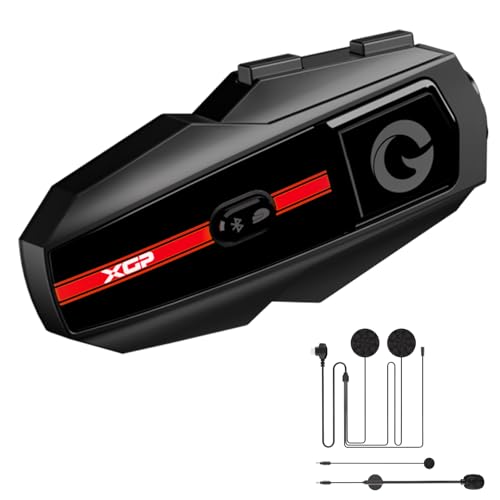
XGP Motorcycle Helmet Bluetooth Intercom
★★★★★ 4.3 / 5 Best for ATV and snowmobile
This one is pitched beyond street bikes toward ATV and snowmobile use, so it suits riders who split time across machines and want one intercom that follows them. It covers two-rider talk, music sharing, and audio multitasking so a call or the intercom can cut over your music, with an IP67 rating for rough conditions.
Connection Bluetooth, two-rider intercomUse Motorcycle, ATV and snowmobileWeatherproofing IP67 waterproof ratingExtras Music sharing and audio multitasking
- Aimed at ATV and snowmobile as well as bikes
- IP67 rating for cold and wet riding
- Audio multitasking layers calls over music
- Single pack, so a second rider needs another unit
- Lesser-known brand than the premium names here
Best for: riders splitting time across ATVs, sleds, and bikes
Motorcycle Helmet Bluetooth Intercom Headset
★★★★★ 4.1 / 5 Best simple starter
A no-frills helmet intercom for someone who wants to try rider communication without committing to a premium system first. It handles the core jobs of a Bluetooth headset, taking calls and pairing to a phone, with a simple speaker-and-mic setup, so treat it as a low-cost entry point rather than a long-haul group tool.
Connection Bluetooth headset and intercomAudio Helmet speakers with micSetup Basic pairing to phone and second unitGood to know Entry-level, generic-brand system
- Low-cost way to try helmet communication
- Simple phone pairing and calls
- Speaker-and-mic kit fits most helmets
- Generic brand with limited support and specs
- Shorter range and fewer features than the top picks
Best for: a first, low-cost taste of helmet communication
A motorcycle Bluetooth intercom lets you talk to a passenger or another rider, hear phone calls and GPS directions, and stream music, all through speakers set inside your helmet. The picks below range from a group-focused mesh system to simple two-rider Bluetooth units and a low-cost starter, so you can match the intercom to how you actually ride rather than to the longest feature list on the shelf.
Bluetooth pairing versus mesh groups
The first real decision is Bluetooth or mesh. A Bluetooth intercom links helmets one to one in a set chain, which is simple, reliable, and all most people need for a rider and passenger or a single riding buddy. A mesh intercom, like the Sena 60S EVO here, builds a self-healing network where riders can join or drop out without anyone re-pairing, and the link reroutes around a rider who falls behind. Mesh costs more and only pays off when several people run compatible units, so choose it for regular group rides and stick with Bluetooth for pairs.
Being honest about rider-to-rider range
Range is where marketing and reality drift apart. The distances brands quote are best-case, wide-open, line-of-sight figures, measured with nothing between the two headsets, and you will rarely see them on a real road. Hills, trees, buildings, corners, and traffic all cut the usable distance, sometimes by a lot, so read any headline number as a ceiling rather than a guarantee. This is another reason group riders favor mesh, since a mesh link generally holds together over broken terrain better than a single one-to-one Bluetooth connection, though even mesh has limits once riders spread far apart.
Music, phone, GPS audio, and battery life
Every unit on this list doubles as a plain Bluetooth headset, so you can stream music, hear turn-by-turn navigation, and take calls even without using the intercom. If sound quality matters, the larger 40mm speakers on the Cardo Spirit HD and FREECOM 2X give fuller audio than slim drivers, and features like the audio multitasking the XGP lists let a call or the intercom cut cleanly over music. Battery life is the trade-off to watch, because steady intercom talk drains a unit faster than occasional music or standby, so look at the quoted talk time for long days and get into the habit of charging the night before a big ride.
Helmet fit and choosing the mic
An intercom is only as good as its fit in your helmet. Most kits mount a control unit on the shell and drop two thin speakers into the ear pockets, so a helmet with shallow recesses can press the speakers against your ears, which is exactly why the slim 32mm Cardo Spirit exists for tighter helmets. The microphone follows your helmet style too. A boom mic on an arm sits close to your mouth and usually sounds clearer on open-face and modular helmets, while a wired chin-bar mic is the answer for full-face lids where a boom will not fit. Many kits include both, so match the mic to your helmet before you commit.
Questions people ask
What is the difference between a Bluetooth intercom and a mesh intercom?
A Bluetooth intercom pairs helmets one to one in a fixed chain, which is simple and works well for two riders like a rider and passenger. A mesh intercom, such as the Sena 60S EVO on this list, lets riders join and leave a group automatically without re-pairing, and the network reroutes if one rider drops out of range. Mesh is worth the extra cost mainly if you ride in groups often, while Bluetooth is plenty for pairs.
How far can rider-to-rider intercoms really reach?
Brands quote range figures, but those are best-case, wide-open, line-of-sight numbers that assume nothing sits between the two units. In real riding, hills, trees, buildings, and traffic all cut the distance sharply, so treat any headline range as a ceiling you rarely hit rather than a promise. Mesh systems tend to hold a usable link over longer and more broken terrain than one-to-one Bluetooth, which is one reason group riders lean toward them.
Can I use one of these intercoms just for music and GPS?
Yes. Every pick here works as a plain Bluetooth headset, so you can stream music, hear turn-by-turn navigation from a phone or GPS, and take calls even if you never use the intercom side. If audio quality is your priority, the larger 40mm speakers on the Cardo Spirit HD and FREECOM 2X give fuller sound than slim drivers. Look for audio multitasking, like the XGP lists, if you want calls or intercom to cut over music cleanly.
Will these headsets fit inside my helmet?
Most systems mount a control unit on the outside of the shell and place two thin speakers in the helmet ear pockets, with a mic on a boom arm or a small wired pad. Fit problems usually come from shallow ear pockets pressing on the speakers, which is why the slim 32mm Cardo Spirit exists for tighter helmets. Check your helmet has ear recesses and enough depth before buying, since a speaker that presses on your ear gets uncomfortable fast.
Boom mic or wired mic, which should I choose?
A boom mic sits on an arm near your mouth and generally picks up your voice more clearly, which suits open-face and modular helmets. A wired or corded mic tucks into the chin bar and is the usual choice for full-face helmets where a boom will not fit. Many kits include both styles so you can match the mic to your helmet, so check the box contents before deciding.
How long do motorcycle intercoms last on a charge?
Battery life depends on how you use it, since constant intercom talk drains a unit faster than occasional music or standby. Makers quote talk-time hours that assume steady intercom use, so real all-day figures land lower once you mix in music and calls. If you ride long days, look at the quoted talk time rather than standby time, and get in the habit of charging the night before a big ride.
Do different brands of intercom work together?
Same-brand units pair most reliably and unlock the full feature set, including mesh grouping on systems that support it. Many headsets, including the Cardo units here, advertise universal Bluetooth so they can connect to another brand as a basic phone-style link, but you usually lose the advanced group features when you mix brands. If you already ride with a group, matching their brand is the safest way to avoid pairing headaches.
How did we choose the intercoms in this guide?
We compared connection type, whether a unit does Bluetooth or mesh, speaker size, weatherproofing, and the kind of rider each one suits, then matched them to real needs like group riding, two-up trips, and budget starters. Every product shown is a real, current listing, and these are our chosen picks based on that comparison rather than claims of hands-on lab work.
The bottom lineSo which one?
The Sena 60S EVO is our top choice for its mix of mesh grouping and everyday Bluetooth, which makes it the most flexible pick for riders who move between solo trips and group rides, with the Cardo FREECOM 2X close behind as a simpler and lighter-cost two-rider option. Let connection type, your helmet fit, and how often you actually ride with others lead the decision, and remember that the range figures on any box are best-case numbers that real roads will cut down, so buy for the riding you do rather than the distance a spec sheet promises.