Motorcycle Helmets
Best Motorcycle Helmets for Safety and Comfort
7 picks compared
10 min read
ProductPickly is reader-supported. When you buy through links on our site, we may earn an affiliate commission at no extra cost to you. It never changes our picks.
The short answerThe best motorcycle helmet is a properly certified one that fits your head shape snugly and suits your riding style. For a sport-grade full face the AGV K1 S stands out, while the ILM ILM-313 covers value commuting and the ILM 902 adds a flip-up modular chin bar. Touring riders should look at the DOT and ECE listed ScorpionEXO T520. Certification and fit come first; features are the tie-breaker.
?How we pickedWe compare published specifications, safety certifications and thousands of verified owner reviews, and we do not physically test every unit. Read the full process in our review methodology.
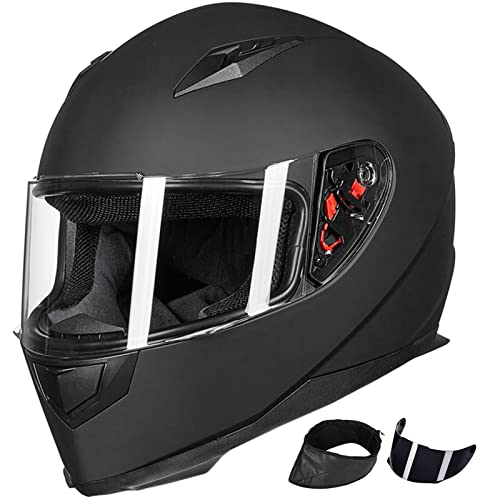
AGV K1 S Street Full Face Motorcycle Helmet
★★★★★ 4.7 / 5 Best overall
The K1 S is a sport-focused full face with a wide field of view and a shell built for higher speeds. It carries a premium price and runs on the snug side, so try a size up if you are between fits.
Helmet type Full faceCertification Confirm on current listingShield Anti-scratch clear visorBest use Sport and spirited street riding
- Wide eye port for good peripheral vision
- Sport-oriented shell shape cuts wind noise
- Trusted racing-brand construction
- Runs snug, size carefully
- Costs more than most full-face options
Best for: riders who want a sport-grade full face
ILM Full Face Helmet DOT Model ILM-313
★★★★★ 4.4 / 5 Best value full face
A DOT-marked full face that covers the basics for daily commuting without a large outlay. The liner is removable for washing, which matters on a helmet you wear every day.
Helmet type Full faceCertification DOT (per listing)Liner Removable and washableBest use Everyday commuting
- DOT marked at an accessible price
- Removable washable liner
- Available for men and women
- Ventilation is basic
- Heavier than premium shells
Best for: budget-minded daily commuters
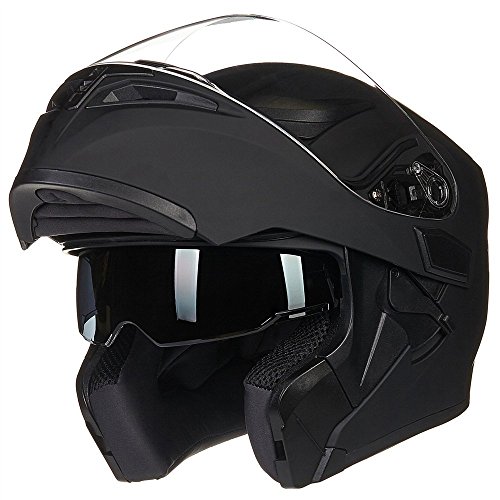
ILM Modular Flip-Up Helmet DOT Model 902
★★★★★ 4.4 / 5 Best modular
A flip-up modular design lets you lift the chin bar at stops without removing the helmet. The dual visor adds an internal sun shade, though a modular shell is a little heavier than a fixed full face.
Helmet type Modular flip-upCertification DOT (per listing)Shield Dual visor with inner sun shadeBest use Touring and commuting
- Flip-up chin bar for easy stops
- Built-in drop-down sun shade
- Several color options
- Heavier than a fixed full face
- Slightly more wind noise at speed
Best for: riders who like a flip-up chin bar
ScorpionEXO T520 Full Face Touring Helmet
★★★★★ 4.6 / 5 Best for touring
A touring full face with speaker pockets so it is ready for a Bluetooth communicator you add separately. It lists both DOT and ECE approval, which is useful for long-distance riders.
Helmet type Full face touringCertification DOT and ECE (per listing)Audio Bluetooth-ready speaker pocketsBest use Long-distance touring
- Speaker pockets for an add-on comms unit
- Lists DOT and ECE approval
- Comfort-focused touring fit
- Bluetooth unit is not included
- Priced above entry-level helmets
Best for: tourers who want comms-ready design
LS2 Stream II Full Face Helmet with Sun Shield
★★★★★ 4.5 / 5 Best built-in sun shield
The Stream II pairs a full-face shell with an internal drop-down sun visor, so you can cut glare without swapping shields. It is a practical pick for riders who face changing light through the day.
Helmet type Full faceCertification Confirm on current listingShield Clear visor plus drop-down sun shadeBest use Commuting in changing light
- Internal sun shade drops in seconds
- Established helmet brand
- Comfortable everyday fit
- Fewer color choices in some sizes
- Vents are adequate rather than aggressive
Best for: riders who deal with glare and changing light
TRIANGLE Full Face Street Bike Helmet DOT
★★★★★ 4.3 / 5 Best for new street riders
A straightforward DOT-marked full face aimed at street riders who want coverage without complexity. It suits men and women getting their first proper full-face helmet.
Helmet type Full faceCertification DOT (per listing)Shield Clear flip-up visorBest use Street and beginner riders
- DOT marked for street use
- Simple, easy to live with
- Fits men and women
- Basic ventilation
- No internal sun shade
Best for: new riders wanting simple full-face coverage
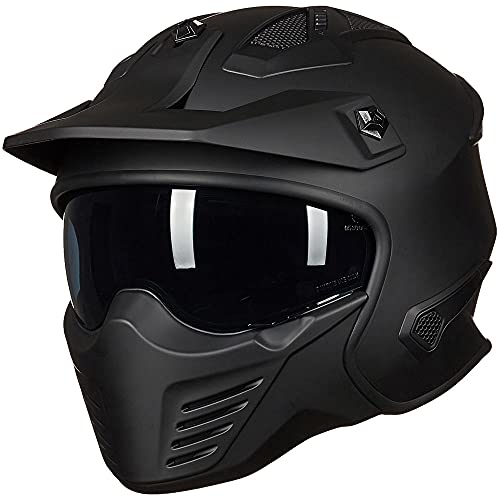
ILM Open Face 3/4 Helmet DOT Model 726X
★★★★★ 4.3 / 5 Best open face
A DOT-marked 3/4 open-face helmet for cruisers, scooters, and low-speed riding where airflow and visibility matter. Note that an open face leaves the chin exposed, so it protects less than a full face.
Helmet type Open face (3/4)Certification DOT (per listing)Shield Flip-up face shieldBest use Cruisers, scooters, low speed
- Open, airy feel with good visibility
- DOT marked
- Lighter than a full face
- No chin protection
- More wind and noise at higher speed
Best for: cruiser and scooter riders who want airflow
The best motorcycle helmet for you is the certified one that fits your head shape correctly and matches how you ride. This guide sticks to real, currently listed helmets across full face, modular, and open-face styles, and explains the certification, fit, and feature checks that actually matter so you can choose with confidence rather than guesswork.
Certification is the first thing to check
Before styling or features, confirm a helmet is certified. In the United States that means a DOT mark showing it meets the FMVSS 218 standard, and many helmets add ECE 22.06, a widely used international standard. A certification does not promise you will avoid injury in a crash, but it does mean the helmet passed defined impact and retention tests, which a novelty or uncertified helmet has not. The ScorpionEXO T520 lists both DOT and ECE approval, while the ILM and TRIANGLE models here list DOT. When a listing does not clearly state a standard, verify it before you buy.
Match the helmet type to how you ride
Full-face helmets like the AGV K1 S, LS2 Stream II, and TRIANGLE cover the whole head and chin in one fixed shell, which is why most riders on faster roads choose them. Modular helmets such as the ILM 902 add a flip-up chin bar that is convenient at stops and for glasses wearers, trading a little extra weight and noise for that flexibility. Open-face helmets like the ILM 726X leave the chin exposed and suit low-speed cruiser or scooter riding where airflow matters more than full coverage. There is no single best type, only the right type for your riding.
Fit decides how well a helmet works
A helmet only does its job when it fits, so measure the widest part of your head about an inch above the eyebrows and check that number against the maker's size chart. A correct fit feels snug and even with no pressure points, and it should not shift when you shake your head. Cheek pads should press firmly at first because they settle with use. Head shapes differ between brands, so a helmet that runs snug, like the AGV K1 S, may need a size up, while others fit true. Never size up just to escape a break-in period.
Features that add real everyday value
Once certification and fit are sorted, features separate the picks. An internal drop-down sun visor, as on the LS2 Stream II and the ILM 902, saves you from swapping shields when the light changes. Good ventilation keeps you cooler on long rides, a removable washable liner keeps a daily helmet fresh, and speaker pockets like those on the ScorpionEXO T520 make adding a communicator simple. Treat these as tie-breakers between helmets that already fit and carry the certification you want, not as reasons to compromise on either.
Questions people ask
What certification should a motorcycle helmet have?
In the United States a helmet should carry a DOT mark, which means it meets the federal FMVSS 218 standard. Many quality helmets also list ECE 22.06, a European standard used worldwide. Look for the certification printed on the shell or the listing, and treat an uncertified novelty helmet as decoration rather than protection.
Are full face or modular helmets better?
A full face gives the most coverage in one fixed shell and is usually lighter and quieter. A modular helmet adds a flip-up chin bar that is handy at stops and for glasses wearers, at the cost of a little extra weight and noise. Choose based on how you ride rather than assuming one is universally superior.
How should a motorcycle helmet fit?
A correct fit is snug all the way around with even pressure and no hard spots. It should not shift when you shake your head, and the cheek pads should touch your cheeks firmly at first because they break in over time. If the helmet rocks loosely or leaves red marks, the size or shape is wrong.
How do I measure my helmet size?
Wrap a soft tape measure around the widest part of your head, about an inch above your eyebrows, and compare that number to the maker's size chart. Head shapes vary, so a size that fits one brand may feel different in another. When you are between sizes, most riders size down for a secure fit unless the listing advises otherwise.
Do open face helmets protect enough?
An open-face or 3/4 helmet covers the top, back, and sides of your head but leaves your chin and face exposed. It suits low-speed cruiser and scooter riding where airflow and visibility are priorities. For higher speeds or maximum coverage, a full face protects more of your head.
When should I replace my helmet?
Replace a helmet after any impact, even one that leaves no visible crack, because the protective liner compresses on impact and does not recover. Most makers also suggest replacing a helmet roughly every five years of normal use as materials and fit degrade. Store it away from heat and solvents to help it last.
Can I add Bluetooth to any helmet?
Many helmets can accept an add-on communicator, and some, like the ScorpionEXO T520, include speaker pockets to make that easier. The Bluetooth unit is usually sold separately, so confirm the helmet has room for speakers and a clip before you buy. Adding a unit does not change the helmet's certification.
Is a more expensive helmet safer?
Price often buys better ventilation, lighter materials, quieter shells, and refined fit rather than a fundamentally higher safety floor, since any DOT-marked helmet meets the same federal standard. A well-fitting certified helmet you actually wear on every ride does more for you than a pricier one that fits poorly. Fit and certification come first, features second.
The bottom lineSo which one?
There is no single safest helmet, only the certified helmet that fits you and matches your riding. The AGV K1 S is our overall pick for sport street use, but the ILM ILM-313, ILM 902, and ScorpionEXO T520 are strong choices for value, modular flexibility, and touring. Confirm the certification and get the fit right, then let features decide.