RV Wheel Chocks
Best RV Wheel Chocks to Stop Your Rig Rolling
7 picks compared
9 min read
ProductPickly is reader-supported. When you buy through links on our site, we may earn an affiliate commission at no extra cost to you. It never changes our picks.
The short answerThe best all-round choice for a tandem-axle travel trailer is the X-Chock Wheel Stabilizer, which wedges between the paired tires and stops the back-and-forth rocking you feel when someone walks inside. For a single-axle rig or as a first line of defense, a set of heavy solid rubber chocks like the Rhino USA blocks grips loose ground far better than lightweight plastic. Remember that chocks add safety but do not replace the parking brake. Set the brake first, then chock the tires snug as backup.
?How we pickedWe compare published specifications, safety certifications and thousands of verified owner reviews, and we do not physically test every unit. Read the full process in our review methodology.
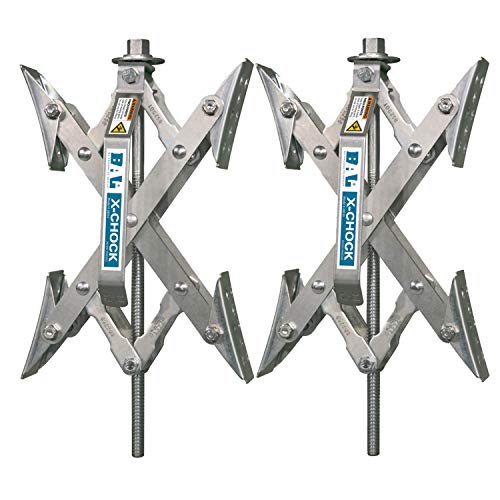
X-Chock Wheel Stabilizer (Pair, One Handle)
★★★★★ 4.7 / 5 Best overall
This is the fork-style stabilizer that wedges between the two tires of a tandem axle and tightens outward, so the pair stops rocking against each other. It does not replace a chock in front of and behind the wheels, but on a twin-axle rig it kills the back-and-forth shuffle better than a plain block.
Type X-shaped tandem stabilizerFits Tandem (dual) axle rigsTightening Turn handle or ratchetPack One pair (one handle)
- Locks the gap between paired tires so the trailer stops rocking
- Tightens by hand with a single handle, no tools needed
- Rust-resistant coated steel built for repeat outdoor use
- Only works on tandem axles, useless on a single-axle trailer
- Still needs a normal chock front and back for a real stop
Best for: Tandem-axle travel trailers that rock when you move inside
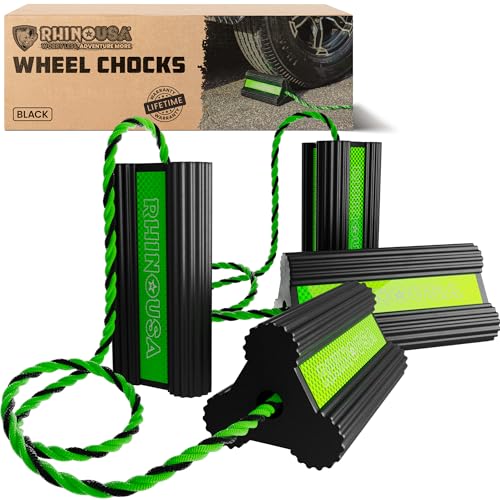
Rhino USA Heavy Duty Rubber Wheel Chocks
★★★★★ 4.6 / 5 Grippiest rubber
Solid molded rubber with a deep tread pattern that bites into gravel, grass and pavement instead of skating on it. These are the ones I reach for on a slope because the mass and the ribbed base do the work.
Type Wedge block chockMaterial Solid molded rubberBase Ribbed non-slip treadFits Trucks, RVs, trailers
- Heavy solid rubber grips loose surfaces well
- Handles hot sun and rain without cracking
- Deep tread on the base resists sliding under load
- Heavier to carry and stow than plastic chocks
- One pair may not be enough for a large tandem rig
Best for: Parking on gravel, grass or a slight grade
Camco RV Wheel Chocks with Rope (2-Pack)
★★★★★ 4.6 / 5 Easy to retrieve
A straightforward ramp-shaped chock with a pull rope, so you can drag it out from under the tire without crawling in the dirt. The rope sounds like a gimmick until the first time you park nose-in against a curb and cannot reach the block.
Type Ramp-style chockFeature Pull rope for removalPack Two chocksFits RV and trailer tires
- Attached rope makes pulling the chock out simple
- Light enough to carry two without fuss
- Simple ramp shape seats fast against the tire
- Plastic body has less bite than solid rubber on ice
- Two-pack covers one axle, not a full tandem set
Best for: Owners who hate crawling under the rig to grab a chock
MaxxHaul Solid Rubber Wheel Chock (2-Pack)
★★★★★ 4.5 / 5 Compact rubber
A smaller solid rubber block with a molded handle, sized for lighter trailers, teardrops and utility trailers rather than a full motorhome. The built-in handle means you can grab and place it one-handed.
Type Wedge block chockMaterial Solid rubberHandle Molded carry handlePack Two chocks
- Solid rubber grips better than hollow plastic
- Built-in handle makes placing it easy
- Compact size stows in a small bay
- Smaller block suits lighter trailers, not big rigs
- Low profile can be less effective on steeper grades
Best for: Teardrops, utility trailers and small campers
RVPNR Camper Wheel Chock Stabilizer (X-Chock, 2 Sets)
★★★★★ 4.4 / 5 Tandem kit
A two-set scissor stabilizer bundle that ships with a ratchet wrench, hex socket and gloves, so you can snug both sides of a tandem rig without hunting for tools. It fills the same job as a single X-chock but covers both axles in one box.
Type X-shaped scissor stabilizerFits Tandem axle rigsIncludes Ratchet, hex socket, glovesPack Two sets
- Two sets cover both sides of a tandem trailer
- Ratchet tool speeds up tightening
- Reduces side-to-side rocking between paired tires
- Does not stop a rig from rolling on its own
- Fit is fussy if tire spacing is unusually tight or wide
Best for: Tandem owners who want a complete two-side kit
OULEME Heavy-Duty Rubber Wheel Chocks (4-Pack)
★★★★★ 4.5 / 5 Value 4-pack
A four-pack of rubber wedge chocks, which is the right count if you want a block ahead of and behind both tires on a single axle, or two per side on a tandem. Buying four at once is the cheaper way to chock properly rather than skimping with two.
Type Wedge block chockMaterial RubberPack Four chocksFits RV, trailer, camper tires
- Four blocks let you chock both sides properly
- Rubber grips better than lightweight plastic
- Sensible option for a full front-and-back setup
- Mid-size blocks suit typical trailer tires, not oversize
- No rope, so removal means reaching under the tire
Best for: Chocking a full axle front and back on a budget
PAHTTO Wheel Chocks with Rope (4-Pack)
★★★★★ 4.3 / 5 Budget plastic
A budget four-pack of hard plastic chocks, each with a pull rope for easy removal. Plastic weighs less and costs less, and for level pavement and flat campsites it does the job, though I would not lean on it on a real slope.
Type Ramp-style chockMaterial Hard plasticFeature Pull rope on eachPack Four chocks
- Four ropes make removal quick and clean
- Very light to carry and store
- Low cost for a full set of four
- Hard plastic slips more than rubber on loose ground
- Better on level sites than on a grade
Best for: Flat, paved sites where weight and cost matter most
A wheel chock has one job, to stop your rig from rolling when it is parked, and the right one depends far more on your axle setup and where you camp than on brand names. This guide sorts the main types, matches them to single versus tandem axles and tire size, and is honest about the fact that a chock is backup for your parking brake, not a replacement for it.
Ramp, wedge and X-chock: which type fits your rig
There are three shapes worth knowing. Ramp and wedge chocks are simple blocks you place ahead of or behind a tire so it cannot roll, and they work on any trailer or motorhome. X-chock stabilizers are different: they are scissor devices that wedge between the two tires of a tandem axle and tighten outward, which stops the tires rocking against each other when you move inside. If you have a single axle, an X-chock does nothing for you and you want good wedge chocks. If you have a tandem axle, the best setup is usually both, an X-chock to stop the rock plus wedge chocks front and back to stop the roll.
Matching the chock to your axle and tire size
Sizing matters more than most buyers expect. The chock should reach up the curve of the tire, roughly a quarter to a third of the way up the radius, so the tire presses down into it instead of shoving it aside. A small block that suits a utility trailer will get pushed flat by a big motorhome tire. Count your needs too: a single axle covered front and back needs four chocks, a tandem needs more, which is why four-packs exist. Buying a two-pack for a heavy tandem rig is the most common mistake.
Material and grip: rubber versus plastic
Solid rubber is the grippier, heavier choice. Its mass and ribbed tread bite into gravel, grass and damp pavement and resist sliding under load, which is exactly what you want on any kind of slope. Hard plastic is lighter and cheaper and is genuinely fine on flat, paved sites, but it can skate on loose or wet ground. If you camp on varied terrain, spend on rubber. If you only ever park on a level concrete pad, plastic will save weight and money.
Using chocks safely with the parking brake
This is the part people skip. Chocks add safety, they do not create it on their own. Always set the parking brake first, and on a trailer chock the tires as your backup in case the brake or the hitch lets go. On a grade, chock the downhill side so the block stops the tire rolling away from you, and on a steep slope chock both directions. Place each chock snug against the tread, not a hand-width away where the rig can build momentum before it hits the block. And remove every chock and X-chock before you tow, because driving over your own chock damages the tire, the chock and the rig.
Questions people ask
Do wheel chocks alone hold my RV in place?
No. Chocks add safety, they do not replace the parking brake or, on a trailer, hitching and leveling. Set the brake first, then place the chocks snug against the tires as backup so nothing rolls if the brake slips.
What is the difference between a chock and an X-chock stabilizer?
A chock is a wedge you place ahead of or behind a tire to stop it rolling. An X-chock is a scissor device that wedges between the two tires of a tandem axle to stop them rocking against each other. They do different jobs, and a tandem rig often uses both.
How many chocks do I actually need?
For a single axle, a block in front of and behind each tire means four total for full coverage on a grade. On level pavement many owners use two, one behind each tire on the downhill side. Tandem axles need more, which is why four-packs are popular.
Rubber or plastic, which grips better?
Solid rubber grips loose surfaces like gravel and grass better and resists sliding under load. Hard plastic is lighter and cheaper and is fine on level pavement, but it can skate on a slope or wet ground.
How do I size a chock to my tire?
Match the chock height to the tire so the block reaches up the curve of the tread, roughly a quarter to a third of the tire radius. Too small a block just gets pushed aside. Big-diameter rig tires need taller, heavier chocks than a small utility trailer.
Which side do I chock on a hill?
Chock on the downhill side so the block stops the tire from rolling away from you. On a steep grade, chock both directions and never rely on a single downhill block alone.
Why do X-chocks have a rope or handle?
Ramp chocks with a rope let you pull the block out without crawling under the rig, which matters when you park tight against a curb. X-chocks use a handle or ratchet so you can tighten and loosen them by hand between the tires.
Can I leave chocks in place while towing?
No. Remove every chock and stabilizer before you move. Towing over your own chock can damage the tire, the chock and the rig, and a forgotten X-chock will bind the axle.
The bottom lineSo which one?
If you tow a tandem-axle trailer, start with an X-chock stabilizer to kill the rocking and add a pair of rubber block chocks for real anti-roll insurance. Single-axle and smaller rigs are well served by a four-pack of rubber wedge chocks so you can block both tires front and back. Whatever you pick, set the parking brake first and treat the chocks as the backup that keeps you safe if it slips.