A good foot mask is one of the simplest ways to look after tired, dry, or rough feet at home. The category really splits into two very different jobs. Hydrating foot masks, often sold as moisturizing socks or booties, flood the skin with emollients and humectants to soften roughness and lock in moisture. Exfoliating foot peel masks work the opposite way, using a leave-on treatment that encourages the top layer of dry, dead skin to shed gradually over the days that follow. Knowing which job you want done is the first and most important choice you make.
This roundup gathers five foot masks that cover both approaches, from quick hydrating booties for a self-care evening to a peel designed for heavy callus and rough heels. Every pick below is drawn from current Amazon listings, and the ingredients and claims described here come straight from those listings rather than from any lab result of our own. Use it as a starting map, then match a mask to your own feet and your own comfort level.
How we chose these foot masks
These are editorial picks, selected by reading and comparing current product listings, brand descriptions, and the stated ingredients and pack sizes. We did not run a clinical trial or a hands-on study, and nothing here should be read as a measured performance result. Instead we looked for a sensible spread of formats, a mix of hydrating booties and an exfoliating peel, a range of pack counts so there is an option for occasional use and for a longer routine, and recognizable ingredients that the listings call out, such as urea, shea butter, jojoba oil, and goat milk. Results from any mask vary from person to person, so treat the descriptions as listing claims and your own skin as the final judge.
The best foot masks
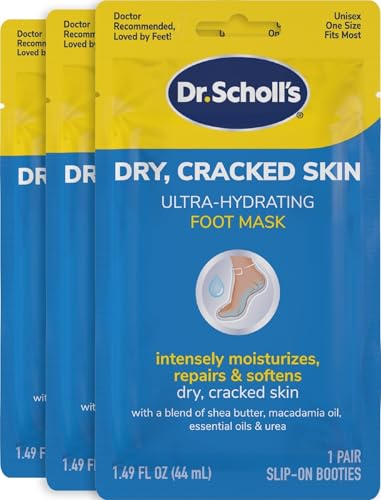
1. Dr. Scholl's Cracked Skin Ultra Hydrating Foot Mask (Top Pick)
Dr. Scholl's is a name most people already associate with foot care, and this Ultra Hydrating mask is a straightforward, well rounded choice for dry, rough, cracked feet. The listing describes moisturizing socks formulated with urea and essential oils, with urea being a classic humectant that the brand positions for intensely softening thick, dry skin. You get three pairs, which is enough for a short course rather than a one off, and because it is a sock style hydrating mask it is gentle in approach, with no peeling phase to wait through. If you are not sure where to start, this is the easy recommendation.
2. Epielle Hydrating Foot Mask (Best Hydrating)
For rich moisture and value together, the Epielle hydrating mask leans into emollient ingredients. The listing highlights shea butter and jojoba oil in a deep moisturizing sock aimed at dry and cracked feet, and the pack includes six pairs, which makes it well suited to a weekly routine or to sharing. These are comfort first booties rather than an active peel, so they are a nice option for a relaxing evening or as a simple self-care gift that still feels practical.
3. Aquaphor Advanced Therapy Repairing Foot Masks (Best for Cracked Heels)
Aquaphor's Advanced Therapy Repairing Foot Masks come as six individual masks and take a repair focused approach to rough, dry skin. Aquaphor is a brand built around protecting and repairing very dry skin, and these masks are designed to soften and help restore feet that have gone past ordinary dryness into rough, cracked territory. Because each mask is single use and leave on, they suit someone who wants a targeted treatment for problem heels rather than a large multipack of everyday socks.
4. DERMORA Foot Peel Mask (Best Exfoliating Peel)
If your goal is to shed built up dead skin rather than only soften it, DERMORA's Foot Peel Mask is the exfoliating option here. This is a peel, not a moisturizer, so the process is different. You wear the booties for the time on the label, rinse, and then over roughly the next week the top layer of dry, rough skin gradually loosens and sheds. The original two pair pack is a sensible way to try a peel, since most people do not need to peel often. Expect patchy shedding and give it time rather than pulling at the skin.
5. SULADEC Moisturizing Foot Mask with Shea Butter and Goat Milk (Best Value Multipack)
SULADEC's moisturizing foot mask pairs shea butter with goat milk in a hydrating sock, and with five pairs in the box it is the multipack pick for anyone who wants a steady supply without reaching for a peel. By description it is a gentle, comfort led formula aimed at dry feet that mainly need softening and moisture. For regular upkeep between any heavier treatments, a stack of simple hydrating socks like these is an easy habit to keep going.
How to choose a foot mask
Hydrating booties versus exfoliating peels
The single biggest decision is which family you need. Hydrating booties or moisturizing socks are saturated with emollients and humectants. You slip them on, relax, and your skin tends to feel softer soon after, with no shedding afterward. Exfoliating foot peels are a treatment, not a moisturizer. They are designed to loosen the outer layer of hardened, dry skin so it flakes away over the following days. If your feet are generally dry and you want quick comfort, choose a hydrating mask. If you are dealing with thick, built up rough skin and calluses and you want it to come off, choose a peel.
How a peel works over several days
Peels confuse people because nothing dramatic happens on day one. You wear the booties for the label time, rinse your feet, and then wait. Over roughly the next several days, and sometimes up to a week or two, the top layer of skin begins to peel. Shedding is usually uneven and patchy, and that is normal. Resist the urge to peel or pull the skin yourself, since forcing it can irritate the fresh skin underneath. A gentle daily soak can help the process along. Most people only need to do this occasionally, not every week.
Ingredients to look for
On hydrating masks, look for humectants and emollients. Urea is a well known softener for thick, dry skin and shows up on the Dr. Scholl's listing. Shea butter and jojoba oil, called out by Epielle and SULADEC, are rich emollients that help skin feel soft and supple, and goat milk is used as a gentle conditioning ingredient. On peels, the active work is usually done by mild acids such as AHAs, which loosen the bonds between dead skin cells so the outer layer can shed. Always read the specific listing, since formulas differ from brand to brand.
Cracked heels versus general softening
Be honest about the state of your feet. For everyday dryness and a bit of roughness, almost any hydrating sock will make a noticeable difference, and a multipack lets you keep it up. For deeper, rougher heels, a repair focused mask like the Aquaphor option, or a urea based hydrating mask, is a more sensible target. If you have a lot of thick, built up callus, a peel will do more to remove it than a moisturizer alone, though you can follow a peel with hydrating socks once the shedding has finished.
Sensitive skin and sensible cautions
If your skin is sensitive or reacts easily, hydrating booties are generally the gentler choice, since they moisturize rather than chemically exfoliate. Fragrance is worth watching if you know perfumed products bother you. With any mask, and especially a peel, do a small patch test first and wait to see how your skin responds before treating both whole feet. Follow the time on the label rather than leaving a product on longer in the hope of a bigger result, which tends to cause irritation rather than better outcomes.
Time and frequency
Hydrating socks can be used often, as a relaxing part of a weekly or even more frequent routine, which is part of why a larger pack is handy. Peels are the opposite. They are occasional treatments, and once your feet are smooth there is no need to repeat a peel until rough skin builds up again. Give any treatment the full time stated on its packaging, no more and no less.
A note on safety
Foot masks are cosmetic products for external use only, and nothing here is medical advice or a treatment for any condition. Do a patch test before first use. Do not apply a mask, and especially a peel, to open wounds, broken skin, or cracked and bleeding areas. If you have diabetes, poor circulation, or any condition that affects the skin or healing of your feet, talk to a doctor or qualified professional before using a peel or any foot treatment. Keep products away from the eyes, follow the label timing, and stop use if you notice irritation, a rash, or discomfort. Some shedding after a peel is expected, but pain is not.
The bottom line
There is no single best foot mask for everyone, because the right pick depends on whether you want to soften and hydrate or actively exfoliate. For most people the Dr. Scholl's Ultra Hydrating mask is the easy, versatile starting point. Reach for the Epielle or SULADEC packs when you want a steady supply of simple hydrating socks, the Aquaphor masks when rough heels need a repair focus, and the DERMORA peel when you specifically want to shed thick, built up dead skin. Whichever you choose, read the listing, respect the label, and let your own feet tell you what is working.