Drones and Accessories
Best Camera Drones for Every Pilot
7 picks compared
6 min read
ProductPickly is reader-supported. When you buy through links on our site, we may earn an affiliate commission at no extra cost to you. It never changes our picks.
The short answerThe DJI Mini 4 Pro leads for most people, balancing image quality and portability. The DJI Air 3 offers dual cameras for versatility. The Autel EVO Lite+ is a strong alternative with a large sensor.
?How we pickedWe compare published specifications, safety certifications and thousands of verified owner reviews, and we do not physically test every unit. Read the full process in our review methodology.
DJI Mini 4 Pro
★★★★★ 4.8 / 5 best overall
The Mini 4 Pro packs a 1/1.3-inch CMOS sensor into a sub-249-gram body. It shoots 4K/60fps video with 10-bit D-Log M color. Omnidirectional obstacle sensing makes it safe for beginners. Its 34-minute flight time covers most sessions.
Weight 249 gSensor 1/1.3-inch CMOSVideo 4K/60fpsFlight time 34 min
- Under 250 g, no registration in many regions
- Excellent obstacle avoidance
- Compact and foldable
- Smaller sensor than larger drones
- Requires ND filters for bright scenes
DJI Air 3
★★★★★ 4.8 / 5 best dual camera
The Air 3 features a wide-angle and a 3x telephoto camera. Both sensors are 1/1.3-inch CMOS, enabling 4K/60fps HDR video. Its 46-minute flight time leads the mid-range. Omnidirectional obstacle sensing aids complex flights.
Cameras Wide + 3x teleSensor 1/1.3-inch CMOS (both)Video 4K/60fps HDRFlight time 46 min
- Telephoto lens adds creative flexibility
- Long flight time
- Great low-light performance
- Heavier than 249 g, requires registration
- Higher price than Mini series
Best for: best dual camera
Autel EVO Lite+
★★★★★ 4.7 / 5 best large sensor
The EVO Lite+ sports a 1-inch CMOS sensor with an adjustable aperture. It captures 6K/30fps video and 20MP stills. A 40-minute flight time supports longer shoots. Its obstacle avoidance covers three directions.
Sensor 1-inch CMOSVideo 6K/30fpsAperture f/2.8-f/11Flight time 40 min
- Large sensor for better low light
- Adjustable aperture without ND filters
- No geofencing restrictions
- Bulkier than Mini drones
- App can be less polished than DJI's
Best for: best large sensor
DJI Mavic 3 Classic
★★★★★ 4.8 / 5 best for professionals
The Mavic 3 Classic pairs a 4/3 CMOS Hasselblad camera with a 20MP sensor. It records 5.1K/30fps and 4K/60fps video in 10-bit D-Log. Its 46-minute flight time is generous. Omnidirectional obstacle sensing covers all angles.
Sensor 4/3 CMOS HasselbladVideo 5.1K/30fpsStills 20MPFlight time 46 min
- Large sensor for exceptional dynamic range
- Professional color science
- Long flight time
- Expensive
- No telephoto lens (unlike Mavic 3)
Best for: best for professionals
DJI Mini 3
★★★★★ 4.8 / 5 best value
The Mini 3 offers a 1/1.3-inch sensor and 4K/30fps video at a lower price than the Pro. It retains the 249-gram weight and 38-minute flight time. Vertical shooting is a bonus for social media. It lacks obstacle avoidance, so fly carefully.
Weight 248 gSensor 1/1.3-inch CMOSVideo 4K/30fpsFlight time 38 min
- Great image quality for the price
- Lightweight and portable
- Vertical video support
- No obstacle sensors
- Not ideal for windy conditions
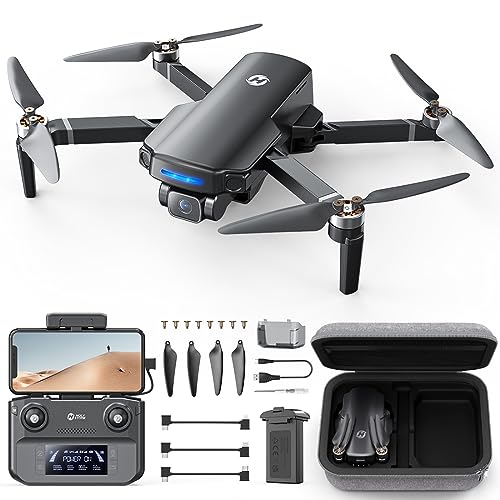
Holy Stone HS720G
★★★★★ 4.3 / 5 best budget
The HS720G is a beginner-friendly drone with a 4K camera and GPS. It offers a 26-minute flight time and a 5GHz transmission. Its brushless motors provide stable flight. Owners report decent image quality for the price.
Camera 4KFlight time 26 minTransmission 5GHzMotors Brushless
- Very affordable
- GPS features for stable hovering
- Easy to fly for beginners
- No obstacle avoidance
- Image quality not comparable to DJI
DJI Avata 2
★★★★★ 4.7 / 5 best for FPV flying
The Avata 2 is an FPV drone with a 1/1.3-inch sensor and 4K/60fps video. It features a 4K/100fps slow-motion mode. Its 23-minute flight time is decent for FPV. The included motion controller simplifies flying.
Sensor 1/1.3-inch CMOSVideo 4K/60fpsFlight time 23 minController Motion controller included
- Immersive FPV experience
- Beginner-friendly motion control
- Good image stabilization
- Short flight time
- Requires practice for manual mode
Best for: best for FPV flying
What to look for in a camera drone
Start with the camera sensor. Larger sensors capture more light and detail. Check video resolution and frame rates. Flight time matters for longer shoots. Obstacle avoidance prevents crashes. Weight determines registration rules. Consider transmission range for how far you'll fly.
Camera quality and sensor size
A 1/2.3-inch sensor is common in budget drones. The 1/1.3-inch sensors in DJI Mini models offer better low-light performance. Professional drones use 1-inch or larger sensors. Larger sensors also provide more dynamic range. For social media, 4K is enough.
Flight time and battery
Most consumer drones fly 20 to 40 minutes per battery. Longer flight times reduce the need to swap batteries. Battery cost is a factor. Some drones have smart batteries that show remaining life. Always carry spares for extended sessions.
Obstacle avoidance and safety
Obstacle sensing helps avoid collisions. It ranges from downward-only to omnidirectional. More sensors mean safer flights, especially for beginners. But they add weight and cost. Even with sensors, fly in open areas.
Portability and weight
Drones under 250 grams often avoid registration in many countries. They are easier to travel with. Larger drones offer better cameras but need more space. Foldable designs are convenient. Check the drone's folded dimensions.
Smart features and app
Look for features like QuickShots, return-to-home, and follow-me. These simplify flying and capture. The app should be intuitive and stable. Some drones support waypoint missions. These features vary by brand and model.
Questions people ask
What is the best camera drone for beginners?
The DJI Mini 3 is a great start. It is light, easy to fly, and has good image quality. Its lack of obstacle avoidance means you should practice in open spaces.
Do I need a license to fly a camera drone?
It depends on your country and the drone's weight. Drones under 250 grams often need no registration for recreational use. For commercial use, you may need a license. Always check local regulations.
How long do drone batteries last?
Most consumer drones fly 20 to 40 minutes on a full charge. Actual time varies with wind, speed, and camera use. Cold weather reduces battery performance. Carry extra batteries for longer sessions.
Can I fly a drone in the rain?
Most consumer drones are not waterproof. Rain can damage electronics and affect flight. Check the drone's IP rating. If it's not rated, avoid flying in wet conditions.
What is the difference between DJI Mini 4 Pro and Air 3?
The Mini 4 Pro is lighter and has a single camera. The Air 3 has two cameras and a longer flight time. The Mini 4 Pro is more portable. The Air 3 offers more creative flexibility.
Is a 4K camera necessary for a drone?
4K gives you high-resolution footage that can be cropped. It is useful for professional work. For casual use, 1080p may be enough. Most modern drones offer 4K as standard.
How far can a camera drone fly?
Transmission range varies from a few hundred meters to over 10 kilometers. Higher-end models have longer ranges. Always maintain a visual line of sight for safety. Range is also affected by obstacles and interference.
What is the best camera drone for photography?
The DJI Mavic 3 Classic excels for stills. Its large sensor and Hasselblad color science produce excellent photos. The Autel EVO Lite+ is also strong. Consider your budget and needs.
Can I use a drone for real estate photography?
Yes, many real estate agents use drones. A drone with a good camera and stable flight is ideal. The DJI Air 3 or Mavic 3 Classic work well. Ensure you have the required licenses.
What is the best budget camera drone?
The Holy Stone HS720G is a solid budget pick. It offers 4K video and GPS for under 200 dollars. But image quality and features are limited. For a bit more, the DJI Mini 3 is better.
The bottom lineSo which one?
For most people, the DJI Mini 4 Pro is the best balance of size, features, and image quality. If you need dual cameras, the Air 3 is worth the extra money. Budget buyers can start with the Holy Stone HS720G.