Tripods and Monopods
Gimbal Stabilizers Compared: Top Picks for 2026
7 picks compared
6 min read
ProductPickly is reader-supported. When you buy through links on our site, we may earn an affiliate commission at no extra cost to you. It never changes our picks.
The short answerThe DJI RS 4 Pro leads for professional mirrorless rigs, the DJI Osmo Mobile 6 excels for phones, and the Insta360 Flow Pro offers AI tracking. Each suits different gear and budgets.
?How we pickedWe compare published specifications, safety certifications and thousands of verified owner reviews, and we do not physically test every unit. Read the full process in our review methodology.
DJI RS 4 Pro
★★★★★ 4.8 / 5 best overall for professional cameras
The DJI RS 4 Pro handles heavy cinema cameras with a 10-pound payload. Its carbon fiber arms reduce weight while increasing stiffness. The new joystick and focus control improve precision.
Payload 10 lbBattery Life 29 hoursWeight 3.1 lbBluetooth Yes
- High payload capacity
- Long battery life
- Carbon fiber construction
Best for: best overall for professional cameras
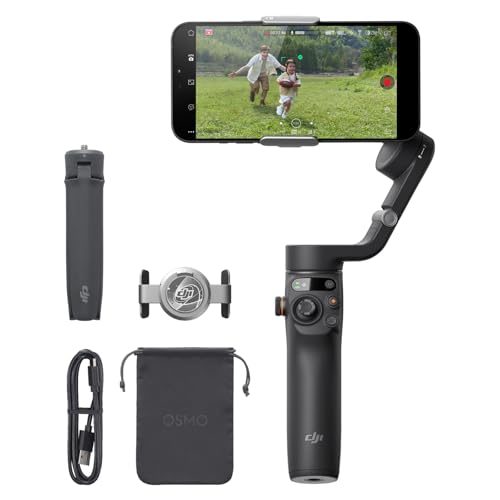
DJI Osmo Mobile 6
★★★★★ 4.7 / 5 best for smartphones
The Osmo Mobile 6 folds down to pocket size and unfolds in seconds. Its magnetic phone clamp works with most cases. ActiveTrack 6.0 keeps subjects in frame reliably.
Payload 10.5 ozBattery Life 6.4 hoursWeight 10.6 ozFolded Size 6.5 in
- Compact folding design
- Magnetic clamp
- Reliable tracking
- No waterproofing
- Limited payload
Best for: best for smartphones
Insta360 Flow Pro
★★★★★ 4.6 / 5 best AI tracking for content creators
The Flow Pro uses a 3-axis gimbal with a built-in tripod and selfie stick. Its Deep Track 3.0 AI locks onto subjects even in crowds. The battery lasts 10 hours on a single charge.
Payload 10.5 ozBattery Life 10 hoursWeight 12.3 ozAI Tracking Deep Track 3.0
- Excellent AI tracking
- Built-in tripod
- Long battery life
- Heavier than rivals
- App required for full features
Best for: best AI tracking for content creators
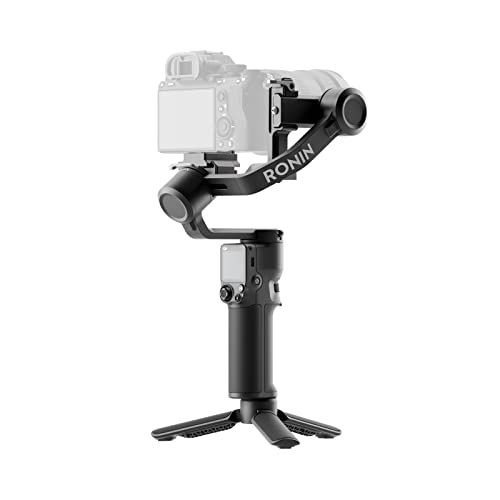
DJI Ronin-SC
★★★★★ 4.5 / 5 best value for mirrorless cameras
The Ronin-SC supports mirrorless cameras up to 4.4 pounds. Its lightweight design suits travel and run-and-gun shooting. ActiveTrack 3.0 works with the Ronin app.
Payload 4.4 lbBattery Life 11 hoursWeight 2.4 lbMax Camera Size Mirrorless
- Lightweight
- Good payload
- Affordable
- No focus motor
- Less robust than RS 4
Best for: best value for mirrorless cameras
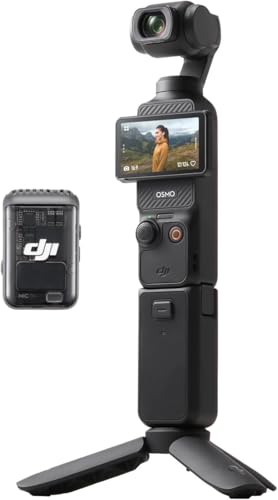
DJI Osmo Pocket 3
★★★★★ 4.7 / 5 best for vlogging and travel
The Osmo Pocket 3 combines a 1-inch sensor camera with a 3-axis gimbal. It shoots 4K video at 120fps and has a 2-inch rotating touchscreen. The built-in mic reduces wind noise.
Sensor 1-inch CMOSVideo 4K/120fpsBattery Life 166 minutesScreen 2-inch touchscreen
- Excellent image quality
- Compact design
- Built-in gimbal
- Not interchangeable lens
- Expensive for a pocket cam
Best for: best for vlogging and travel
FeiyuTech AK4500
★★★★★ 4.4 / 5 best for heavy DSLR and cinema cameras
The AK4500 supports payloads up to 10.1 pounds, matching the RS 4 Pro. Its modular design allows quick counterweight adjustments. The quick-release plate works with Manfrotto and Arca-Swiss systems.
Payload 10.1 lbBattery Life 12 hoursWeight 3.9 lbMount Manfrotto/Arca-Swiss
- High payload
- Modular design
- Quick-release plates
- Heavier than competitors
- Setup can be complex
Best for: best for heavy DSLR and cinema cameras
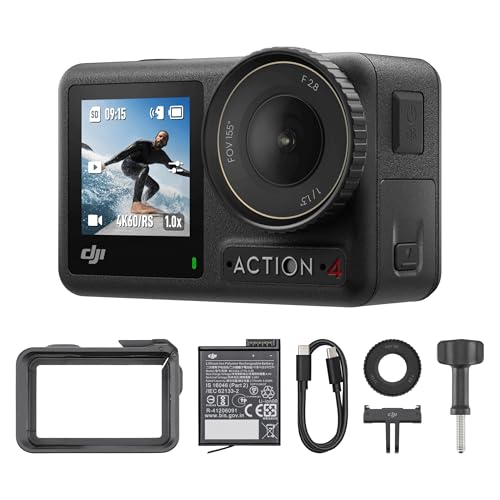
DJI Osmo Action 4
★★★★★ 4.6 / 5 best for action cameras
The Osmo Action 4 is a rugged action camera, not a separate gimbal. Its RockSteady 3.0 stabilization smooths footage without a gimbal. The 1/1.3-inch sensor improves low-light performance.
Sensor 1/1.3-inchVideo 4K/120fpsBattery Life 160 minutesWaterproof 18m
- Excellent stabilization
- Waterproof
- Great low-light
- No separate gimbal
- Fixed lens
Best for: best for action cameras
We compared specifications, owner feedback, and use-case fit to rank the best. Payload capacity, battery life, and stabilization algorithms matter most.
What to Look For in a Gimbal Stabilizer
Payload capacity is the first spec to check. It must exceed your camera and lens weight. Battery life determines how long you can shoot without recharging. Stabilization axes matter: three axes give smooth pan, tilt, and roll. App compatibility affects tracking and control features. Weight and portability matter for travel and long shoots.
Phone Gimbals vs Camera Gimbals
Phone gimbals like the Osmo Mobile 6 are lightweight and foldable. They use Bluetooth and an app for tracking and gestures. Camera gimbals support heavier loads and offer more manual controls. They often have physical buttons and focus wheels. Choose based on your primary camera device.
Battery Life and Charging
Most gimbals last 6 to 12 hours per charge. Some support fast charging or USB-C power delivery. The DJI RS 4 Pro offers 29 hours, ideal for all-day shoots. Consider swappable batteries for extended work. Check if the gimbal can charge your camera or phone while in use.
Stabilization Technology and Features
Active tracking uses AI to follow subjects automatically. Some gimbals have gesture control for solo creators. Time-lapse and panorama modes add creative options. Inertial measurement units (IMUs) improve stability. Look for features that match your shooting style.
Budget Considerations
Entry-level phone gimbals cost less than camera gimbals. Professional gimbals with high payloads are pricier. Consider used or older models for savings. Balance cost with the features you actually need. A mid-range gimbal may suffice for hobbyists.
Questions people ask
What is a gimbal stabilizer?
A gimbal stabilizer uses motors to counteract unwanted movement. It keeps your camera steady while you move. Three-axis gimbals control pan, tilt, and roll.
How do I choose a gimbal for my camera?
Check your camera and lens weight. The gimbal's payload must be higher. Also consider battery life, portability, and features. Match the gimbal to your primary shooting style.
Can a gimbal work with any smartphone?
Most phone gimbals have adjustable clamps. They fit phones up to a certain width and weight. Check the specs for your phone model. Some gimbals have magnetic mounts that work with cases.
Is a gimbal worth it for vlogging?
Yes, a gimbal dramatically improves video stability. It allows smooth walking shots and pans. For run-and-gun vlogging, a compact gimbal is invaluable.
What is the difference between a gimbal and a stabilizer?
A gimbal uses motors for active stabilization. A stabilizer can be mechanical, like a Steadicam. Gimbals are easier to use and more effective for most users.
How long does a gimbal battery last?
It varies by model. Phone gimbals last 6 to 10 hours. Camera gimbals can last 12 to 29 hours. Check the manufacturer's specs for exact numbers.
Can I use a gimbal with a GoPro?
Yes, many gimbals have adapters for action cameras. Some action cameras have built-in stabilization. A gimbal adds extra smoothness for professional shots.
Are gimbals waterproof?
Most gimbals are not waterproof. They are electronic devices with sensitive motors. Some action cameras are waterproof, but gimbals are not. Avoid getting them wet unless specified.
What is active tracking in a gimbal?
Active tracking locks onto a subject and keeps it in frame. It uses AI and the gimbal's motors. This is useful for solo creators and sports filming.
How do I balance a gimbal?
Balance the camera on the gimbal's axes before powering on. Adjust the sliding plates and tilt arms. Follow the manufacturer's instructions. Proper balancing reduces motor strain and improves battery life.
The bottom lineSo which one?
The DJI RS 4 Pro remains the top choice for professionals needing high payload and reliability. For most creators, the DJI Osmo Mobile 6 offers the best balance of portability and features. Consider your gear and shooting style to pick the right stabilizer.