Lenses
Best Macro Lenses for Sharp Close-Ups
7 picks compared
6 min read
ProductPickly is reader-supported. When you buy through links on our site, we may earn an affiliate commission at no extra cost to you. It never changes our picks.
The short answerThe Canon RF 100mm f/2.8L Macro IS USM leads for sharpness and stabilization. The Laowa 100mm f/2.8 2x Ultra Macro APO offers true 2:1 magnification on a budget. For Sony users, the Sony FE 90mm f/2.8 Macro G OSS balances resolution and handling.
?How we pickedWe compare published specifications, safety certifications and thousands of verified owner reviews, and we do not physically test every unit. Read the full process in our review methodology.
Canon RF 100mm f/2.8L Macro IS USM
★★★★★ 4.8 / 5 best overall for Canon mirrorless
This L-series lens delivers exceptional sharpness with a floating focus system. The Hybrid IS compensates for both angular and shift shake, aiding handheld close-ups. It also doubles as a superb portrait lens with its 100mm focal length.
Focal Length 100mmAperture f/2.8Magnification 1.4xImage Stabilization Hybrid IS
- Outstanding sharpness at all apertures
- Effective Hybrid IS for handheld shots
- Weather-sealed build
Best for: best overall for Canon mirrorless
Laowa 100mm f/2.8 2x Ultra Macro APO
★★★★★ 4.6 / 5 best value for 2:1 magnification
This manual-focus lens offers a true 2:1 magnification ratio, doubling the life-size reproduction of typical macro lenses. The apochromatic design minimizes chromatic aberration for clean colors. It is available for Canon EF, Nikon F, Sony E, and other mounts.
Focal Length 100mmAperture f/2.8Magnification 2:1Autofocus Manual only
- Exceptional 2:1 magnification
- Apochromatic correction for sharp images
- Compact and lightweight
- No autofocus
- Focus ring is stiff
Best for: best value for 2:1 magnification
Sony FE 90mm f/2.8 Macro G OSS
★★★★★ 4.8 / 5 best for Sony full-frame
This G-series lens pairs a 90mm focal length with Optical SteadyShot image stabilization. It delivers high resolution and pleasing bokeh, making it a favorite for portraits as well. The focus range limiter speeds up autofocus for close-up work.
Focal Length 90mmAperture f/2.8Magnification 1:1Image Stabilization OSS
- Excellent sharpness and contrast
- Effective OSS for handheld shooting
- Fast and accurate autofocus
- Focus ring is electronic, not mechanical
- Lens hood is shallow
Best for: best for Sony full-frame
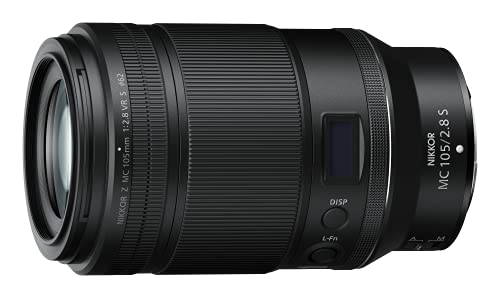
Nikon Z MC 105mm f/2.8 VR S
★★★★★ 4.7 / 5 best for Nikon Z shooters
This S-line lens offers exceptional resolution and Nano Crystal Coat to reduce flare. Vibration Reduction helps stabilize handheld shots, and the customizable control ring adds versatility. It is a top choice for Nikon mirrorless users.
Focal Length 105mmAperture f/2.8Magnification 1:1Image Stabilization VR
- Superb sharpness across the frame
- Effective VR for low-light close-ups
- Dust and drip resistant
Best for: best for Nikon Z shooters
Canon EF 100mm f/2.8L Macro IS USM
★★★★★ 4.8 / 5 best for Canon DSLR users
This EF-mount lens brings L-series quality to DSLR shooters. Its Hybrid IS and ring-type USM autofocus make it versatile. The 100mm focal length provides a comfortable working distance for insects and flowers.
Focal Length 100mmAperture f/2.8Magnification 1:1Image Stabilization Hybrid IS
- Excellent build and optics
- Hybrid IS for handheld macro
- Fast, quiet autofocus
- No weather sealing
- Heavier than some rivals
Best for: best for Canon DSLR users
Tamron 90mm f/2.8 Di III Macro VXD
★★★★★ 4.6 / 5 best for Sony APS-C and full-frame
This Tamron lens offers a 1:1 magnification ratio and a compact, lightweight design. The VXD linear motor provides quick and quiet autofocus. It also features a weather-sealed construction for outdoor use.
Focal Length 90mmAperture f/2.8Magnification 1:1Autofocus VXD linear motor
- Compact and light
- Fast and quiet autofocus
- Weather-sealed
- No image stabilization
- Plastic lens hood
Best for: best for Sony APS-C and full-frame
Laowa 60mm f/2.8 2x Ultra-Macro APO
★★★★★ 4.5 / 5 best budget 2:1 macro for APS-C
This manual-focus lens offers 2:1 magnification at a budget price. It is designed for APS-C sensors, giving a 90mm equivalent field of view. The APO design reduces color fringing for sharp results.
Focal Length 60mmAperture f/2.8Magnification 2:1Autofocus Manual only
- Very affordable for 2:1 macro
- Compact and light
- Good sharpness for the price
- Manual focus only
- Short working distance
Best for: best budget 2:1 macro for APS-C
Our picks span Canon, Nikon, Sony, and third-party brands. Each one excels in a different niche, from studio work to handheld nature shots. We prioritized optical quality, build, and value for the price.
Understanding Magnification Ratio
Macro lenses are defined by their magnification ratio. A 1:1 ratio means the lens projects a life-size image onto the sensor. Many lenses offer 1:1, but some go further to 2:1 for double life-size. Higher magnification lets you capture smaller details, but it also reduces working distance. For most insects, 1:1 is sufficient, but 2:1 opens up new creative possibilities.
Focal Length and Working Distance
Focal length determines how close you can get to your subject. A 60mm lens requires you to be very close, which can scare skittish insects. A 100mm or 105mm lens offers more working distance, making it easier to photograph live subjects. Longer focal lengths also compress perspective, which can be pleasing. Choose a longer lens if you shoot insects or other wary creatures.
Autofocus vs Manual Focus
Most modern macro lenses have autofocus, but manual focus is often preferred for precise control. Autofocus can hunt when shooting at close distances, so many macro photographers switch to manual. Lenses like the Laowa are manual-only, which keeps costs down. If you shoot static subjects, manual focus is fine. For handheld work, a lens with fast autofocus and stabilization helps.
Image Stabilization and Tripod Use
Image stabilization (IS, VR, OSS) is valuable for handheld macro shots. It compensates for camera shake, which is magnified at close distances. However, for extreme close-ups, a tripod is still recommended. Stabilization does not freeze subject movement. If you plan to use a tripod, you can save money by choosing a lens without IS, like the Laowa models.
Questions people ask
What is the best macro lens for beginners?
The Laowa 60mm f/2.8 2x Ultra-Macro APO is a budget-friendly choice for APS-C shooters. It offers 2:1 magnification and sharp optics, but you must focus manually. If you prefer autofocus, the Tamron 90mm f/2.8 Di III VXD is a good starting point for Sony users.
Can I use a macro lens for portraits?
Yes, many macro lenses double as excellent portrait lenses. Their sharpness and beautiful bokeh are ideal for headshots. The Canon RF 100mm f/2.8L and Sony FE 90mm f/2.8 are popular choices for both macro and portrait work.
What is the difference between 1:1 and 2:1 magnification?
1:1 magnification means the subject is reproduced at life size on the sensor. 2:1 means it is twice life size, allowing you to capture even smaller details. Lenses with 2:1, like the Laowa 100mm, let you fill the frame with tiny subjects.
Is image stabilization necessary for macro photography?
It helps, especially for handheld shots. Stabilization reduces the effect of camera shake, which is amplified at high magnification. However, for static subjects on a tripod, you can do without it. Lenses like the Laowa 100mm lack IS but are still popular for tripod work.
Which macro lens has the longest working distance?
The Canon RF 100mm f/2.8L and Nikon Z 105mm f/2.8 VR S offer around 15 cm of working distance at 1:1. The Laowa 100mm provides about 18 cm at 2:1, which is generous for a 2x lens. Longer working distance is better for skittish insects.
Can I use a macro lens with a teleconverter?
Yes, but it reduces light and may affect autofocus speed. Some lenses, like the Canon RF 100mm, work with extenders, but you lose a stop of light. For extreme magnification, a dedicated 2:1 lens is often better than a teleconverter.
What is the best macro lens for Canon EF mount?
The Canon EF 100mm f/2.8L Macro IS USM is the top choice. It offers L-series build, Hybrid IS, and excellent sharpness. It works well on both DSLRs and mirrorless with an adapter.
Are macro lenses worth the price?
Yes, if you need extreme close-up capability. They are sharp, versatile, and hold their value well. A good macro lens can last for decades. The Laowa 60mm offers a budget entry point, while premium lenses like the Canon RF 100mm justify their cost with superior optics.
The bottom lineSo which one?
For most photographers, the Canon RF 100mm f/2.8L Macro IS USM is the best all-around choice for Canon mirrorless. If you want 2:1 magnification without breaking the bank, the Laowa 100mm f/2.8 2x Ultra Macro APO is a standout. Sony users should consider the Sony FE 90mm f/2.8 Macro G OSS for its balance of features.