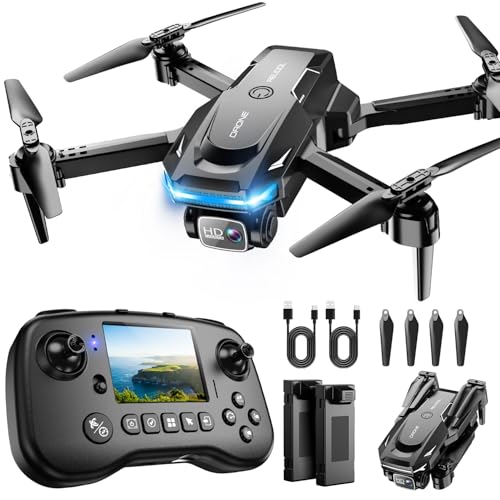
Drones and Accessories
Best Mini Drones: Top Picks and Buying Guide
7 picks compared
6 min read
ProductPickly is reader-supported. When you buy through links on our site, we may earn an affiliate commission at no extra cost to you. It never changes our picks.
The short answerThe DJI Mini 4 Pro leads for camera quality and safety, the Potensic ATOM is the best value for most flyers, and the Holy Stone HS440 is the top budget pick for beginners.
?How we pickedWe compare published specifications, safety certifications and thousands of verified owner reviews, and we do not physically test every unit. Read the full process in our review methodology.
DJI Mini 4 Pro
★★★★★ 4.8 / 5 Best overall
The DJI Mini 4 Pro offers a 1/1.3-inch CMOS sensor that captures 4K/60fps video with vertical shooting mode. It has omnidirectional obstacle sensing, making it one of the safest mini drones. With a 34-minute max flight time and O4 video transmission, it suits serious creators.
Weight <249 gCamera 4K/60fps, 1/1.3-inch CMOSFlight Time 34 minutesObstacle Sensing Omnidirectional
- Excellent camera quality
- Top-tier safety features
- Compact and portable
- Higher price
- Requires DJI account
Potensic ATOM
★★★★★ 4.6 / 5 Best value
The Potensic ATOM features a 4K camera with a 1/3-inch Sony sensor and three-axis gimbal. It offers 32 minutes of flight time and a transmission range of up to 6 kilometers. The drone includes a smart return-to-home and GPS, making it reliable for beginners.
Weight 249 gCamera 4K, 1/3-inch Sony sensorFlight Time 32 minutesTransmission Range 6 km
- Excellent value for features
- Stable gimbal
- Long flight time
- No obstacle avoidance
- App can be finicky
Holy Stone HS440
★★★★★ 4.4 / 5 Best budget
The Holy Stone HS440 is a foldable drone with a 1080p camera and a 60-minute total flight time (two batteries). It includes features like altitude hold and one-key takeoff/landing, ideal for novices. The drone has a 300-meter control range and comes with spare parts.
Weight 300 gCamera 1080pFlight Time 30 minutes per batteryControl Range 300 m
- Very affordable
- Includes two batteries
- Easy to fly
- No gimbal
- Short control range
DJI Mini 3
★★★★★ 4.7 / 5 Best for beginners
The DJI Mini 3 offers a 1/1.3-inch sensor that shoots 4K/30fps video and 12MP photos. It has a 38-minute flight time and supports vertical shooting, perfect for social media. The drone includes beginner-friendly features like return-to-home and GPS.
Weight <249 gCamera 4K/30fps, 1/1.3-inch sensorFlight Time 38 minutesObstacle Sensing Downward only
- Easy to operate
- Great battery life
- Vertical video mode
- No obstacle avoidance
- Lacks advanced features
Best for: Best for beginners
Autel EVO Nano+
★★★★★ 4.5 / 5 Best for photography
The Autel EVO Nano+ features a 1/1.28-inch CMOS sensor with RYYB filter, producing excellent low-light images. It captures 4K/30fps video and has a 28-minute flight time. The drone includes 3-way obstacle avoidance and a 10 km transmission range.
Weight 249 gCamera 4K/30fps, 1/1.28-inch sensorFlight Time 28 minutesObstacle Sensing 3-way
- Outstanding camera in low light
- Compact and foldable
- Good safety features
- Shorter flight time
- App has fewer features
Best for: Best for photography
Ryze Tello
★★★★★ 4.3 / 5 Best for kids
The Ryze Tello is a tiny drone weighing 80 grams, perfect for indoor flights. It has a 5MP camera that captures 720p video and a 13-minute flight time. Programmable via Scratch, it also teaches coding basics.
Weight 80 gCamera 720p, 5MPFlight Time 13 minutesControl Range 100 m
- Very safe for kids
- Programmable
- Low cost
Hubsan Zino Mini Pro
★★★★★ 4.4 / 5 Best for travel
The Hubsan Zino Mini Pro is a 249-gram drone with a 4K camera and 3-axis gimbal. It offers 40 minutes of flight time and 8 km transmission range. The drone has obstacle avoidance and comes with a carrying case.
Weight 249 gCamera 4K, 3-axis gimbalFlight Time 40 minutesTransmission Range 8 km
- Long flight time
- Compact design
- Includes carrying case
- Brand less established
- App needs improvement
Best for: Best for travel
What to look for in a mini drone
Start with weight. Drones under 250 grams often skip registration in many countries. Check camera specs if you plan to shoot photos or video. Flight time matters, but most mini drones average 20 to 30 minutes. Look for safety features like GPS and return-to-home. Consider controller range and battery charging options.
Camera quality and gimbal stabilization
A gimbal keeps the camera steady during flight. Without it, footage becomes shaky. Sensor size affects low-light performance. Larger sensors capture more light and detail. Check if the camera supports 4K video and what frame rates. Some drones offer vertical shooting for social media.
Flight time and battery considerations
Mini drones typically fly 15 to 40 minutes per battery. Longer flight times reduce the need to swap batteries. Spare batteries are useful for extended sessions. Charging time also varies. Some drones support fast charging. Consider the total cost of extra batteries.
Safety features and regulations
GPS and return-to-home prevent lost drones. Obstacle sensors help avoid crashes, but they add cost. Always follow local drone laws. Many countries require registration for drones over 250 grams. Check if your drone needs a license. Fly in open areas away from people and airports.
Questions people ask
What is the best mini drone for beginners?
The DJI Mini 3 is a top choice for beginners due to its easy controls and safety features. The Holy Stone HS440 is a more affordable option with similar ease of use.
How long do mini drone batteries last?
Most mini drones fly between 15 and 40 minutes per battery. The DJI Mini 3 offers up to 38 minutes, while the Ryze Tello lasts about 13 minutes.
Do I need a license to fly a mini drone?
In many countries, drones under 250 grams do not require registration. However, always check local regulations. Some areas still require a license for any drone use.
Can mini drones fly in windy conditions?
Mini drones are light and can be affected by wind. Most can handle winds up to 10-15 mph. The DJI Mini 4 Pro has better stability due to its advanced sensors.
What is the difference between a mini drone and a toy drone?
Mini drones are typically under 250 grams and have better cameras and flight features. Toy drones are often smaller, cheaper, and lack GPS or gimbal stabilization.
Are mini drones good for photography?
Yes, many mini drones like the Autel EVO Nano+ and DJI Mini 4 Pro offer excellent camera quality. They can capture 4K video and high-resolution photos.
How far can a mini drone fly?
Transmission range varies. Budget drones like the Holy Stone HS440 reach about 300 meters. High-end models like the Potensic ATOM can fly up to 6 kilometers.
What is the best mini drone for kids?
The Ryze Tello is ideal for kids due to its small size and low cost. It is safe to fly indoors and has programmable features for learning.
Can I fly a mini drone indoors?
Yes, many mini drones are suitable for indoor flight. The Ryze Tello is specifically designed for indoor use. Ensure you have enough space and avoid obstacles.
Is a mini drone worth it?
Mini drones offer a great balance of portability and performance. They are perfect for travel and casual flying. For serious photography, invest in a model with a good camera and gimbal.
The bottom lineSo which one?
The DJI Mini 4 Pro is the best overall for its camera and safety, but the Potensic ATOM offers the best value. For beginners, the DJI Mini 3 is a solid choice. Consider your budget and intended use to pick the right mini drone.