Camera Accessories
UV Filters Compared: Top Picks for Lenses
7 picks compared
6 min read
ProductPickly is reader-supported. When you buy through links on our site, we may earn an affiliate commission at no extra cost to you. It never changes our picks.
The short answerThe best UV filters are the Hoya HDX UV, B+W XS-Pro UV, and the K&F Concept Nano-X. Each offers strong protection and clear optics. The Hoya leads for durability, the B+W for image quality, and the K&F for budget.
?How we pickedWe compare published specifications, safety certifications and thousands of verified owner reviews, and we do not physically test every unit. Read the full process in our review methodology.
Hoya HDX UV
★★★★★ 4.8 / 5 Best Overall
The Hoya HDX UV is built with a hardened glass that resists scratches and impacts. Its eight-layer coating reduces reflections and is easy to clean. Owners report it does not affect image sharpness.
Coating 8-layer multi-coatingFrame AluminumThickness 3mmWarranty Limited lifetime
- Very durable
- Excellent light transmission
- Easy to clean
- Pricier than some rivals
- Can be hard to find in odd sizes
B+W XS-Pro UV
★★★★★ 4.7 / 5 Best for Image Quality
The B+W XS-Pro UV uses Schott glass with a nano coating that minimizes flare and ghosting. It is brass-framed to prevent binding on lenses. Photographers often note its neutral color cast.
Glass SchottCoating Nano multi-coatingFrame BrassFilter thread Standard sizes
- Superb optical clarity
- Brass frame avoids jamming
- Thin profile for wide angles
- Expensive
- May be overkill for casual use
Best for: Best for Image Quality
K&F Concept Nano-X
★★★★★ 4.6 / 5 Best Value
The K&F Concept Nano-X offers a 28-layer nano coating at a low price. It is lightweight and includes a cleaning cloth. Users say it performs well for general protection.
Coating 28-layer nanoFrame AluminumWeight Varies by sizeIncluded Cleaning cloth
- Very affordable
- Good coating for the price
- Thin frame
- Not as scratch-resistant
- Some sizes may have vignetting
Tiffen 52mm UV Protection
★★★★★ 4.5 / 5 Best Budget
The Tiffen UV Protection filter is a basic, no-frills option. It uses a single-layer coating to reduce reflections. It is a popular choice for hobbyists on a tight budget.
Coating Single-layerFrame AluminumGlass OpticalSize 52mm
- Very cheap
- Does the job
- Easy to find
- More prone to flare
- Less durable coating
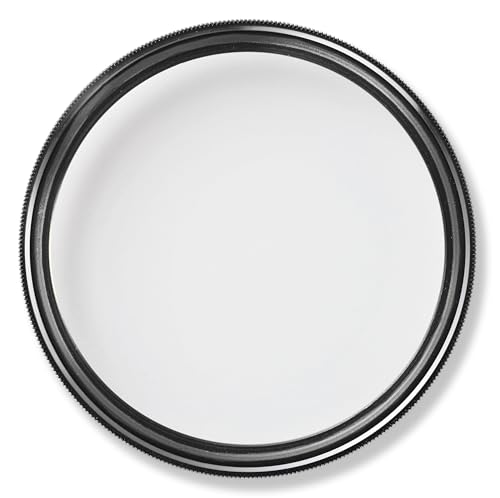
Zeiss UV
★★★★★ 4.7 / 5 Best for Wide-Angle Lenses
The Zeiss UV filter features a slim profile that minimizes vignetting on wide-angle lenses. Its T* coating reduces reflections effectively. It is a premium choice for landscape photographers.
Coating T* anti-reflectiveFrame AluminumThickness ThinCompatibility Wide-angle
- Minimal vignetting
- Excellent coating
- High light transmission
- Premium price
- Limited size availability
Best for: Best for Wide-Angle Lenses
Nikon 77mm UV
★★★★★ 4.6 / 5 Best for Nikon Lenses
The Nikon 77mm UV filter is designed to match Nikon lenses. It has a multi-coated glass that resists smudges. Owners appreciate the secure fit and consistent quality.
Coating Multi-coatedFrame AluminumSize 77mmCompatibility Nikon lenses
- Perfect fit on Nikon
- Good build
- Reputable brand
- Only for 77mm threads
- Not the cheapest
Best for: Best for Nikon Lenses
Kenko Pro1D UV
★★★★★ 4.4 / 5 Best for Beginners
The Kenko Pro1D UV is easy to use and clean. It has a digital multi-coating that reduces ghosting. It is a solid entry-level filter for learning photographers.
Coating Digital multi-coatingFrame AluminumGlass OpticalSizes Multiple
- Simple to attach
- Good value
- Reduces flare
- Not as durable
- May cause slight color cast
Best for: Best for Beginners
We also considered owner feedback on durability and cleaning ease. No filter is perfect, and each has trade-offs in price and performance. Our picks cover different needs, from budget to professional use.
What to Look For
Start with the coating. Multi-coated filters reduce reflections and flare better than single-coated ones. Check the frame material; brass is less likely to stick. Thickness matters for wide-angle lenses, where thick frames cause vignetting. Consider the glass quality, as it affects sharpness. Finally, think about durability if you shoot outdoors often.
UV Filters vs Clear Filters
Clear filters offer no UV blocking but protect the lens. UV filters can reduce haze in bright conditions, though digital sensors are less sensitive to UV. Both are transparent, so the choice is often about extra protection. Some photographers prefer clear filters for pure image quality. UV filters are still popular for their dual function.
How to Choose the Right Size
Check your lens barrel for the filter thread size, usually marked with a number. Common sizes are 52mm, 58mm, 67mm, 72mm, and 77mm. Using the wrong size will not fit. You can use a step-up ring to adapt larger filters to smaller lenses, but that may cause vignetting. Always match the filter size to your lens.
When to Skip a UV Filter
If you use a lens hood, you already have some protection. In low-light or night photography, any extra glass can cause flare. Some photographers skip UV filters to maximize image quality. For expensive lenses, a filter is a cheap insurance. But for kit lenses, it might not be worth the cost.
Questions people ask
What does a UV filter do?
A UV filter blocks ultraviolet light and protects your lens from scratches and dust. It can also reduce haze in outdoor shots. Most photographers use it as a protective layer.
Is a UV filter worth it?
It depends on your needs. If you shoot in dusty or wet conditions, it can save your lens. For critical image quality, you might skip it. Many owners find it a worthwhile investment.
Can a UV filter affect image quality?
Any filter can reduce sharpness or cause flare. High-quality filters with multi-coating minimize these effects. Cheap filters may degrade images noticeably.
What is the best UV filter brand?
Hoya, B+W, and Zeiss are top brands. Each offers excellent build and optical quality. K&F Concept is a good budget alternative.
How do I know which size UV filter to buy?
Look for the diameter marked on your lens, like 52mm or 77mm. It is usually on the front ring. You can also check your camera manual.
Should I use a UV filter on a wide-angle lens?
Yes, but choose a slim filter to avoid vignetting. Thick frames can block light at the corners. Our pick for wide-angle is the Zeiss UV.
Are UV filters useful for digital cameras?
Digital sensors are less sensitive to UV, so the main benefit is protection. Some photographers still see reduced haze. It is a personal choice.
Can I use a UV filter with a lens hood?
Yes, most filters fit under a hood. The hood may add extra protection from flare. Just ensure the hood does not touch the filter.
What is the difference between UV and clear filters?
UV filters block ultraviolet light, while clear filters only protect. Both are transparent. UV filters may slightly reduce haze, but clear filters are simpler.
How do I clean a UV filter?
Use a microfiber cloth and lens cleaning solution. Gently wipe in circular motions. Avoid harsh chemicals that can damage the coating.
The bottom lineSo which one?
For most photographers, the Hoya HDX UV offers the best balance of durability and clarity. If you need the highest optical quality, the B+W XS-Pro UV is worth the extra cost. Budget buyers will find the K&F Concept Nano-X a solid choice.