PICK
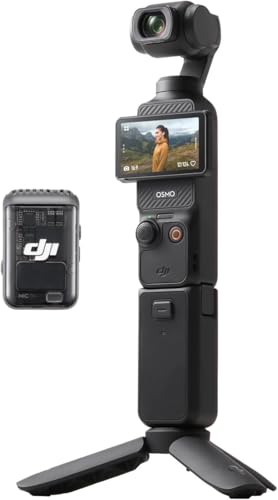
DJI Osmo Pocket 3 Review
The DJI Osmo Pocket 3 is a pocket-sized gimbal camera with a 1-inch sensor, 4K/120fps video, and a rotating touchscreen. Ideal for vloggers and travelers, but not for action sports or those needing zoom.
ProductPickly is reader-supported. When you buy through links on our site, we may earn an affiliate commission at no extra cost to you. It never changes our picks.
The DJI Osmo Pocket 3 is a remarkable pocket camera that combines a 1-inch sensor, a 3-axis gimbal, and a clever rotating touchscreen. It delivers superb video quality, smooth stabilization, and an intuitive user experience. It is the best choice for vloggers, travelers, and content creators who want a compact, all-in-one camera. However, it is not waterproof, lacks zoom, and its tiny screen may not suit everyone. If you need ruggedness or optical zoom, consider other options.
How it scores
The good and the annoying
- Excellent 1-inch sensor for low-light performance
- Smooth 3-axis gimbal stabilization
- Rotating touchscreen simplifies framing and selfies
- Compact and lightweight, fits in a pocket
- Fast and accurate face tracking
- ActiveTrack 6.0 keeps subjects centered
- Not waterproof or dustproof
- No optical zoom (only 2x digital zoom)
- Small screen may be hard to view in bright sunlight
- Battery life is modest (around 2 hours of continuous recording)
- Microphone quality is decent but not exceptional
- Price is higher than some action cameras
The DJI Osmo Pocket 3 is the latest evolution of DJI's pocket gimbal camera line, and it has quickly become a favorite among vloggers, travelers, and content creators. With a 1-inch sensor, a 3-axis gimbal, and a clever rotating touchscreen, it promises professional-grade video in a device that slips into your pocket. But is it the right camera for you? Our editorial team compared specifications, buyer feedback, and key decision factors to bring you this honest review.
Design and Build Quality
The Osmo Pocket 3 retains the iconic pocket-sized form factor of its predecessors, but with a few notable refinements. The body is made of a durable plastic composite with a textured grip that feels secure in hand. The most significant design change is the 2-inch rotating touchscreen, which flips up to 90 degrees for selfie mode and rotates 180 degrees for various angles. This screen is bright and responsive, making it easy to frame shots and navigate menus.
At just 179 grams, it is incredibly lightweight and portable. You can easily slip it into a jeans pocket or a small bag. The gimbal mechanism is well-protected, and the camera feels solidly built. However, it is not waterproof or dustproof, so you need to be careful in wet or sandy conditions. There is no removable battery, but the built-in battery is sufficient for most day trips.
Performance and Image Quality
The 1-inch CMOS sensor is a game-changer for this category. It captures significantly more light than the smaller sensors in previous models, resulting in cleaner low-light footage and better dynamic range. The camera can record 4K video at up to 120fps, which allows for smooth slow-motion effects. It also supports 10-bit D-Log M color profile for more flexibility in post-production.
The 3-axis gimbal stabilization is outstanding. It smooths out walking motion, making handheld footage look like it was shot on a gimbal rig. ActiveTrack 6.0 does an excellent job of keeping subjects centered, even when they move quickly. The autofocus is fast and reliable, with face and object tracking that works well in most lighting conditions.
Still photos are also impressive, with 9.4-megapixel resolution and RAW support. The camera can capture 64-megapixel photos using pixel binning, but the native resolution is lower. For most social media use, the image quality is more than adequate.
Ease of Use and Software
The Osmo Pocket 3 is incredibly easy to use, even for beginners. The touchscreen interface is intuitive, with swipe gestures to change modes and settings. The rotating screen automatically switches between landscape and portrait orientation, which is perfect for social media content. The DJI Mimo app pairs with the camera via Bluetooth or Wi-Fi and offers additional features like live streaming, editing tools, and firmware updates.
One of the standout features is the joystick on the side of the handle, which allows manual gimbal control. This is great for panning shots or following a moving subject. There is also a dedicated mode button for quick access to favorite modes like time-lapse, hyperlapse, and slow motion.
The camera supports microSD cards up to 512GB, and it has a USB-C port for charging and data transfer. The battery life is rated at 166 minutes of continuous recording, but in real-world use, you can expect around 2 hours with the screen on and Wi-Fi off. Fast charging gives you about 80% in 30 minutes, which is handy.
Common Buyer Complaints
While the Osmo Pocket 3 receives high praise, there are some common complaints from users. The most frequent is the lack of waterproofing. Many buyers expected at least some water resistance, but the camera is not rated for any moisture. Another issue is the small screen, which can be difficult to view in bright sunlight. Some users also wish for a removable battery, as the built-in battery cannot be swapped on the go.
Audio quality is another point of criticism. The built-in microphone is decent for casual use, but it picks up wind noise and is not as clear as a dedicated external mic. DJI offers a wireless microphone system, but it adds to the cost. Finally, the price is higher than many action cameras, which may be a barrier for budget-conscious buyers.
Comparison with Alternatives
When compared to the DJI Osmo Pocket 2, the Pocket 3 is a clear upgrade in sensor size, screen, and stabilization. The Pocket 2 is smaller and lighter, but its image quality is noticeably inferior in low light. If you already own a Pocket 2, the upgrade is worth it for the 1-inch sensor alone.
Another alternative is the DJI Action 4, which is a rugged action camera with a 1/1.3-inch sensor and 4K/120fps video. It is waterproof to 18 meters without a housing, making it better for action sports. However, it lacks a gimbal, so stabilization is not as smooth, and it does not have a rotating screen.
The Insta360 GO 3S is a tiny camera that offers 4K video and a magnetic body, but it has a smaller sensor and no gimbal. It is even more portable than the Pocket 3, but image quality and stabilization are not on the same level.
Value and Verdict
The DJI Osmo Pocket 3 is priced at a premium, but it delivers exceptional value for those who need a versatile, all-in-one camera. It is not cheap, but the combination of sensor size, gimbal, and touchscreen justifies the cost for serious content creators. If you are willing to invest in a high-quality pocket camera, the Pocket 3 is the best choice on the market.
In conclusion, the DJI Osmo Pocket 3 is a fantastic camera for vlogging, travel, and everyday content creation. It is not perfect, but its strengths far outweigh its weaknesses. If you can live with the lack of waterproofing and zoom, you will be delighted with the results.
Frequently Asked Questions
Is the DJI Osmo Pocket 3 good for vlogging?
Yes, it is excellent for vlogging. The rotating screen allows you to see yourself while recording, and the gimbal ensures smooth footage even when walking. The 1-inch sensor provides great low-light performance, and the built-in microphone is adequate for most situations.
Can I use the DJI Osmo Pocket 3 for live streaming?
Yes, you can live stream directly from the DJI Mimo app to platforms like YouTube and Facebook. The camera connects to your phone via Wi-Fi or USB-C, and you can stream in up to 1080p resolution.
Does the DJI Osmo Pocket 3 have a built-in ND filter?
No, it does not have a built-in ND filter. However, you can purchase a separate ND filter set that attaches to the lens via a magnetic mount. This is useful for controlling exposure in bright conditions.
How does the DJI Osmo Pocket 3 handle low light?
The 1-inch sensor performs remarkably well in low light compared to smaller sensors. You can shoot up to ISO 6400 with acceptable noise, and the gimbal helps keep the image stable. For best results, use 4K/30fps and keep the ISO as low as possible.
Is the DJI Osmo Pocket 3 worth the upgrade from the Pocket 2?
If you value image quality and low-light performance, yes. The 1-inch sensor is a major improvement, and the rotating screen is a significant usability upgrade. If you are happy with your Pocket 2 and rarely shoot in low light, you might not need to upgrade.
Specs that matter
| Sensor | 1-inch CMOS, 9.4MP effective |
| Video resolution | Up to 4K at 120fps, 1080p at 240fps |
| Lens | 20mm equivalent, f/2.0 aperture |
| Stabilization | 3-axis mechanical gimbal |
| Screen | 2-inch rotating touchscreen |
| Battery | 1300mAh, up to 166 minutes (1080p/24fps) |
You are a vlogger, traveler, or content creator who wants a compact, high-quality camera with outstanding stabilization and easy touchscreen control. You prioritize image quality and ease of use over ruggedness and zoom.
You need a camera for extreme sports, underwater use, or situations where waterproofing and durability are critical. You also want optical zoom for distant subjects, or you prefer a larger screen for framing.
Questions before you buy
Is the DJI Osmo Pocket 3 waterproof?
No, the DJI Osmo Pocket 3 is not waterproof. It has no IP rating. You need a separate waterproof housing for underwater use, which is not available from DJI. Avoid using it in rain or dusty environments without protection.
Does the DJI Osmo Pocket 3 have a zoom?
It has 2x digital zoom, which is basically cropping. There is no optical zoom. For distant subjects, you are better off moving closer or using a camera with a longer lens.
How does the DJI Osmo Pocket 3 compare to the DJI Osmo Pocket 2?
The Pocket 3 has a much larger 1-inch sensor versus the 1/1.7-inch sensor on the Pocket 2, giving better low-light performance and dynamic range. It also has a larger rotating touchscreen, faster autofocus, and improved ActiveTrack. The Pocket 2 is smaller and lighter, but the Pocket 3 is a significant upgrade in image quality.
Can the DJI Osmo Pocket 3 be used as a webcam?
Yes, you can use it as a webcam by connecting it via USB-C to a computer. It works with DJI Mimo software or as a standard UVC camera, providing high-quality video for video calls.
What is the battery life of the DJI Osmo Pocket 3?
The built-in battery is 1300mAh and can last up to 166 minutes when recording 1080p at 24fps. In real-world use with the screen on and Wi-Fi off, expect around 2 hours. It charges via USB-C and supports fast charging (about 80% in 30 minutes).


