Drones and Accessories
Best Foldable Drones: Top Picks for Travel and Portability
7 picks compared
6 min read
ProductPickly is reader-supported. When you buy through links on our site, we may earn an affiliate commission at no extra cost to you. It never changes our picks.
The short answerThe DJI Mini 4 Pro leads for camera quality and safety, the DJI Air 3 offers dual cameras and longer flight, and the Holy Stone HS440 is the best budget pick. Each folds small for easy transport.
?How we pickedWe compare published specifications, safety certifications and thousands of verified owner reviews, and we do not physically test every unit. Read the full process in our review methodology.
DJI Mini 4 Pro
★★★★★ 4.8 / 5 best overall
The DJI Mini 4 Pro weighs under 250 grams, so many regions exempt it from registration. It shoots 4K/60fps video with a 1/1.3-inch CMOS sensor and offers omnidirectional obstacle sensing. Owners praise its reliable ActiveTrack and 34-minute max flight time.
Weight 249 gCamera 4K/60fps, 1/1.3-inch CMOSFlight Time 34 min (max)Obstacle Sensing Omnidirectional
- Excellent image quality for its size
- Advanced safety features
- Compact and travel-friendly
- Higher price than other mini drones
- Requires separate controller for full features
DJI Air 3
★★★★★ 4.8 / 5 best dual-camera drone
The DJI Air 3 features a dual-camera system with a 1/1.3-inch wide camera and a 3x medium telephoto lens. It flies up to 46 minutes on a single charge. The drone has omnidirectional obstacle sensing and supports 4K/60fps HDR video.
Weight 720 gCamera Dual 1/1.3-inch CMOS, 4K/60fpsFlight Time 46 min (max)Obstacle Sensing Omnidirectional
- Versatile dual cameras
- Long flight time
- Strong obstacle avoidance
- Heavier than mini drones
- More expensive
Best for: best dual-camera drone
Holy Stone HS440
★★★★★ 4.4 / 5 best budget
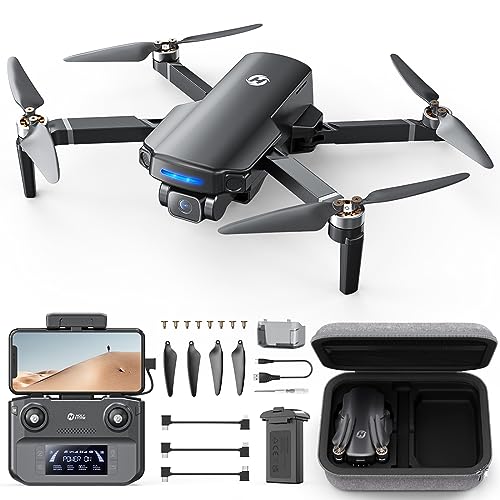
The Holy Stone HS440 is a budget-friendly foldable drone with GPS-assisted flight. It captures 2K video and includes features like follow me and waypoint flight. Owners report a stable hover and a 20-minute flight time.
Weight 340 gCamera 2K videoFlight Time 20 min (per battery)GPS Yes
- Very affordable
- GPS features for stable flight
- Good for beginners
- Camera quality is basic
- No obstacle avoidance
Autel Robotics EVO Nano+
★★★★★ 4.5 / 5 best for beginners
The Autel EVO Nano+ is a sub-250g drone with a 1/1.28-inch CMOS sensor and 4K/30fps video. It offers three-way obstacle avoidance and a 28-minute flight time. Beginners appreciate its simple controls and automatic return-to-home.
Weight 249 gCamera 4K/30fps, 1/1.28-inch CMOSFlight Time 28 min (max)Obstacle Sensing Three-way
- User-friendly for novices
- Good low-light performance
- Compact and portable
- Limited obstacle coverage
- App can be less polished
Best for: best for beginners
DJI Mavic 3 Classic
★★★★★ 4.7 / 5 best for professionals
The DJI Mavic 3 Classic has a 4/3 CMOS Hasselblad camera that captures 5.1K video. It offers a 46-minute flight time and omnidirectional obstacle sensing. Professionals value its raw photo support and 15km video transmission.
Weight 895 gCamera 4/3 CMOS Hasselblad, 5.1KFlight Time 46 min (max)Obstacle Sensing Omnidirectional
- Large sensor for high-quality images
- Long flight time
- Robust build
- Heavy and larger when folded
- Premium price
Best for: best for professionals
Potensic ATOM
★★★★★ 4.5 / 5 best for hiking
The Potensic ATOM weighs only 249 grams and folds to a compact size. It has a 4K/30fps camera with a 1/3-inch CMOS sensor and a 32-minute flight time. Hikers like its lightweight design and included carrying bag.
Weight 249 gCamera 4K/30fps, 1/3-inch CMOSFlight Time 32 min (max)Obstacle Sensing Downward only
- Very light and compact
- Good flight time
- Affordable for 4K
- No side obstacle sensors
- Image quality suffers in low light
Best for: best for hiking
Holy Stone HS720G
★★★★★ 4.3 / 5 best for kids
The Holy Stone HS720G is a foldable GPS drone with a 4K camera and a 26-minute flight time. It includes features like altitude hold and one-key takeoff/landing, making it simple for kids. Parents appreciate the included carrying case and extra batteries.
Weight 460 gCamera 4K videoFlight Time 26 min (per battery)GPS Yes
- Simple controls for children
- Durable design
- Comes with extra battery
- Camera stabilization is limited
- No obstacle avoidance
Choosing one is tricky because specs vary widely. We compared flight times, camera quality, sensor sizes, and owner feedback to narrow the list.
What to look for in a foldable drone
Start with the weight. Under 250 grams often avoids registration rules. Check flight time, as it ranges from 20 to 46 minutes. Camera quality depends on sensor size, not just megapixels. Look for obstacle sensing if you are a beginner. Finally, consider the controller range and battery life.
Camera specs explained
Sensor size matters more than megapixels. A 1/1.3-inch sensor outperforms a 1/2.3-inch in low light. Video resolution like 4K is standard, but frame rate affects smoothness. Look for a gimbal for stable footage. HDR and log profiles help in post-production.
Flight time and battery
Flight time is measured under ideal conditions. Real-world wind and speed reduce it. Extra batteries extend your session. Charging time can be an hour or more. Some drones have quick-swap batteries, which is convenient.
Portability and build quality
Foldable arms reduce size, but check the folded dimensions. Lighter drones are easier to carry. Build materials affect durability. Carbon fiber and ABS plastic are common. Read owner reviews on hinge durability.
Regulations and safety
Many countries require registration for drones over 250 grams. Check local laws before flying. Keep your drone in sight and avoid airports. Use geofencing features if available. Always follow manufacturer guidelines.
Questions people ask
What is the best foldable drone for travel?
The DJI Mini 4 Pro is a top choice due to its sub-250g weight and compact size. It also has excellent camera quality and safety features.
Are foldable drones as stable as non-foldable ones?
Yes, modern foldable drones use the same flight controllers and GPS. Stability is comparable, though lighter drones may be more affected by wind.
How long do foldable drone batteries last?
Typical flight times range from 20 to 46 minutes. Actual time depends on wind, speed, and payload. Always buy extra batteries for longer sessions.
Can I fly a foldable drone indoors?
Some can, but they need space and good lighting. Use propeller guards to protect people and objects. GPS may not work indoors, so rely on visual positioning.
What is the difference between DJI Mini 4 Pro and DJI Air 3?
The Mini 4 Pro is lighter and cheaper. The Air 3 has a dual-camera system and longer flight time. Choose based on your need for zoom and budget.
Is a foldable drone worth it?
If you travel or hike, yes. They are easier to pack and often have similar features to larger drones. For professional work, larger drones may offer better cameras.
How do I choose a foldable drone for a beginner?
Look for GPS, obstacle avoidance, and beginner modes. The Holy Stone HS440 or Autel EVO Nano+ are good starts. They are affordable and easy to fly.
What is the maximum range of foldable drones?
Range varies from 1 km to 15 km depending on the model. Higher-end DJI drones offer longer transmission. Always keep your drone within visual line of sight.
Do foldable drones come with a carrying case?
Many do, but not all. Check the package contents. Some include a case or bag, while others sell separately. The Potensic ATOM includes a carrying bag.
Can I use my phone as a controller?
Most drones use your smartphone as a display via Wi-Fi or a controller. Some controllers have a built-in screen. Phone connection is standard.
The bottom lineSo which one?
The DJI Mini 4 Pro is the best all-around foldable drone for most people. For budget buyers, the Holy Stone HS440 offers great value. Professionals should consider the Mavic 3 Classic for its larger sensor.