This is an editorial, listing-based look at the GVM 48-inch (120cm) carbon fiber motorized camera slider, not a hands-on review. We have not filmed with this unit or handled it in a studio, so everything below is read from the Amazon product listing and framed as a claim on paper. The goal is to explain what the slider is, which creators it suits, where its stated strengths line up with real shooting needs, and the honest questions worth settling before you commit to a rail this long. Treat the specifications as manufacturer claims rather than measured results.
What it is
At its core this is a 48-inch carbon fiber motorized camera slider built for smooth, repeatable camera movement. A slider is a straight rail with a carriage that carries your camera; the lens travels along the rail to create a gliding push-in, pull-out, or lateral tracking move. The motorized part is what separates this unit from a plain manual slider. Instead of pushing the carriage by hand, a motor drives it along the rail at a controlled speed, which is what makes the two headline uses possible: slow, buttery video moves and frame-by-frame time-lapse sequences.
The listing positions it as a professional tool that supports video mode, time-lapse photography, horizontal travel, tracking, and 120 degree panoramic shooting. In plain terms, it is meant to give one operator a motion-control rig that can repeat the same move again and again, which is useful far beyond a single clever shot.
Key features per listing
These are the points the Amazon listing highlights. They are the manufacturer's stated capabilities, so read them as specifications to verify rather than as performance we have confirmed:
- Length: a 48-inch (120cm) rail, which is a genuinely long slider and the main reason it can produce wide, sweeping moves.
- Rail material: carbon fiber construction, chosen for a high stiffness to weight ratio so the rail stays rigid without the mass of an aluminum beam of the same length.
- Motorized motion: a motor drives the carriage, with remote control cited for operating moves without touching the camera.
- Shooting modes: the listing names video mode for continuous motion and time-lapse mode for stepped capture, plus horizontal, tracking, and 120 degree panoramic moves.
- Mounting: as a professional slider it is designed to sit on tripods or stands, with standard mounting points for the camera and the rail.
If a number matters to your decision, such as the exact maximum payload, the battery runtime, or the control range, confirm it on the current listing before buying, because those details can change between versions and we are not restating a figure we cannot see verified.
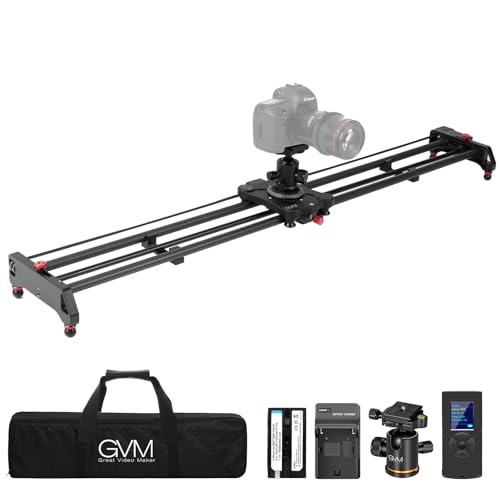
GVM 48-Inch (120cm) Carbon Fiber Motorized Camera Slider
A motorized carbon fiber rail that the listing pairs with remote control, video and time-lapse modes, and panoramic tracking moves.
Check price on AmazonWho it is for
A long motorized slider like this one makes the most sense for a specific group of creators. Videographers who want cinematic motion on interviews, b-roll, and corporate pieces are the obvious fit, because a smooth reveal or a slow track adds production value that a locked-off tripod cannot. Product and food shooters benefit because the motor can repeat an identical move across takes, which matters when you are matching a pour or a hero rotation shot. Time-lapse creators are a natural audience too, since the stepped motion mode is designed to inch the camera along across hundreds of frames for a moving time-lapse rather than a static one. Studios and solo operators who need motion control without hiring a grip will also find the appeal. It is less suited to run-and-gun shooters who move location constantly, simply because of the rail length.
Strengths on paper
Judged against its listing, the slider's advantages are coherent. Motorized motion is the headline: a motor delivers consistency that a hand push rarely matches, so your moves look even and, crucially, repeatable across multiple takes. Carbon fiber is a sensible material choice for a rail this long, because it stays light enough to transport and mount while resisting the flex that would show up as wobble in the footage. Remote control means you can start a move and keep your hands off the camera, which reduces vibration and lets one person operate the rig. The dedicated time-lapse mode is a real value-add, turning the same hardware into a motion time-lapse tool rather than a video-only accessory. Taken together, the feature set reads like a flexible, one-operator motion-control kit rather than a single-trick gadget, and that breadth is its strongest argument on paper.
Things to check honestly
A 48-inch slider is a commitment, so a few points deserve a clear-eyed look before you buy. First, size and transport: a rail this long is bulky, needs a case or bag that fits it, and is harder to pack than a short travel slider. Second, support: a long slider needs sturdy tripods or stands, often two, because a single light tripod under a long rail can sag or tip, especially with the carriage near the ends. Third, payload: confirm the stated maximum load against the real weight of your camera, lens, and any cage or monitor, and leave headroom rather than running at the limit. Fourth, battery life, which determines how many moves or how long a time-lapse you can run before recharging; the listing should state it, so verify the number. Fifth, the app and firmware learning curve, since motorized sliders reward practice and setup time. Finally, leveling: a slider that is not level will drift to one side under gravity, so plan to level it carefully on every setup.
How it compares
It helps to place this slider against the two tools people weigh it against. Compared with a manual slider, the motorized version wins on consistency and repeatability and enables time-lapse, but it costs more, adds a motor and battery to charge and carry, and brings a learning curve a passive rail does not have. Compared with a gimbal, the two are not really rivals; they solve different problems. A gimbal is for moving with the camera through space, handheld and walking, while a slider is for a precise, repeatable move along a fixed straight line, often on a static subject such as a product or an interview. A gimbal cannot hold a dead-straight track or run an unattended time-lapse the way a slider can, and a slider cannot follow a subject around a room. Many serious shooters own both and reach for whichever the shot needs. If your work centers on controlled, repeatable motion on set, a slider is the right category, and this one's length and motor are its defining traits.
Verdict
On the strength of its listing, the GVM 48-inch carbon fiber motorized camera slider reads as a capable motion-control rail for creators who want smooth, repeatable moves and time-lapse from one piece of gear. Its length is both its biggest advantage, for wide sweeping shots, and the thing most likely to complicate your life, in transport and support. The carbon fiber rail, motorized carriage, remote control, and dedicated time-lapse mode form a sensible, flexible package on paper, provided you confirm the payload, battery, and control details for your own rig and you are set up to support a rail this size. If that matches your workflow, you can review the current specifications, photos, and buyer feedback by checking the GVM motorized slider on Amazon.
Disclosure: this is an editorial, listing-based overview and not a hands-on test. We have not filmed with or physically handled this product. As an Amazon Associate we may earn from qualifying purchases made through links on this page, at no extra cost to you. Specifications are manufacturer claims from the Amazon listing and can change, so verify current details before buying.