Mirrorless Cameras
Best Mirrorless Cameras for Photos, Video, and Vlogging
7 picks compared
11 min read
ProductPickly is reader-supported. When you buy through links on our site, we may earn an affiliate commission at no extra cost to you. It never changes our picks.
The short answerFor most people the Sony a7 IV is the standout mirrorless pick, a full-frame body that shoots detailed stills, clean 4K, and tracks eyes reliably, all in one kit. If you are just starting out, the Canon EOS R50 is the friendliest and easiest to learn on, while the EOS R100 gets you onto the same lens mount for less. Vloggers are best served by the Sony ZV-E10 with its front-facing screen and strong audio, and the Nikon Z5 is the most affordable way to step up to full-frame. Choose by your sensor needs, how much video you shoot, and the lens system you want to grow into rather than by price alone.
?How we pickedWe compare published specifications, safety certifications and thousands of verified owner reviews, and we do not physically test every unit. Read the full process in our review methodology.
Sony Alpha a7 IV Full-Frame Camera with 28-70mm Lens
★★★★★ 4.8 / 5 Best overall
The a7 IV is the all-round full-frame body most enthusiasts settle on, pairing a 33 megapixel sensor with fast subject tracking that sticks to eyes and faces in both stills and video. It shoots detailed 4K, has a fully articulating screen for solo filming, and comes here with a 28-70mm zoom that covers everyday shooting from day one.
Sensor Full-frame 33MPVideo 4K up to 60pAutofocus Real-time subject trackingBest use Hybrid photo and video
- Full-frame sensor gives strong detail and low-light range
- Autofocus locks and holds on eyes reliably
- Fully articulating screen suits video and solo work
- Sits at the top of this list on cost
- Larger and heavier than the APS-C picks
Best for: one camera that handles serious photo and video work
Canon EOS R50 with RF-S 18-45mm Lens
★★★★★ 4.6 / 5 Best for beginners
The R50 is the friendliest way into Canon's mirrorless system, with a 24.2 megapixel APS-C sensor, a guided menu that explains settings as you learn, and dependable eye-detect autofocus. It stays small and light with the 18-45mm kit lens, so it is easy to carry every day while you build up your skills.
Sensor APS-C 24.2MPVideo 4K from 6K oversamplingAutofocus Eye and subject detectBest use First interchangeable-lens camera
- Guided interface makes the learning curve gentle
- Compact body and kit lens are easy to carry
- Autofocus tracks people well for the class
- Single card slot and modest battery life
- Kit lens is limited in low light
Best for: a first mirrorless camera that is simple to grow into
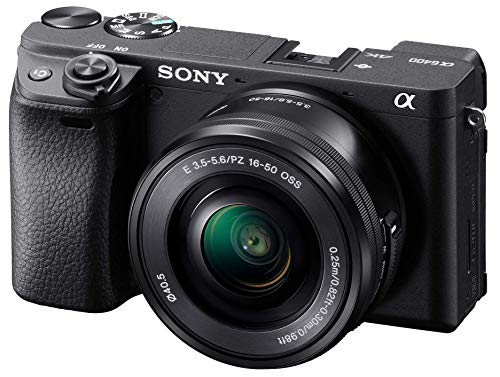
Sony Alpha a6400 with 16-50mm Lens
★★★★★ 4.6 / 5 Best APS-C all-rounder
The a6400 has aged well thanks to its quick real-time eye autofocus and a flip-up screen that faces forward for pieces to camera. It is a compact APS-C body that shoots clean 4K and handles stills and everyday video without fuss, which keeps it a steady mid-range choice.
Sensor APS-C 24.2MPVideo 4K up to 30pAutofocus Real-time eye AFBest use Travel and everyday hybrid
- Eye autofocus is fast and reliable
- Flip-up screen helps with self-recording
- Small enough for travel and street shooting
- Screen tilts but does not fully articulate
- No in-body stabilization
Best for: a compact do-everything APS-C camera for travel
Nikon Z50 II with Two Lenses
★★★★★ 4.7 / 5 Best for creators
The Z50 II is Nikon's updated APS-C body aimed at people who shoot both photos and video, with easy color presets, a vari-angle screen, and quick wireless photo sharing to a phone. This two-lens kit pairs a wide everyday zoom with a longer reach lens, so it covers portraits, travel, and casual video out of the box.
Sensor APS-C 20.9MPVideo 4K videoAutofocus Subject-detect AFBest use Stills and casual video
- Two-lens kit covers wide and telephoto reach
- Vari-angle screen suits video and vlogging
- Color presets speed up an in-camera look
- Smaller native lens range than Sony or Canon
- 20.9MP sensor trails the higher-count rivals
Best for: a creator kit with wide and zoom reach included
Canon EOS R100 with RF-S 18-45mm Lens Kit
★★★★★ 4.4 / 5 Best budget pick
The R100 is Canon's simplest mirrorless body and the lowest-cost way onto the RF lens mount, with a 24.1 megapixel APS-C sensor, 4K video, and Wi-Fi for sharing. It drops some of the R50's extras, but for a first camera that outclasses a phone it is a sensible starting point.
Sensor APS-C 24.1MPVideo 4K with cropAutofocus Dual Pixel AFBest use Entry-level photography
- Lowest-cost route into Canon's mirrorless mount
- Light body suits new and casual shooters
- Wi-Fi and Bluetooth make sharing easy
- Fixed screen does not tilt or flip
- 4K video is heavily cropped
Best for: the cheapest way into a real interchangeable-lens camera
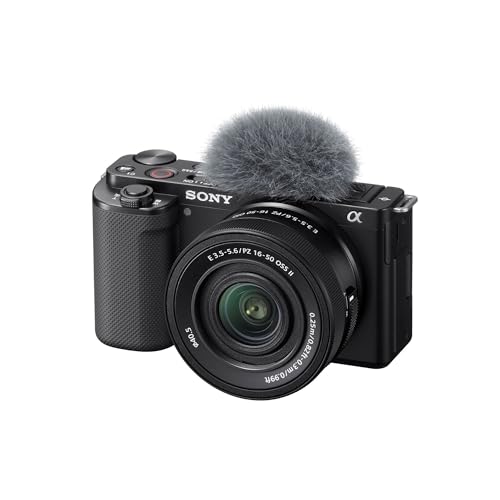
Sony ZV-E10 with 16-50mm Lens
★★★★★ 4.5 / 5 Best for vlogging
The ZV-E10 is built around video and self-recording, with a fully articulating screen, a dedicated background-blur button, and a strong built-in microphone with a bundled wind muff. It uses the same APS-C sensor family as Sony's photo bodies, so it still takes solid stills when you turn the camera around.
Sensor APS-C 24.2MPVideo 4K up to 30pAutofocus Real-time eye AFBest use Vlogging and talking head
- Front-facing articulating screen is made for vlogging
- Product-showcase and blur buttons simplify video
- Good built-in audio with the included wind muff
- No viewfinder for bright-light stills
- Rolling shutter shows on fast pans
Best for: vlogging and talking-head video with clean audio
Nikon Z5 Full-Frame Camera Body
★★★★★ 4.6 / 5 Best value full-frame
The Z5 is the most affordable way to step up to a full-frame sensor, with in-body stabilization, dual card slots, and a weather-sealed body that feels built to last. It is sold here as a body only, so it suits someone ready to choose their own lenses rather than start from a kit.
Sensor Full-frame 24.3MPVideo 4K with cropAutofocus Hybrid phase-detectBest use Affordable full-frame stills
- Full-frame sensor at an accessible entry point
- In-body stabilization steadies handheld shots
- Dual card slots and weather sealing add reliability
- 4K video carries a noticeable crop
- Body only, so a lens is an extra purchase
Best for: stepping up to full-frame without the flagship outlay
The best mirrorless camera for you comes down to sensor size, how much you shoot video, and the lens system you want to grow into, not the highest megapixel count on the box. The picks below span easy APS-C bodies for beginners, a dedicated vlogging camera, and full-frame options for low light and portraits, so you can match one to how you actually shoot. If you want a single camera that does almost everything well, the Sony a7 IV is our top choice, while the Canon EOS R50 is the friendliest starting point.
APS-C vs full-frame, and who each suits
Sensor size is the first fork in the road. Full-frame bodies like the Sony a7 IV and Nikon Z5 capture more light, which means cleaner images in dim rooms and a softer, more flattering background blur for portraits, at the cost of larger bodies and pricier lenses. APS-C cameras such as the Canon EOS R50, Sony a6400, and Nikon Z50 II use a smaller sensor that keeps the whole kit lighter and more affordable while still outclassing any phone. As a rule, beginners and travelers are well served by APS-C, while people who shoot a lot in low light or want the shallowest depth of field lean toward full-frame.
Shooting photos vs video and vlogging
How you split your time between stills and video should steer the choice. If you mostly take photos, any of these bodies will serve, and the a7 IV and Z5 give you the most room in low light. If video or vlogging is the point, look for a screen that flips forward, autofocus that holds on your face, and clean 4K. The Sony ZV-E10 is built squarely for this, with a fully articulating screen, a background-blur button, and strong built-in audio, while the a7 IV brings those same video strengths to a full-frame sensor. The Nikon Z50 II and a6400 sit in the middle, comfortable for both jobs without specializing in either.
The lens system and the kit lens
A camera body is only half the decision, because the lenses you can add over the years matter more than any single spec. Canon, Sony, and Nikon each run large lens ecosystems, so all three brands here give you room to grow into bright primes for portraits or long telephotos for wildlife and sport. The kit lens that comes bundled, whether an 18-45mm or a 16-50mm zoom, is a capable everyday starting point and no reason to hold off buying. Kits like the Nikon Z50 II two-lens bundle stretch that further by including a telephoto from the start, which is good value if you know you want the extra reach.
Beginner vs enthusiast: matching the level
Be honest about where you are. A first-time buyer is best served by a body that stays out of the way, which is why the Canon EOS R50 and its guided menu, or the lower-cost EOS R100, top our beginner list. As you get more confident and start caring about low-light quality, dual card slots, and in-body stabilization, an enthusiast body like the a7 IV or the value full-frame Z5 begins to earn its keep. There is no need to overbuy on day one, since these systems are designed to let you add lenses and upgrade the body later without starting over.
Questions people ask
What is a mirrorless camera and how is it different from a DSLR?
A mirrorless camera drops the moving mirror and optical viewfinder that a DSLR uses and sends the sensor's live view straight to a screen or electronic viewfinder. That makes the body smaller and lighter, lets you preview exposure before you shoot, and usually brings faster, smarter autofocus. The trade is that electronic viewfinders draw more battery, so you tend to carry a spare.
Is APS-C or full-frame better for me?
Full-frame sensors gather more light, so they hold detail better in dim rooms and give a shallower background blur, which is why the a7 IV and Z5 suit low light and portraits. APS-C bodies like the R50 and a6400 are smaller, lighter, and easier on the wallet, and their lenses are more compact too. For most people starting out, APS-C is plenty, and you can move up later if you need the extra range.
Which of these cameras is best for a complete beginner?
The Canon EOS R50 is the easiest to learn on, thanks to a guided menu that explains each setting as you go and reliable autofocus that keeps faces sharp. If budget is the main concern, the EOS R100 gets you onto the same lens mount for less, though it drops the flip screen and some conveniences. Both are far simpler than jumping straight to a full-frame body.
What should I look for if I mainly shoot video or vlogs?
Look for a fully articulating screen that flips to face you, dependable autofocus that tracks your face, and clean 4K. The Sony ZV-E10 is built for this, with a front-facing screen, a background-blur button, and strong built-in audio. The a7 IV is the step up if you want the same video strengths on a full-frame sensor and better low-light footage.
Does the kit lens matter, or should I upgrade right away?
A kit lens like an 18-45mm or 16-50mm is a fine place to start and covers most everyday shots, so there is no rush to replace it. The bigger long-term advantage of these cameras is the lens system behind them, since you can add a bright prime for portraits or a telephoto for reach as your needs grow. Buy a kit first, then add glass once you know what you shoot most.
Do I need in-body image stabilization?
Stabilization helps most when you shoot handheld in low light or record video while moving, and it lets you use slower shutter speeds without blur. The a7 IV and Z5 include in-body stabilization, while APS-C bodies like the a6400 and ZV-E10 rely on stabilized lenses or software instead. It is a genuine benefit, but it is not essential if you mostly shoot in good light or on a tripod.
Can I use older lenses on these mirrorless cameras?
Often yes, with an adapter. Canon, Sony, and Nikon each sell adapters that let many of their older DSLR lenses mount on these newer bodies, usually with autofocus intact. It is a practical way to reuse glass you already own, though native mirrorless lenses are generally smaller and better matched to the body, so most people move to native lenses over time.
How did we choose the cameras in this guide?
We compared sensor size, video features, autofocus, size and weight, and the lens system behind each camera, then matched them to real needs such as beginners, travel, vlogging, and full-frame stills. Every product shown is a real listing, and these are our chosen picks rather than lab-tested claims.
The bottom lineSo which one?
The Sony a7 IV is our top choice for anyone who wants one camera to handle serious photos and video, with the Canon EOS R50 the friendliest pick for a first mirrorless body and the EOS R100 the lowest-cost way onto the same mount. Vloggers should look at the Sony ZV-E10 for its front-facing screen and built-in audio, while the Nikon Z5 is the value route into full-frame. Match the camera to your sensor needs, your split between photos and video, and the lens system you want, and it should serve you for years.