Tripods and Monopods
Monopods for Wildlife: Top Picks Compared
7 picks compared
6 min read
ProductPickly is reader-supported. When you buy through links on our site, we may earn an affiliate commission at no extra cost to you. It never changes our picks.
The short answerFor wildlife, the Gitzo GM2562T, Benro Sup8, and Manfrotto XPRO stand out. Gitzo offers carbon fiber rigidity. Benro adds a fluid base. Manfrotto balances price and performance.
?How we pickedWe compare published specifications, safety certifications and thousands of verified owner reviews, and we do not physically test every unit. Read the full process in our review methodology.
Gitzo GM2562T Series 2 Traveler Monopod
★★★★★ 4.8 / 5 Best overall
The Gitzo GM2562T is a 6-section carbon fiber monopod. It extends to 64.2 inches and folds to 17.7 inches. Owners praise its stiffness and compact size for travel.
Material Carbon fiberMax height 64.2 inFolded length 17.7 inWeight 1.1 lb
- Extremely lightweight
- Compact folded size
- Excellent build quality
- Expensive
- No built-in head
Benro Sup8 Slim Aluminum Monopod
★★★★★ 4.6 / 5 Best value
The Benro Sup8 is an aluminum monopod with a fluid base. It extends to 68.5 inches and weighs 2.4 pounds. The fluid base helps smooth panning for wildlife action.
Material AluminumMax height 68.5 inFolded length 27.6 inWeight 2.4 lb
- Fluid base for panning
- Good height for tall users
- Reasonable price
- Heavier than carbon fiber
- Folded length is long
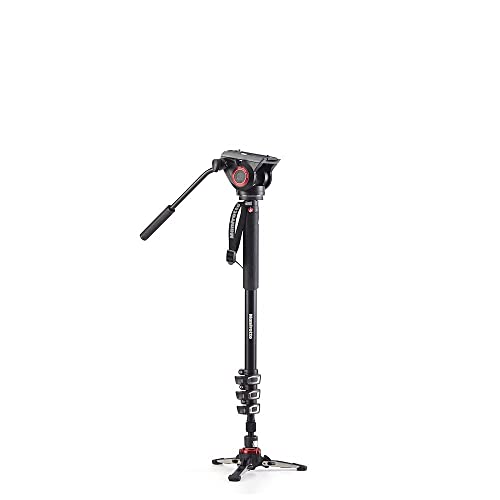
Manfrotto XPRO Monopod
★★★★★ 4.5 / 5 Best budget
The Manfrotto XPRO is an aluminum monopod with a twist lock. It extends to 64.2 inches and weighs 1.5 pounds. It offers a budget-friendly entry into wildlife support.
Material AluminumMax height 64.2 inFolded length 24.4 inWeight 1.5 lb
- Affordable
- Lightweight for aluminum
- Reliable twist locks
- No fluid base
- Not as sturdy as carbon
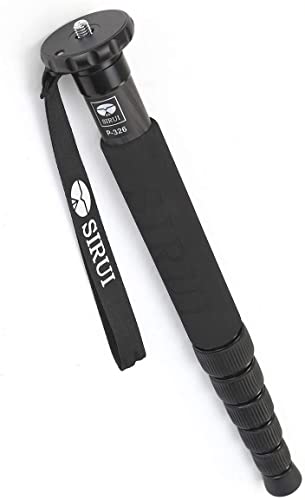
Sirui P-326 Carbon Fiber Monopod
★★★★★ 4.7 / 5 Best for hiking
The Sirui P-326 is a 6-section carbon fiber monopod. It weighs only 0.9 pounds and folds to 14.6 inches. It packs small for long hikes into wildlife areas.
Material Carbon fiberMax height 55.1 inFolded length 14.6 inWeight 0.9 lb
- Very light
- Compact folded size
- Great for travel
- Lower max height
- May feel flimsy with heavy lenses
Best for: Best for hiking
Benro Mach3 Aluminum Monopod
★★★★★ 4.6 / 5 Best for heavy lenses
The Benro Mach3 is a 4-section aluminum monopod. It supports up to 33 pounds and extends to 66.9 inches. Owners report it handles large telephoto lenses well.
Material AluminumMax height 66.9 inFolded length 25.6 inWeight 2.6 lb
- High load capacity
- Sturdy for big lenses
- Flip locks are quick
- Heavier than carbon
- No head included
Best for: Best for heavy lenses
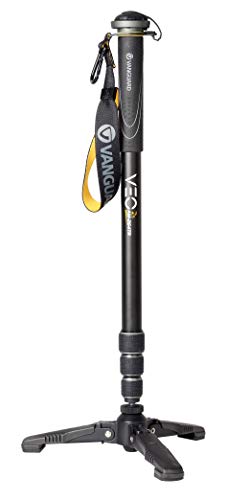
Vanguard VEO 2 AM-264TR Monopod
★★★★★ 4.4 / 5 Best with built-in head
The Vanguard VEO 2 AM-264TR includes a fluid head. It extends to 66.9 inches and weighs 3.3 pounds. The built-in head allows smooth panning and tilt.
Material AluminumMax height 66.9 inFolded length 27.6 inWeight 3.3 lb
- Included fluid head
- Quick setup
- Good for video
- Heavier
- Head may not suit all lenses
Best for: Best with built-in head
Leofoto LS-324C Monopod
★★★★★ 4.5 / 5 Best for tall photographers
The Leofoto LS-324C is a 4-section carbon fiber monopod. It extends to 74.8 inches, ideal for users over 6 feet. It weighs 2.2 pounds and folds to 26.8 inches.
Material Carbon fiberMax height 74.8 inFolded length 26.8 inWeight 2.2 lb
- Very tall max height
- Lightweight
- Stable carbon build
Best for: Best for tall photographers
Choosing a monopod involves trade-offs between weight, height, and head type. Carbon fiber saves weight but costs more. Fluid heads help track moving subjects. We matched each pick to a distinct use case.
What to look for in a wildlife monopod
Weight matters most when you hike. Carbon fiber saves pounds but costs more. Height should match your eye level. Check the folded length for travel. Load capacity must exceed your heaviest lens.
Head types and stability
A fluid head helps track moving animals smoothly. Ball heads offer quick adjustments but less control for panning. Some monopods have a built-in head, saving weight. A foot or base can add stability on uneven ground. Consider a monopod with a tilting base for flexibility.
Matching a monopod to your lens
Telephoto lenses require a sturdy monopod. Check the load capacity of the monopod. A heavy lens needs a thicker leg section. Carbon fiber reduces vibration but may cost more. Test the setup for balance before buying.
Budget and brand considerations
You can spend from budget to premium. Aluminum monopods are affordable but heavier. Carbon fiber models are lighter and more expensive. Trusted brands include Gitzo, Benro, and Manfrotto. Read owner reviews for real-world durability.
Questions people ask
What is the best monopod for wildlife photography?
The Gitzo GM2562T is a top choice for its carbon fiber build and compact size. It offers excellent stability for long lenses. For a budget option, the Manfrotto XPRO is reliable.
How do I choose a monopod for birding?
Look for a lightweight model that extends to your eye level. A fluid head helps track birds in flight. Consider the Sirui P-326 for hiking or the Benro Sup8 for panning.
Is a monopod better than a tripod for wildlife?
A monopod is lighter and quicker to set up. It is easier to carry on hikes. A tripod offers more stability but is heavier. For active wildlife, a monopod is often preferred.
What is the difference between a monopod and a walking stick?
A monopod is designed for camera support with a head mount. A walking stick has no head and is for balance. Some monopods double as walking sticks, but not all.
Can I use a monopod with a heavy telephoto lens?
Yes, but check the load capacity. The Benro Mach3 supports up to 33 pounds. Use a sturdy head to avoid strain. Carbon fiber models like the Leofoto are also stable.
How tall should a monopod be for a 6-foot person?
You need a monopod that extends to at least 60 inches. The Leofoto LS-324C reaches 74.8 inches. This allows you to stand upright without bending.
Is carbon fiber worth the extra cost?
Carbon fiber is lighter and reduces vibration. It is ideal for long hikes and sharp images. If weight is a priority, it is worth it. Otherwise, aluminum is fine.
What is the best monopod for video of wildlife?
A monopod with a fluid head is best. The Vanguard VEO 2 includes a fluid head. It allows smooth panning. The Benro Sup8 also has a fluid base for video.
The bottom lineSo which one?
For most wildlife photographers, the Gitzo GM2562T offers the best balance of weight and stability. If you are on a budget, the Manfrotto XPRO is a solid choice. Consider your lens weight and hiking needs before deciding.