Vlogging Cameras
Best Vlogging Cameras: Pocket, Mirrorless and Flip-Screen Picks
7 picks compared
9 min read
ProductPickly is reader-supported. When you buy through links on our site, we may earn an affiliate commission at no extra cost to you. It never changes our picks.
The short answerFor most creators the DJI Osmo Pocket 3 Creator Combo is the best vlogging camera in this lineup, a pocket camera that lists a 1 inch CMOS sensor and 4K video up to 120 fps. The Canon EOS R50 Content Creator Kit is the step up to a 24.2 MP APS-C mirrorless body that ships with a lens, grip and microphone, while the HolyEye adds AI face tracking and the 330 degree gimbal pocket camera pairs 4K video with 75 MP photos. On a budget, the Duluvulu 48 MP flip-screen compact and the 5K 80 MP dual-screen camera cover beginners, and the M105 is a simple handheld pocket camcorder.
?How we pickedWe compare published specifications, safety certifications and thousands of verified owner reviews, and we do not physically test every unit. Read the full process in our review methodology.
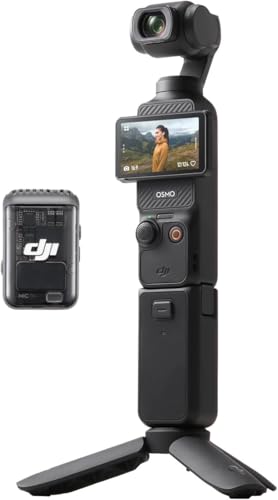
DJI Osmo Pocket 3 Creator Combo, Vlogging Camera with 1'' CMOS & 4K/120fps
★★★★★ 4.8 / 5 Editor's pick
The DJI Osmo Pocket 3 Creator Combo is our top vlogging pick because its listing pairs a 1 inch CMOS sensor with 4K video up to 120 fps in a camera that fits in a pocket. The Creator Combo bundle makes it a grab-and-go kit for solo creators who want big-sensor footage without carrying a full camera bag.
Sensor 1 in CMOSVideo 4K up to 120 fpsForm Pocket vlogging cameraKit Creator Combo bundle
- Listed 1 in CMOS sensor is large for a pocket camera
- Shoots 4K video at up to a stated 120 fps
- Pocket form factor sold as a ready creator bundle
- Listing leads on sensor and video rather than screen detail
- Small body holds a smaller battery than a full camera
Best for: Creators who want big-sensor 4K footage in a pocket camera.
Canon EOS R50 Content Creator Kit, Hybrid Mirrorless Camera with RF-S18-45mm F4.5-6.3 IS STM Lens, Tripod Grip, Microphone, Wireless Remote Control, 24.2 MP CMOS (APS-C) Sensor, Vlogging Camera, Black
★★★★★ 4.7 / 5 Step up to mirrorless
If you want room to grow, the Canon EOS R50 Content Creator Kit is the step up to an interchangeable-lens mirrorless body, with a listed 24.2 MP APS-C CMOS sensor and an RF-S 18-45mm IS STM lens. The kit also ships with a tripod grip, a microphone and a wireless remote, so a new creator gets a vlogging setup in one box.
Sensor 24.2 MP APS-C CMOSLens RF-S 18-45mm IS STMIn the kit Grip, mic, remoteType Mirrorless
- Listed 24.2 MP APS-C sensor with interchangeable lenses
- Kit includes a microphone, tripod grip and remote
- Bundled lens lists optical IS image stabilization
- Larger and heavier than the pocket picks here
- Listing does not state a video resolution figure
Best for: Creators who want an interchangeable-lens camera that grows with them.
HolyEye 4K Vlogging Camera with AI Face Tracking, 330° Rotating Lens & WiFi
★★★★★ 4.4 / 5 Hands-free tracking
The HolyEye is the pick for filming yourself without a crew, since its listing adds AI face tracking to a 4K pocket camera. A 330 degree rotating lens lets you swing the view onto yourself, and built-in WiFi is listed for moving clips off the camera.
Video 4KTracking AI face trackingLens 330 degree rotatingConnectivity WiFi
- AI face tracking listed for hands-free solo filming
- 330 degree rotating lens aims the view at you
- Built-in WiFi listed for quick transfers
- Listing does not state the sensor size
- No frame-rate figure is given for the 4K mode
Best for: Solo creators who want the camera to follow their face.
4K Vlogging Camera with 330° Gimbal Lens & 75MP Photo, WiFi Pocket Camera
★★★★★ 4.3 / 5 Pocket all-rounder
This WiFi pocket camera is a flexible all-rounder that lists 4K video alongside a 75 MP photo mode, so it covers both clips and stills. Its 330 degree gimbal lens swings between front and rear views, which suits creators who switch between filming themselves and their surroundings.
Video 4KPhoto 75 MPLens 330 degree gimbalConnectivity WiFi
- Lists both 4K video and a 75 MP photo mode
- 330 degree gimbal lens flips front to back
- Built-in WiFi listed for sharing
- Listing does not state the sensor size
- No frame-rate figure is given for the 4K mode
Best for: Creators who want one pocket camera for clips and stills.
Duluvulu 4K Digital Camera for Photography Autofocus, 48MP Vlogging Camera for YouTube with SD Card, 2 Batteries, 3" 180° Flip Screen Compact Travel Camera for Teens with 16X Zoom, Black
★★★★★ 4.2 / 5 Budget pick
The Duluvulu is a budget-friendly compact that lists a 3 inch 180 degree flip screen, so beginners and teens can frame themselves while recording. It pairs 4K video and a 48 MP photo mode with autofocus, and the listing bundles an SD card and two batteries to get started.
Photo 48 MPVideo 4KScreen 3 in 180 flipZoom 16X
- 3 in 180 degree flip screen listed for self-view
- Autofocus listed, with 4K video and 48 MP photos
- Ships with an SD card and two batteries
- Listing does not state the sensor size
- 16X zoom is not described as optical
Best for: Beginners and teens who want an easy flip-screen starter.
Digital Camera, 5K 80MP 3.5"+2" Dual Screen Cameras for Photography Autofocus, 18X Digital Zoom Vlogging Camera for YouTube, Travel, Beginners, Include 64GB Card and 2 Batteries, Black
★★★★★ 4.2 / 5 Budget pick
This dual-screen compact lists a 3.5 inch rear and a 2 inch front screen, so you can monitor yourself and your subject at the same time. It records 5K video with an 80 MP photo mode and autofocus, and the listing includes a 64GB card and two batteries.
Video 5KPhoto 80 MPScreen 3.5 in + 2 in dualZoom 18X digital
- Front 2 in screen listed for easy self-view
- Records 5K video with an 80 MP photo mode
- Includes a 64GB card and two batteries
- 18X zoom is stated as digital, not optical
- Listing does not state the sensor size
Best for: Budget shooters who want a front screen for self-view.
M105 4K Handheld Vlogging Pocket Camera, Portable Video Recording Camcorder
★★★★★ 4.2 / 5 Simple camcorder
The M105 is the simplest grab-and-go pick here, a handheld pocket camcorder that lists 4K video recording. It is a straightforward choice for creators who want to point and record without learning a feature-heavy camera.
Video 4KForm Handheld camcorderType Pocket cameraUse Video recording
- 4K video recording listed in a pocket body
- Handheld camcorder shape is easy to hold
- Simple, point-and-record operation
- Listing is light on sensor and screen detail
- Fewer features than the higher picks here
Best for: Creators who want a simple point-and-record camcorder.
The best vlogging camera is the one that keeps your face sharp and in frame while staying small enough to actually carry. This guide covers pocket cameras, one mirrorless creator kit and budget flip-screen compacts from DJI, Canon, HolyEye and more, and we only quote the sensors, resolutions and features the listings state.
Flip screens and self-view
Seeing yourself while you record is what separates a vlogging camera from a general camera. Two picks here put a screen where you need it: the Duluvulu lists a 3 inch 180 degree flip screen, and the 5K 80 MP camera lists a 2 inch front screen alongside a 3.5 inch rear, so you can monitor your framing without a mirror. The pocket cameras take a different route, using rotating or gimbal lenses rather than flip screens. The DJI Osmo Pocket 3, the HolyEye and the 330 degree gimbal pocket camera all swing the lens toward you, with the HolyEye and the gimbal model listing a 330 degree range. The Canon EOS R50 listing here leads on its kit contents and sensor rather than describing its screen, so if a vari-angle display matters to you, confirm it on the product page.
Autofocus and stabilization
Autofocus is the feature you feel most when filming yourself, because it has to hold focus as you move. The Duluvulu and the 5K 80 MP dual-screen camera both list autofocus, and the HolyEye lists AI face tracking that follows your face around the frame, which is the closest thing here to a hands-free operator. On stabilization, we only quote what the listings state: the Canon EOS R50 kit lens is an RF-S 18-45mm IS STM, and IS means it lists optical image stabilization, while the 330 degree gimbal pocket camera describes a gimbal lens. The remaining listings do not state a stabilization system, so treat smooth handheld footage as something to verify rather than assume, and consider a small tripod or grip for static shots.
4K video and frame rates
Resolution sets the ceiling on how sharp and how croppable your footage is. Most of these cameras list 4K: the HolyEye, the 330 degree gimbal pocket camera, the Duluvulu and the M105 all state 4K recording, and the dual-screen compact goes further with a listed 5K mode. The standout for motion is the DJI Osmo Pocket 3, which is the only pick here to list a frame rate, at 4K up to 120 fps, giving you headroom for smooth slow motion. The Canon EOS R50 listing in this kit highlights its 24.2 MP APS-C sensor rather than a video resolution, so if a specific 4K mode is essential, check its product page. Remember that higher resolutions and frame rates create larger files, so plan your card and storage around them.
Audio and microphone input
Viewers forgive soft video long before they forgive bad audio, so sound deserves attention. The clearest answer in this group is the Canon EOS R50 Content Creator Kit, which ships with a microphone in the box, a real advantage for interviews and talking-head clips. The other cameras describe built-in recording rather than a microphone input, and their listings do not state a mic jack, so if you plan to add an external mic, confirm the connection on the product page first. Built-in microphones are fine for casual walk-and-talk vlogs, but they pick up more wind and room noise than a dedicated mic, so for serious work the R50 bundle has the edge.
Questions people ask
What should I look for in a vlogging camera?
Match the camera to how you shoot. Solo creators benefit most from a front-facing or flip screen and reliable autofocus or face tracking, while travel and run-and-gun filming reward a small, pocketable body. In this lineup the DJI Osmo Pocket 3 Creator Combo leads on sensor and video, the Canon EOS R50 kit adds interchangeable lenses and a microphone, and the flip-screen and dual-screen compacts cover self-view on a budget.
Do I need a flip screen or front screen to vlog?
It helps a lot, because you can see yourself and keep your face framed while recording. The Duluvulu lists a 3 inch 180 degree flip screen, the 5K 80 MP camera lists a 2 inch front screen alongside a 3.5 inch rear, and the pocket cameras with 330 degree rotating or gimbal lenses point the view back at you instead. If you only ever film other subjects, a front screen matters less.
Is a pocket camera or a mirrorless camera better for vlogging?
It depends on how much you carry and how much you want to control. Pocket cameras like the DJI Osmo Pocket 3 and the 330 degree gimbal models are small and simple for walk-and-talk clips. A mirrorless body like the Canon EOS R50 is larger but accepts different lenses and, in this kit, ships with a microphone and grip, so it suits creators who want room to grow.
How important is autofocus for vlogging?
Autofocus keeps your face sharp when you move, which is the hardest part of filming yourself. The Duluvulu and the 5K 80 MP camera both list autofocus, and the HolyEye lists AI face tracking that follows your face. We only quote the focus features each listing states, so for anything not listed, check the product page before buying.
Do any of these vlogging cameras support an external microphone?
The Canon EOS R50 Content Creator Kit is the one that ships with a microphone in the box. The other listings describe built-in recording rather than a microphone input, so if clean audio is a priority, confirm whether a camera has a mic jack on its product page. Built-in mics are fine for casual clips but pick up more room noise than an external mic.
Can these cameras shoot 4K video?
Most can, based on their listings. The DJI Osmo Pocket 3 lists 4K up to 120 fps, the HolyEye, the 330 degree gimbal pocket camera, the Duluvulu and the M105 all list 4K, and the dual-screen compact lists 5K. The Canon EOS R50 listing here focuses on its kit contents and 24.2 MP sensor rather than quoting a video resolution, so check its page if 4K is essential.
Are budget vlogging cameras good enough for YouTube?
For beginners and casual channels, yes. The Duluvulu and the 5K 80 MP dual-screen camera list self-view screens, autofocus and included cards and batteries, which covers the basics for YouTube and travel clips. They typically use smaller sensors and digital zoom, so they trade some low-light quality and reach for a lower price, which is a fair trade while you learn.
What is the difference between the DJI Osmo Pocket 3 and the cheaper pocket cameras?
The headline gap is the sensor. The DJI Osmo Pocket 3 Creator Combo lists a 1 inch CMOS sensor and 4K up to 120 fps, which is large for a pocket camera and helps in low light and for slow motion. The budget 330 degree pocket cameras here list 4K video and high photo megapixels but do not state sensor size, so expect simpler image quality for a lower outlay.
The bottom lineSo which one?
Choose the DJI Osmo Pocket 3 Creator Combo if you want the most capable pocket vlogging camera here, with a listed 1 inch CMOS sensor and 4K video up to 120 fps in a grab-and-go body. Step up to the Canon EOS R50 Content Creator Kit when you want an interchangeable-lens 24.2 MP APS-C mirrorless camera that ships with a lens, tripod grip and microphone. The HolyEye is the pick for hands-free AI face tracking, and the 330 degree gimbal pocket camera is a flexible all-rounder with a 75 MP photo mode. For a lower outlay, the Duluvulu flip-screen 48 MP compact and the 5K 80 MP dual-screen camera suit beginners and teens, while the M105 handheld camcorder keeps things simple. Match the sensor, video and self-view features to how you shoot first, then let the form factor decide the rest.