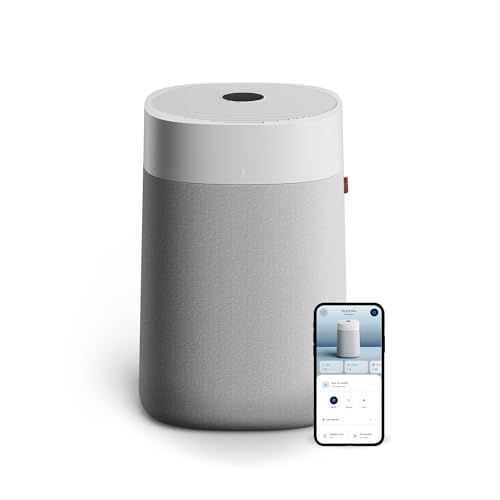
Our editorial team compared specifications, buyer feedback and key decision factors for the best air purifiers for home use. We focused on CADR, filter types, room size coverage, and overall value to bring you top picks for allergies, pets, and budget.
Buying Guide: What to Look for in an Air Purifier
Choosing the right air purifier starts with understanding your needs. The most important factor is the Clean Air Delivery Rate (CADR), which tells you how fast the unit filters smoke, dust, and pollen. For a room, you want a CADR of at least two-thirds of the room's square footage. For example, a 300-square-foot room needs a CADR of at least 200 CFM. Higher CADR means faster air cleaning.
Next, consider the filter type. True HEPA filters capture 99.97% of particles as small as 0.3 microns, including pet dander, pollen, and dust mites. Activated carbon filters help remove odors and volatile organic compounds (VOCs). Some models also include washable pre-filters that extend the life of the main filter.
Room size coverage is another key factor. Manufacturers list a maximum room size, but for optimal performance, choose a unit that can cycle the air at least four times per hour. For example, a purifier rated for 400 square feet works well in a 300-square-foot room.
Energy efficiency and noise levels matter, especially if you plan to run the purifier continuously. Look for Energy Star certified models and check the noise rating in decibels (dB). A quiet unit around 25 dB is ideal for bedrooms.
Finally, consider additional features like auto mode, air quality sensors, filter replacement indicators, and smart connectivity. While not essential, these can improve convenience.
Common Mistakes When Buying an Air Purifier
One common mistake is buying a unit that is too small for the room. A purifier with a low CADR will struggle to clean the air effectively, leading to poor results. Always measure your room and match it to the purifier's recommended coverage area.
Another mistake is neglecting filter maintenance. HEPA filters need to be replaced every 6 to 12 months, and pre-filters should be cleaned regularly. A clogged filter reduces airflow and performance. Some models have filter replacement indicators to remind you.
Some buyers overlook the importance of activated carbon filters for odor removal. If you have pets or live in a smoky area, choose a purifier with a substantial carbon filter. Thin carbon sheets may not be effective.
Finally, avoid relying solely on ionizers or UV lights. While they can help, the most effective purification comes from mechanical filtration (HEPA). Units that produce ozone may be harmful to people with asthma. Stick with true HEPA for safety and reliability.
Frequently Asked Questions
What CADR rating should I look for in an air purifier? CADR (Clean Air Delivery Rate) measures how quickly an air purifier filters smoke, dust, and pollen. For a room, you want a CADR of at least 2/3 of the room's square footage. For example, a 300 sq ft room needs a CADR of at least 200 CFM. Higher CADR means faster cleaning.
Do air purifiers help with pet allergies? Yes, air purifiers with true HEPA filters capture pet dander, hair, and dust mites. Models like the Winix 5500-2 also include a washable pre-filter to trap larger particles and an activated carbon filter to reduce pet odors.
How often should I replace the filter? Most manufacturers recommend replacing HEPA filters every 6-12 months, depending on usage and air quality. Some models have filter replacement indicators. Washable pre-filters should be cleaned every 2-4 weeks.
Are air purifiers with ionizers safe? Ionizers and PlasmaWave technology can produce trace amounts of ozone, but at levels that are generally safe for most people. However, if you have respiratory issues, you may prefer a mechanical HEPA filter without ionization. The Coway Airmega AP-1512HH is a good choice as it uses only mechanical filtration.
Can one air purifier clean the whole house? Most air purifiers are designed for a single room. For whole-home coverage, you may need multiple units or a whole-house system that integrates with your HVAC. The Blueair Blue Pure 211+ can cover up to 540 sq ft, which is ideal for large open spaces but not multiple closed rooms.
Our Verdict
For most homes, the Coway Airmega AP-1512HH is the best all-around air purifier, offering high CADR, efficient filtration, and low energy use. If you have pets or allergies, the Winix 5500-2 is a close second with its washable pre-filter. Budget buyers should consider the Levoit Core 300 for smaller rooms. For large spaces, the Blueair Blue Pure 211+ delivers powerful performance. Always check the current price on Amazon before purchasing.