For most home cooks who want a genuine 8 to 9 quart pot for big batches of stock, chili, pasta water, or a holiday braise, our pick is the Tramontina Pro-Line 9 quart dutch oven. It reaches the full large capacity, runs on every stovetop including induction, cleans up in minutes, and weighs far less than cast iron. Step up to the Demeyere Atlantis 8.9 quart casserole if you want a lifetime grade stainless pot built for hard searing, and choose the Overmont 7 quart enameled cast iron dutch oven instead if slow braises and sourdough matter more to you than sheer volume.
We earn a commission from qualifying Amazon purchases at no extra cost to you. Our recommendations are based on what each pot genuinely is, not on paid placement.
The short answer
Large cooking pots in this cluster split into two families. The first is bare stainless steel, which is what both the Demeyere Atlantis and the Tramontina Pro-Line are. The second is enameled cast iron, which is the classic dutch oven material and what the Overmont uses. That single difference drives almost every buying decision at this size.
If your priority is a true 8 to 9 quart working volume with easy handling and fast cleanup, stainless wins, because the two stainless pots actually reach that capacity while staying manageable to lift when full. Among them the Tramontina gives you that capacity at a sensible, workhorse level, and the Demeyere is the premium version of the same idea. If instead your priority is deep heat retention for low and slow cooking or bread, the enameled Overmont is the better tool even though it is a slightly smaller 7 quart and considerably heavier. There is no single winner for everyone here, only the right match for how you cook.
When each pick makes sense
Our pick for the widest range of households is the Tramontina. It is the one most people will reach for several times a week, so it earns the card below.
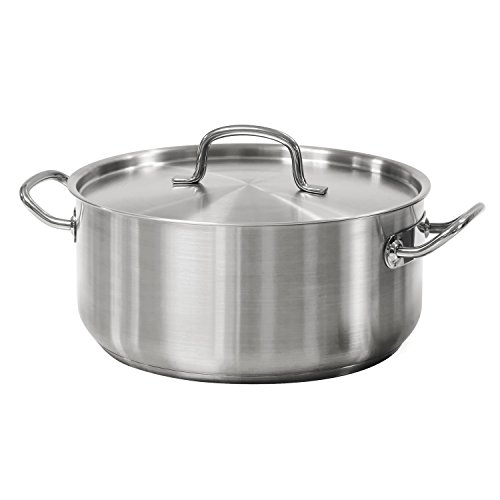
Tramontina Pro-Line 9-Quart Stainless Steel Dutch Oven
A full 9 quart clad stainless pot that heats on induction, moves into a hot oven without worry, and wipes clean far more easily than cast iron. Our pick for everyday big-batch cooking.
Check price on AmazonChoose the Tramontina Pro-Line if you boil, simmer, and batch cook often and want the full large capacity without a heavy lift. Its stainless build shrugs off acidic tomato sauces and long simmers, it is friendly to metal utensils, and it is the easiest of the three to scrub back to clean.
Step up to the Demeyere Atlantis 8.9 quart casserole if you want the most refined stainless pot of the group and plan to keep it for decades. The Atlantis line is heavy gauge, fully clad Belgian cookware with a polished interior that browns meat beautifully and builds a good fond for pan sauces. It is the splurge, and it behaves like one.
Reach for the Overmont 7 quart enameled cast iron dutch oven if your cooking leans toward braises, stews, beans, and sourdough. Enameled cast iron holds heat like nothing else here, so it keeps a gentle simmer steady and gives bread a strong oven spring. It is 7 quarts rather than a full 8 or 9, and it is the heaviest of the three, but for low and slow work that weight is a feature rather than a flaw.
What actually matters in a large dutch oven
Capacity. At this end of the range, an extra quart or two changes what the pot can do. A true 8 to 9 quart holds a full stockpot batch, a big pot of chili for a crowd, or pasta for a large table. A 7 quart still handles a generous braise or a loaf of bread but fills up faster when you are cooking liquid heavy dishes. Match the number to your most common large job rather than to the largest meal you cook once a year.
Material, enameled cast iron versus bare stainless. This is the real decision. Enameled cast iron, like the Overmont, retains heat deeply and evenly, which is why it excels at braising and bread, but it is heavy and the enamel can chip if treated roughly. Bare stainless, like the Demeyere and Tramontina, heats faster, responds quickly when you change the burner, resists acidic foods without any coating to wear out, and is much lighter to carry across the kitchen. Neither is nonstick, so both families need a little fat and patience when you sear.
Oven safe temperature. Bare stainless pots with metal handles and lids can generally take high oven heat without concern, which makes the two stainless picks easy to move from stovetop to oven. Enameled cast iron is also designed for the oven and holds heat superbly once there, though if a pot ships with a plastic or phenolic knob that part can cap the safe temperature, so check the lid hardware before you run it very hot. When bread baking at high heat matters, an all metal lid is the safer choice.
The lid. A heavy, well seated lid traps steam and keeps long simmers from drying out. Cast iron lids are naturally heavy and seal well. Stainless lids vary, so look for one that sits flat and snug. All three of these pots ship with a matching lid, which is part of why they suit slow cooking rather than open boiling alone.
Cleanup. Stainless is the easy winner here. Stuck on bits lift with a soak and a non abrasive scrub, and both stainless pots tolerate a dishwasher if you prefer. Enameled cast iron cleans well too, but hand washing protects the enamel over the long run and the sheer weight makes it more of a chore at the sink.
What to ignore. Do not pay extra for exotic nonstick claims on a pot this large, because a true dutch oven is meant for browning and slow cooking where a little stick is normal and even useful for flavor. Treat color and finish as a preference, not a performance feature. And do not let brand prestige alone decide the purchase if you mostly cook big, simple batches, because a sensible stainless pot does that job just as well as a premium one.
How the three compare
Think of the Tramontina as the practical middle of the group. It delivers the full 9 quart capacity, works everywhere, and is the one you can justify using for a weeknight pot of soup as readily as a weekend project. The Demeyere occupies the same stainless territory but takes the build quality, searing performance, and longevity a clear step higher, which is why we frame it as the upgrade rather than a different kind of pot. If you were only ever going to own one large stainless vessel and wanted the best, it would be the Atlantis.
The Overmont sits apart because it is a different material with a different purpose. It will not match the stainless pots for lifting ease, fast response, or dishwasher convenience, and it comes in a touch smaller at 7 quarts. What it offers in return is the steady, enveloping heat that defines a classic dutch oven, which pays off in fork tender braises and bakery style crust. Choosing between the Overmont and either stainless pot is really choosing between two cooking styles, not between a better and worse product.
Our honest verdict
For the broadest set of kitchens, we would choose the Tramontina Pro-Line 9 quart dutch oven. It stands out for hitting a genuine large capacity while staying light, versatile, and painless to clean, which makes it the pot you actually use rather than the one that lives in a cabinet. If you want to invest once and keep a flawless stainless pot for life, the Demeyere Atlantis 8.9 quart casserole is the clear premium step up. And if your cooking revolves around braises, stews, and bread, the Overmont 7 quart enameled cast iron dutch oven is the right specialist, with the understanding that you are trading a little capacity and a lot of weight for unmatched heat retention.
Whichever you pick, buy for the way you cook most weeks, not for the rare showpiece meal. You can compare more options in our guide to large dutch ovens, and if your large cook often spills over into reheating leftovers or finishing dishes, our coverage of toaster ovens and microwave ovens may help round out the kitchen.