For an active home cook who sharpens often, our pick is a rolling knife sharpener kit with a magnetic angle guide and a leather strop, because it locks in a repeatable edge angle and leaves a finish close to a whetstone without the long freehand learning curve. If you just want the fastest touch-up and you also keep serrated knives in rotation, the AccuSharp is the simpler everyday grab. A classic 3-stage pull-through sits in the middle when you want coarse to fine stages in one cheap, grab-and-go tool.
The short answer
If you cook most days and your knives get dull faster than you would like, the setup that pays off is one that gives you a consistent angle and a fine finishing stage. That is why we would choose the rolling sharpener kit as the everyday workhorse. The magnetic guide holds the blade at a fixed angle, the abrasive wheel does the grinding, and the included leather strop polishes the edge so it bites cleanly through tomatoes and herbs rather than tearing them. It asks a little more time than a quick pull-through, but it rewards you with an edge that lasts longer between sharpenings, which matters when you sharpen often.
That said, no single tool is right for everyone. The AccuSharp handheld sharpener is the fastest way to bring a tired blade back to usable in a few strokes, and it is the only option in this group that is built to handle serrated edges as well as straight ones. The 3-stage pull-through set is the budget all-rounder with separate coarse, medium and fine slots plus a cut-resistant glove for safer handling. Pick by how you actually cook, not by which tool looks the most capable.
When each sharpener is the better call
The rolling kit is the one we reach for when edge quality and repeatability matter more than raw speed. Because the angle is set by a magnetic guide rather than your wrist, your results do not drift from one session to the next, and the strop step gives a refined edge that a two-slot pull-through cannot match. For a cook who values a knife that glides, this is the standout.
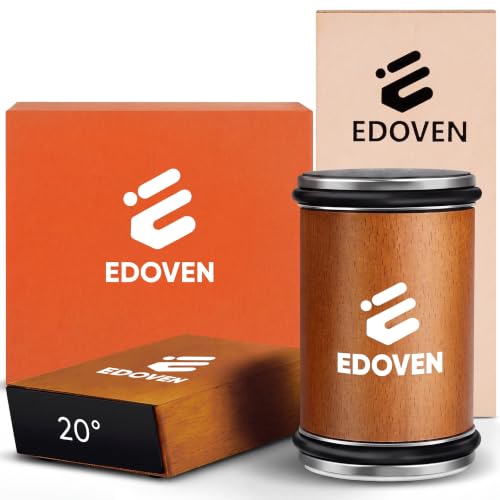
Rolling Knife Sharpener Kit with Leather Strop and Magnetic Angle Guide
A manual rolling system with magnetic 15 and 20 degree guides and a leather strop, so you lock the angle once and repeat it on every pass. This is our pick for an active cook who wants a crisp, consistent edge without learning freehand stones.
Check price on AmazonThe AccuSharp is the better call when convenience wins. It is compact, the handle keeps your fingers clear of the carbide, and a handful of light passes restores a working edge in under a minute. It is also the pick if you regularly cut crusty bread or use serrated utility knives, since it is designed to hone both straight and serrated blades. It will not leave a polished, hair-splitting finish, but for fast daily upkeep that is often all you need.
The 3-stage pull-through earns its place as the inexpensive first sharpener or the one you keep in a drawer for guests. The separate stages let you start coarse on a badly dulled blade and finish finer, and the bundled cut-resistant glove is a genuinely useful safety extra. It is the least precise of the three because the angle is fixed by the slots rather than matched to your knife, so treat it as maintenance rather than a full restoration tool.
What actually matters when you sharpen every week
There are three real sharpening styles for a home kitchen, and it helps to know where each tool sits. A whetstone gives the most control and the finest edge, but it has the steepest learning curve because you hold the angle yourself. A pull-through, like the AccuSharp and the 3-stage set, is the fastest and most forgiving, dragging the blade across fixed carbide or ceramic at a preset angle. A rolling system, like our top pick, sits between the two: it uses an abrasive wheel but a magnetic guide fixes the angle for you, so you get close to stone quality with far less practice. True electric sharpeners are a fourth style, but none are in this group.
Grit stages are the next thing to understand. Coarse removes metal to rebuild a damaged or very dull edge, medium refines it, and a fine or strop stage polishes the apex so it slices cleanly. A cook who sharpens often rarely needs the coarse stage, so a tool with a good fine or stropping step matters more than one with an aggressive coarse slot.
Angle guidance is what separates a decent edge from a frustrating one. Most Western kitchen knives are happiest somewhere around 15 to 20 degrees per side, and the single most useful feature in this group is the rolling kit's magnetic guide that holds that angle for you. If you sharpen freehand or in a basic pull-through, consistency is on you, which is exactly where beginners lose the edge they just created.
On the learning curve, be honest with yourself. If you will not practice, a guided or pull-through tool beats a whetstone you never master. And a few things are worth ignoring: inflated stage counts that just split the same job into more slots, vague claims about restoring any blade, and the idea that more aggressive grinding is better. For good knives, lighter and more controlled almost always wins.
How the three compare
Think of them as a ladder of control versus convenience. The AccuSharp is the most convenient and the most forgiving, and it is the serrated-friendly choice, but it gives the coarsest finish. The 3-stage pull-through adds staged grits and a safety glove for not much more effort, yet its fixed slots still will not match your knife's own angle. The rolling kit asks for the most setup and the most minutes, but it is the only one here that combines a guided angle with a stropping stage, which is why it produces the edge we would want on a knife we use every day.
If your priority is speed and mixed blade types, step down the ladder toward the AccuSharp. If your priority is a clean, long-lasting edge and you are willing to spend a couple of extra minutes, climb to the rolling kit. The 3-stage set is the sensible compromise and the easiest on the wallet, which keeps it relevant for a lot of kitchens.
Our honest verdict
For most active home cooks, we would build the everyday setup around the rolling sharpener kit because repeatable angles and a stropped finish are what keep a knife genuinely sharp between sessions. Keep the AccuSharp nearby if you want a thirty-second rescue or you cut a lot of serrated bread, and treat the 3-stage pull-through as a capable budget starter. None of these replace a honing rod for daily realignment, so a quick hone between sharpenings will stretch every edge further.
A quick safe-handling note: these tools work on very sharp blades, so keep your guide hand clear, use light and even pressure rather than force, let the abrasive do the work, and always follow the angle guidance your knife maker lists for its edge. If a sharpener includes a cut-resistant glove, use it.
Want to go wider? See our full knife sharpener guides, or round out your kit with the right knife sets and a leather knife roll to carry them safely.