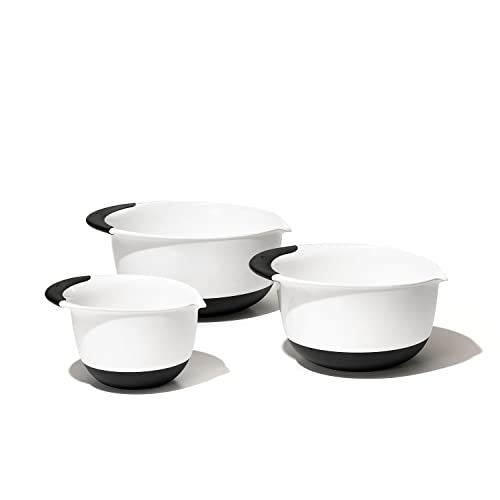
Finding the right mixing bowl set can make baking, prepping, and serving easier and more enjoyable. Our editorial team compared specifications, buyer feedback and key decision factors across top brands like Pyrex, OXO, Cuisinart, and KitchenAid. We evaluated materials, sizes, features, and real user reviews to help you choose the best set for your kitchen.
Buying Guide: What to Look for in Mixing Bowls
When shopping for mixing bowls, consider the material, size range, and special features that match your cooking style. Here are the key factors to evaluate.
Material Matters
Glass bowls are microwave and oven safe, nonporous, and allow you to see the contents. They are heavier and can break if dropped. Stainless steel bowls are lightweight, durable, and often have non-slip bases. They are not microwave safe but resist rust and stains. Ceramic bowls are attractive for serving but are heavy and fragile. Some sets combine materials, such as glass bowls with plastic lids for storage.
Size and Nesting
Most sets include three to five bowls ranging from 1 to 5 quarts. A 1.5-quart bowl is good for eggs or small prep, a 3-quart bowl for cake batter, and a 5-quart bowl for salads or dough. Bowls that nest together save cabinet space. Check if the set includes lids, colanders, or strainers for added value.
Non-Slip Bases and Handles
A non-slip silicone or rubber base keeps the bowl from sliding on the counter while you whisk or mix. This is especially helpful when using a hand mixer. Some bowls have a handle or a spout for easy pouring. These features add convenience but may increase the price.
Dishwasher and Microwave Safety
Most stainless steel and glass bowls are dishwasher safe. Glass bowls can go in the microwave and oven (check temperature limits). Plastic lids are usually top-rack dishwasher safe. If you plan to melt butter or reheat ingredients, choose glass bowls. For everyday mixing, stainless steel is more forgiving.
Common Mistakes When Choosing Mixing Bowls
Avoid these pitfalls when selecting a mixing bowl set to ensure you get the most value.
Buying Too Few or Too Many Bowls
A set of three bowls is enough for most tasks. Buying a single large bowl may limit your ability to prep multiple ingredients. On the other hand, a 10-piece set might include sizes you rarely use. Look for a set that covers small, medium, and large tasks.
Ignoring Storage Space
Some bowls are bulky and do not nest well. Measure your cabinet space and choose a set that nests or stacks compactly. Glass bowls are heavier and may require more sturdy shelving.
Overlooking Non-Slip Features
A bowl that slides around on the counter can be frustrating and dangerous, especially when using electric mixers. Non-slip bases are a worthwhile investment for safety and ease of use.
Choosing the Wrong Material for Your Needs
If you frequently microwave or bake, glass is essential. If you need lightweight bowls for everyday mixing, stainless steel is better. Ceramic bowls are best for serving, not heavy mixing. Consider your primary use before buying.
Not Checking Lid Compatibility
If you plan to store leftovers or prepped ingredients, make sure the lids fit securely and are leak-proof. Some lids are not airtight, which can lead to spills. Read reviews to confirm lid performance.