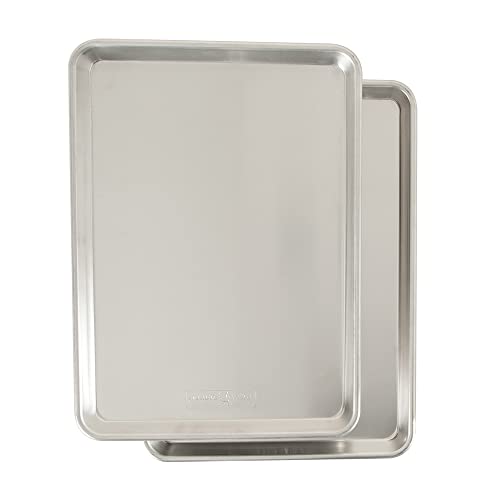
Heavy-gauge aluminum, stainless steel, and carbon steel sheets are safe at 500°F, but nonstick sheets often are not.
- Always check the manufacturer's temperature rating before using a sheet at high heat.
- Use silicone mats instead of parchment paper at 500°F to avoid burning.
- Prevent warping by preheating the oven and avoiding drastic temperature changes.
What Types of Baking Sheets Are Safe at 500°F?
Aluminum baking sheets are the most common and generally safe up to 500°F. Heavy-gauge aluminum, like quarter sheets, resist warping better than thin ones. Stainless steel sheets are also safe, but they conduct heat less evenly. Carbon steel pans are excellent for high heat, often used in pizzerias. Avoid sheets with nonstick coatings unless they explicitly state a higher temperature rating. PTFE-based nonstick coatings can degrade above 500°F, releasing potentially harmful fumes.
How to Check If Your Baking Sheet Is Oven-Safe at 500 Degrees
Look for a stamp or engraving on the bottom of the sheet that indicates a temperature rating. If no rating is visible, check the manufacturer's website or product listing. Many brands list maximum safe temperatures in their specifications. For example, Nordic Ware's ProForm sheets are rated up to 450°F, while their commercial-grade aluminum sheets handle 500°F. When in doubt, contact the manufacturer directly. A quick test is to heat the empty sheet at 500°F for 10 minutes and watch for warping or smoking.
What Happens If You Use a Baking Sheet Above Its Rated Temperature?
Using a sheet above its rating can cause warping, which makes it unstable and can lead to spills. Nonstick coatings may peel or bubble, ruining the pan and potentially contaminating food. Some coatings release fumes that are harmful to birds and may cause flu-like symptoms in humans. The sheet might also discolor or develop a permanent patina, which is cosmetic but not dangerous. In extreme cases, a thin sheet could buckle and cause hot oil or food to slide off.
Best Practices for Baking at 500°F
Preheat the oven fully before placing the sheet inside to minimize thermal shock. Use a sheet with at least 1-inch sides to catch any drips, especially for roasting vegetables or baking pizza. Place the sheet on the middle rack for even heat distribution. Avoid using parchment paper above 425°F, as it can burn; use silicone mats rated for 500°F instead. Always use heavy-duty oven mitts or a towel, as the sheet's edges will be dangerously hot.
Alternatives for High-Heat Baking
If your baking sheet isn't rated for 500°F, consider a cast iron skillet or a baking stone. Cast iron easily withstands 500°F and is ideal for pizza or bread. A baking stone distributes heat evenly and can be preheated in the oven. You can also use a broiler pan, which is designed for high temperatures. These options often produce better browning and crisping than a standard baking sheet.