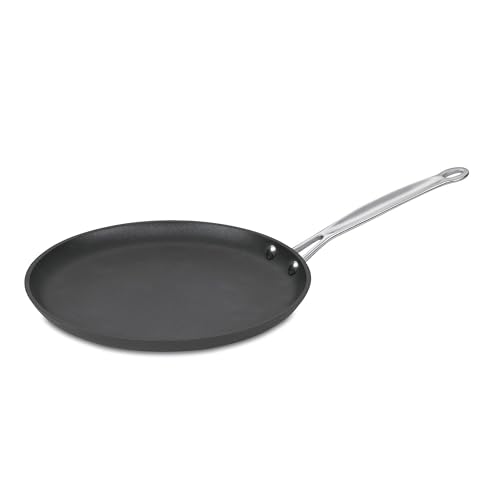
Crepe Pans
Best Crepe Pans for Thin, Even Crepes at Home
7 picks compared
9 min read
ProductPickly is reader-supported. When you buy through links on our site, we may earn an affiliate commission at no extra cost to you. It never changes our picks.
The short answerFor most home cooks the best crepe pan is a flat 10 inch nonstick pan with low sloped sides, like the SENSARTE 10 inch granite pan, because the low rim lets thin batter spread to the edge and the flat base browns evenly on any stove including induction. If you make crepes often and want a pan that lasts, the Le Creuset Toughened Non-Stick PRO comes with its own spreader and a far tougher coating. For full-size crepes and dosas the ESLITE 11 inch is the roomier pick, the Hiceeden detaches its handle for tight storage, the Cuisinart hard-anodized pan suits gas and electric cooks who want a sturdier body, the Kordisen is the value choice that also handles dosas and tortillas, and the SENSARTE 12 inch ceramic pan makes the widest party-size crepes. Match the diameter to what you cook and confirm induction compatibility before you buy.
?How we pickedWe compare published specifications, safety certifications and thousands of verified owner reviews, and we do not physically test every unit. Read the full process in our review methodology.
SENSARTE 10 Inch Nonstick Crepe Pan, Granite Coating, Gray
★★★★★ 4.6 / 5 Best overall
A 10 inch flat pan with low rims and a granite-look nonstick surface that lets a ladle of batter spread out and slide off in one piece, which is what most crepe cooking comes down to. The nonstick is the wear part here, so keep it to low and medium heat and wooden or silicone tools if you want it to last.
Cooking surface About 10 inchesCoating Granite nonstick, PFOA freeBase Flat, induction readyHandle Stay-cool riveted
- Low rim makes flipping and sliding easy
- Batter releases cleanly on low oil
- Works on induction and gas alike
- Nonstick needs gentle heat and soft tools
- No batter spreader in the box
Best for: everyday crepes and pancakes on any stove
Le Creuset Toughened Non-Stick PRO Crepe Pan with Rateau, 11 Inch
★★★★★ 4.7 / 5 Best premium
An 11 inch pan with a hard, reinforced nonstick surface and a wooden rateau spreader for pushing batter into a thin even round. It is the heaviest investment here, so it earns its place if you make crepes often and want a pan that holds up to years of use.
Cooking surface About 11 inchesCoating Toughened hard nonstickIncluded Wooden rateau spreaderBase Flat, oven safe body
- Reinforced coating shrugs off daily use
- Comes with a proper wooden spreader
- Even heat gives consistent browning
- Costs well above the rest
- Heavier than the budget pans
Best for: frequent crepe makers who want a lasting pan
ESLITE LIFE 11 Inch Nonstick Crepe Pan with Spreader, Granite Coating
★★★★★ 4.5 / 5 Best large
An 11 inch flat pan with a granite nonstick surface and an included wooden spreader, sized for full French crepes and large dosas rather than small pancakes. The wider surface needs a bit more batter and a steadier hand to spread evenly, which is the trade for the extra room.
Cooking surface About 11 inchesCoating Granite nonstick, PFOA freeIncluded Wooden batter spreaderBase Flat, induction compatible
- Wide surface fits full-size crepes
- Spreader included for even rounds
- Compatible with induction and gas
- Large size is clumsy for small pancakes
- Needs more batter per crepe
Best for: full-size French crepes and large dosas
Hiceeden Nonstick Crepe Pan with Spreader, 10 Inch, Detachable Handle, Ceramic Coating
★★★★★ 4.3 / 5 Best for small kitchens
A 10 inch ceramic-coated pan whose handle unclips so the flat body stores in a drawer or slides into the oven to finish a filling. The detachable handle is the reason to pick it, though a clip-on handle needs a firm seat before you lift a hot pan.
Cooking surface About 10 inchesCoating Ceramic, PFOA freeHandle Detachable clip-onBase Flat, induction compatible
- Handle detaches for compact storage
- Ceramic surface starts very slick
- Body can go into the oven
- Clip-on handle needs a careful seat
- Ceramic slickness fades sooner than granite
Best for: small kitchens and drawer storage
Cuisinart Chef's Classic Nonstick Hard Anodized 10 Inch Crepe Pan
★★★★★ 4.6 / 5 Best hard-anodized
A 10 inch hard-anodized pan with low sloped sides that make sliding a crepe out easy and a sturdier body than the thin budget pans. The hard-anodized base holds heat steadily, so it browns evenly once it is up to temperature.
Cooking surface About 10 inchesBody Hard-anodized aluminumCoating Nonstick interiorSides Low and sloped
- Sturdy hard-anodized body
- Low sides help crepes slide out
- Even, steady browning heat
- Not induction friendly
- Nonstick still needs gentle care
Best for: gas and electric cooks who want a solid body
Kordisen Crepe Pan Nonstick, 10 Inch Dosa Pan with Spreader, Granite Coating
★★★★★ 4.4 / 5 Best value
A 10 inch granite nonstick pan sold with a wooden spreader and pitched at dosas and tortillas as much as crepes, which makes it a flexible pan for the money. It is a lighter build, so treat it gently and expect the coating to be the limit on its lifespan.
Cooking surface About 10 inchesCoating Granite nonstick, PFOA freeIncluded Wooden spreaderBase Flat, induction compatible
- Spreader included for the money
- Handles dosas and tortillas too
- Flat base works on induction
- Lighter body than pricier pans
- Coating sets the lifespan
Best for: budget buyers who also make dosas and tortillas
SENSARTE 12 Inch Nonstick Crepe Pan, Ceramic Coating, White
★★★★★ 4.4 / 5 Best extra large
A 12 inch ceramic-coated pan for the widest crepes, party-size pancakes and large flatbreads, with a light ceramic surface that releases well when new. The extra diameter needs more batter and a longer spreading motion, so it suits cooks who want size over nimble handling.
Cooking surface About 12 inchesCoating Ceramic, PFOA freeBase Flat, induction compatibleHandle Stay-cool riveted
- Widest surface for big crepes
- Ceramic releases well when new
- Flat base suits induction
- Too large for quick single pancakes
- Ceramic slickness drops over time
Best for: the widest crepes and party-size batches
The best crepe pan for most home cooks is a flat 10 inch nonstick pan with low sloped sides, because those two features let thin batter spread to the edge and let you slide a finished crepe out in one piece. Below we rank seven real crepe pans chosen for surface, size and stove compatibility, from an everyday 10 inch pan to a 12 inch party-size version and a premium pan with its own spreader. Bigger and pricier is not always better, and we flag where a smaller or cheaper pan is the smarter buy.
Why low rims and a flat base matter most
Crepe batter is far thinner than pancake batter, so you pour a ladle in and immediately tilt and swirl the pan to run it out to a wide, even circle. A tall straight side fights that motion and traps batter in the corner, which is why a proper crepe pan has a low, gently sloped rim: the batter flows to the edge, and a spatula or your fingertips can slide under the thin crepe to flip and lift it. The base is the other half of the story. A flat, even bottom sits in full contact with the burner or induction element and browns the whole crepe evenly, while a warped or domed base gives you a pale center ringed by scorched edges. When you compare pans, the rim height and base flatness tell you more than any coating claim on the box.
Nonstick, carbon steel or cast iron
The surface decides how forgiving the pan is and how long it lasts. Nonstick, which covers most of our picks, is the easiest place to start: batter releases on a whisper of oil, the first crepe aside, and cleanup is a wipe, but the coating is a wear part and eventually sets the pan's lifespan. Granite-look coatings, as on the SENSARTE and ESLITE pans, tend to hold up a little longer than plain ceramic, while ceramic surfaces like the Hiceeden and SENSARTE white pans start extremely slick and lose some of that slickness sooner. Carbon steel is the traditional creperie surface and a seasoned steel pan releases beautifully and lasts for decades, at the cost of seasoning and careful drying. Cast iron holds heat like nothing else and never wears out, but it is heavy to lift and swirl. For a first home crepe pan, a granite or ceramic nonstick is the forgiving, low-maintenance choice.
Size and stove compatibility
Match the diameter to what you cook and to the stove you own. A 10 inch pan, like our top SENSARTE and the Cuisinart, is the versatile middle: easy to swirl, easy to store, and big enough for a classic crepe or a stack of pancakes. Step up to 11 or 12 inches, as with the ESLITE 11 inch or the SENSARTE 12 inch, for full French crepes, large dosas and party-size rounds, and accept that the wider surface wants more batter and a steadier spreading hand. Stove type is the other check. Induction needs a flat, magnetic-friendly base that sits dead flat on the element, and the SENSARTE, ESLITE, Hiceeden and Kordisen pans all list induction-ready bases, while the aluminum-bodied Cuisinart is not made for induction. If you cook on induction, confirm compatibility before you buy, because a beautiful pan that will not heat is no bargain.
Spreaders, seasoning and daily care
A batter spreader, or rateau, is the little T-shaped tool you drag across fresh batter to form an even circle, and it gives more consistent thin crepes than swirling alone, which is why the Le Creuset, ESLITE and Kordisen pans include one. You do not need it, but on wider pans it earns its keep. Care is what keeps any of these pans alive. Cook crepes on low to medium heat rather than a blazing burner, since nonstick coatings break down faster when overheated and crepes simply do not need the heat. Use wooden or silicone tools, never metal, wash by hand with a soft sponge, and let the pan cool before rinsing so it does not warp. Expect the first crepe of every session to be a sacrificial one while the pan finds its temperature. Treat a nonstick crepe pan gently and it serves you for years; run it hot with a metal spatula and it can fail within months.
Questions people ask
What makes a good crepe pan?
Two things matter most: a low rim and a flat, even base. Crepe batter is thin, so you tilt and swirl the pan to spread it, and a low sloped side lets the batter run to the edge and lets a spatula or your fingers get under the crepe to flip and lift it. A flat base with steady heat gives even color instead of a pale center and dark ring. Everything else, from the coating to the handle, is a preference on top of those two basics.
Nonstick, carbon steel or cast iron for crepes?
Nonstick, like most pans here, is the easiest start: batter releases on almost no oil and cleanup is simple, but the coating wears and sets the pan's lifespan. Carbon steel is the traditional creperie choice, since a seasoned steel pan releases beautifully and lasts for decades, but it needs seasoning and careful drying. Cast iron holds heat superbly and lasts forever, though it is heavy to lift and swirl and also needs seasoning. For a first crepe pan at home, nonstick is the forgiving pick.
What size crepe pan should I buy?
A 10 inch pan is the sweet spot for home crepes and pancakes, easy to swirl and to store. Go to 11 or 12 inches, like the ESLITE 11 inch or the SENSARTE 12 inch, if you want full French crepes, large dosas or party-size rounds, and accept that a bigger pan needs more batter and a steadier spreading hand. Smaller than 10 inches suits blini and single servings but feels cramped for a classic crepe.
Do I need a batter spreader?
No, but it helps. A spreader, or rateau, is the small T-shaped tool you drag across the batter to make an even circle, and it gives more consistent thin crepes than swirling alone, especially on wider pans. Several picks here include one, such as the Le Creuset, ESLITE and Kordisen pans. If your pan does not come with a spreader you can still make good crepes by tilting and swirling the batter the moment it hits the pan.
Are these crepe pans induction compatible?
Most are, but check before you buy for an induction hob. The SENSARTE, ESLITE, Hiceeden and Kordisen pans here list flat bases that work on induction as well as gas and electric. The Cuisinart hard-anodized pan is aluminum bodied and is not made for induction. On induction, a flat unwarped base matters even more, since any rocking cuts contact with the element.
How do I keep a nonstick crepe pan from wearing out?
Heat and tools do the damage. Cook crepes on low to medium heat, since nonstick coatings degrade faster when overheated and crepes do not need a screaming pan. Use wooden or silicone tools rather than metal, wash by hand with a soft sponge, and let the pan cool before rinsing so it does not warp. Stored carefully and used gently, a nonstick crepe pan lasts years; abused on high heat with metal spatulas, it can fail in months.
Why does my first crepe always fail?
That is normal, and cooks call it the sacrificial crepe. The pan is finding its temperature and the surface is seasoning with the first film of oil and batter, so the first one often tears or sticks. Wipe a thin film of oil into the pan, let it come to a steady medium heat, and the second crepe onward should release cleanly. If every crepe sticks, the pan is too cool or too dry rather than faulty.
Can I make dosas and tortillas in a crepe pan?
Yes, a flat crepe pan doubles well for dosas, tortillas and thin pancakes, which is exactly how the Kordisen pan is pitched. The same low rim and flat base that suit crepes let you spread dosa batter thin and flip a tortilla easily. For dosas you may want a slightly larger flat pan and a higher steady heat, so a 10 to 12 inch pan covers both jobs comfortably.
The bottom lineSo which one?
The SENSARTE 10 inch granite pan is the crepe pan we would hand most kitchens, since it pairs a low easy-flip rim with a flat induction-ready base at a sensible outlay. Choose the Le Creuset if you make crepes often and want a lasting pan with a spreader in the box, the ESLITE 11 inch or SENSARTE 12 inch for full-size and party crepes, the Hiceeden for drawer storage, the Cuisinart for a sturdier hard-anodized body on gas and electric, and the Kordisen as the value pick that also does dosas and tortillas. Whichever you choose, keep the heat low, use soft tools, and let the first crepe be the sacrificial one.