Pastry Rolling Mats
Best Pastry Rolling Mats
7 picks compared
8 min read
ProductPickly is reader-supported. When you buy through links on our site, we may earn an affiliate commission at no extra cost to you. It never changes our picks.
The short answerA good pastry rolling mat should lie flat on the counter without curling, grip the surface underneath so it does not slide while you roll, and keep dough from sticking so you can lift a pastry sheet cleanly. The non-slip 28 by 20 inch extra-thick mat is our overall pick because its size covers most doughs, the extra thickness keeps it flat, and the printed measurements and circle guides help you roll to the right shape. The 24 by 16 inch mat with measurement guides is the one to grab for a smaller counter, the JJOO 27 by 20 inch mat suits heavy kneading, the 24 by 16 inch mat with raised edges keeps flour on the mat, the DANIA and DEAN extra-thick mat is a solid everyday choice, the 36 by 24 inch mat handles big batches, and the 16 by 24 inch kneading sheet is a simple value pick. Measure your counter and decide how much dough you roll at once first, then match the mat to the job.
?How we pickedWe compare published specifications, safety certifications and thousands of verified owner reviews, and we do not physically test every unit. Read the full process in our review methodology.
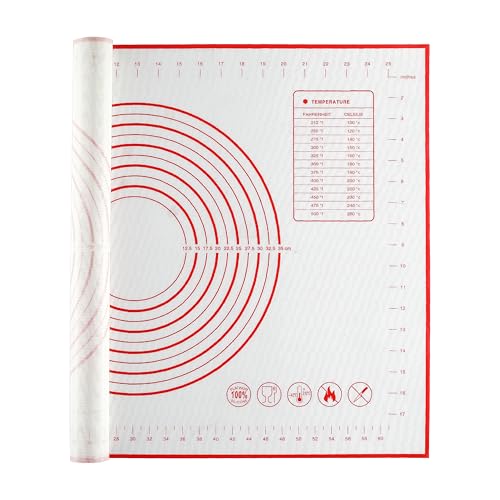
Non-slip Silicone Pastry Baking Mat 28''x 20'' Extra Thick for Pastry Bread
★★★★★ 4.6 / 5 Best overall
This is the mat we would reach for first because 28 by 20 inches is large enough to roll out a pie crust or a batch of cookies without dough hanging off the edge, and the extra thickness is what keeps it lying flat instead of curling at the corners the way thinner mats do. The non-slip underside grips the counter so the mat stays put while you lean into a rolling pin. The printed measurements and circle guides are genuinely useful here rather than decoration, since you can roll a crust to a set diameter without guessing, and the nonstick silicone lets you peel dough up cleanly when you are done.
Size 28 by 20 inchesMaterial SiliconeGrip Non-slip undersideGuides Measurements and circles
- Large surface for crusts and cookie batches
- Extra thickness keeps it flat
- Measurement and circle guides help sizing
- Too big for a very small counter
- Thicker body takes more drawer space rolled up
Best for: anyone who wants one versatile mat for pastry, bread, and cookies
24" x 16" Silicone Baking Mat with Measurement Guides
★★★★★ 4.5 / 5 Best for small counters
At 24 by 16 inches this mat fits a compact worktop or a small island where the bigger mats would hang over the edge, and it still gives you enough room to roll a single crust or knead a modest batch of dough. The printed measurement guides help you judge how far to roll without pulling out a ruler. It is the pick for a tight kitchen rather than a bakery-sized job, so if you routinely roll large batches you will want something wider, but for everyday home baking on limited counter space it covers the work well.
Size 24 by 16 inchesMaterial SiliconeGuides Printed measurementsBest use Small counters
- Compact size fits small worktops
- Measurement guides for quick sizing
- Enough room for a single crust
- Tight for large or double batches
- Less flat than the extra-thick mats
Best for: bakers working on a small counter or island
JJOO Large Bread Rolling Cookie Kneading Baking Mat, Nonstick (27x20 Inch)
★★★★★ 4.5 / 5 Best for kneading
The reason to pick this one is the working room for hands-on dough. At 27 by 20 inches it gives you space to knead bread or push out a big sheet of cookie dough, and the nonstick surface means the dough releases instead of tearing when you fold and turn it. It wipes clean afterward rather than trapping flour paste in a textured surface. It leans toward bread and cookie work rather than fine pastry detail, so there is less emphasis on circle guides here, but if kneading is most of what you do it gives you a large, forgiving surface to work on.
Size 27 by 20 inchesMaterial SiliconeSurface NonstickBest use Kneading dough
- Roomy surface for kneading bread
- Nonstick so dough releases cleanly
- Wipes clean after floury work
- Fewer sizing guides than the pastry mats
- Large footprint on a small counter
Best for: bread bakers who knead and shape dough by hand
Silicone Pastry Non Stick Baking Mat 24"x16" Dough Rolling with Edge Heightening
★★★★★ 4.4 / 5 Best for containing mess
This mat solves the messiest part of rolling dough with a raised edge around the border that keeps flour and stray dough on the mat instead of dusting the counter and floor. For anyone who dreads the cleanup more than the baking, that lip is the whole point, and the nonstick surface still lets pastry lift away without sticking. The heightened edge does make the mat a little less flexible to roll up and store, and it is a mid-size 24 by 16 inch surface rather than an oversized one, but for keeping a tidy work area it earns its spot.
Size 24 by 16 inchesMaterial SiliconeEdge Raised borderSurface Nonstick
- Raised edge keeps flour on the mat
- Nonstick surface releases dough
- Less counter cleanup after rolling
- Raised edge makes it stiffer to roll up
- Mid-size rather than extra large
Best for: bakers who want to keep flour and mess off the counter
DANIA & DEAN 26"x16" Extra Thick Silicone Baking Mat for Pastry and Bread
★★★★★ 4.5 / 5 Best everyday mat
This is a straightforward everyday mat that gets the basics right. At 26 by 16 inches with an extra-thick body, it lies flat and stays put, giving you a stable nonstick surface for rolling pastry or shaping bread without the mat sliding or bunching under the pin. The thickness also lets it double as a heat-friendly surface for resting warm dough. It does not carry the extra features of the larger picks, such as circle guides or a raised edge, but if you want a dependable thick mat for regular baking it is a sensible middle choice.
Size 26 by 16 inchesMaterial SiliconeBody Extra thickBest use Everyday baking
- Thick body lies flat and stays put
- Good size for pastry and bread
- Stable nonstick working surface
- No circle guides for shaping
- No raised edge to catch flour
Best for: regular home bakers who want a dependable thick mat
Non-slip Silicone Pastry Mat Extra Large with Measurements 36''x 24''
★★★★★ 4.4 / 5 Best for big batches
When counter space is not the limit and batch size is, this 36 by 24 inch mat gives you the widest surface in the lineup, enough to roll a large sheet of dough or lay out several pastries at once without crowding. The non-slip backing and printed measurements carry over from the smaller mats, so you keep the grip and sizing guides on a bigger scale. The catch is the same size that makes it useful, since it needs a generous run of counter to lie flat and can overhang a small worktop, so this is the pick for a large kitchen or serious batch baking rather than a compact space.
Size 36 by 24 inchesMaterial SiliconeGrip Non-slip backingGuides Printed measurements
- Widest surface for large batches
- Non-slip backing on a big scale
- Measurements for sizing large sheets
- Needs a lot of counter to lie flat
- Overhangs a small worktop
Best for: bakers rolling large batches in a roomy kitchen
Silicone Baking Pastry Mat Large Dough Kneading Sheet for Rolling, 16x24 in
★★★★★ 4.4 / 5 Best value
This is the pared-down pick for someone who just wants a plain, dependable rolling surface. At 16 by 24 inches it is a good general size for a single crust or a batch of dough, and the nonstick silicone does the core job of letting you roll and lift without sticking, with nothing extra to fuss over. It skips the raised edges and circle guides of the fancier mats, so you trade features for simplicity, but as a basic dough sheet that rolls up and stores easily it does what most people need from a rolling mat.
Size 16 by 24 inchesMaterial SiliconeSurface NonstickStyle Plain dough sheet
- Simple nonstick surface with no frills
- Good general size for one batch
- Rolls up and stores easily
- No measurement or circle guides
- No raised edge to catch flour
Best for: a first mat or a simple everyday dough surface
A pastry rolling mat earns its place when it lies flat on the counter without curling, grips the surface so it does not slide while you roll, and keeps dough from sticking so you can lift a pastry sheet cleanly. This guide sorts our picks by the job they do best, from a large all-round mat to a raised-edge mat that keeps flour off the counter, so you can match one to how you actually bake.
Silicone versus fiberglass mats
The first thing to understand is what these mats are made of, because it shapes how they behave. Every pick in this guide is a silicone mat, which means a flexible, naturally nonstick surface that rolls up for storage and wipes clean, and that is what most people mean by a pastry rolling mat. Silicone gives you a soft, slightly grippy top that dough releases from easily, and a body that lies flat on the counter when it is thick enough. You will also see mats described as fiberglass, which usually refers to a silicone-coated fiberglass mesh built to line a baking sheet in the oven. Those are a different tool, made to bake on rather than to roll dough on, and they tend to be thinner and stiffer. For rolling and kneading on the counter, a solid silicone mat is the surface you want, so this guide focuses on silicone and treats oven-lining fiberglass mats as a separate category.
Printed measurements and circle guides
The feature that separates a plain dough sheet from a proper pastry mat is the printing on it. Many of these mats carry a measurement grid and a set of concentric circle guides, and for pastry work they do real work rather than decoration. The circles let you roll a crust out to the exact diameter of your pie or tart pan, so you stop guessing whether the round is big enough, and the grid helps you keep a sheet even in thickness instead of thin on one side and thick on the other. How much this matters depends on what you bake. For pies, tarts, and rolled cookies where shape and size decide whether the dough fits the pan, the guides save time and waste. For plain bread kneading, where you are folding and shaping by hand rather than rolling to a set size, the markings matter far less, so a baker who mostly kneads can reasonably choose a larger plain surface over a printed one. Decide which kind of baking you do most before you weigh this feature.
Non-slip grip and sizing to your counter
A rolling mat is only as good as its stability, because a mat that slides or curls fights you every time you lean into the pin. Most of these mats have a non-slip underside that grips a clean, dry counter, and the thicker mats hold that grip better because their weight and flatness keep the whole surface in contact rather than lifting at the corners. If a mat still shifts, the usual culprit is flour or grease on the counter, so wiping the surface clean first restores the grip, and a damp cloth underneath anchors a stubborn mat. Sizing the mat to your counter is the other half of stability. A mat needs a clear, flat run of counter at least as large as itself to lie properly, so measure your workspace before choosing a size. A 24 by 16 inch mat suits a small worktop, a 26 to 28 inch mat is the everyday middle ground, and a 36 by 24 inch mat needs a genuinely large counter or it will overhang the edge and refuse to sit flat. Buying the biggest mat you can is only an advantage if you have the space to lay it down.
Food-safe silicone and easy cleaning
The last thing that separates these mats is how they handle daily use and cleanup. Food-grade silicone is the standard material here, chosen because it is nonstick, flexible, and easy to keep clean, which is most of the reason bakers pick a silicone mat over a wooden board. Because the surface is nonstick, many doughs release with little or no added flour, so you can roll a delicate pastry without working extra flour into it, and a rolled sheet peels up in one piece instead of tearing. Cleaning is simple, and that is a large part of the appeal. A wipe with warm soapy water handles everyday flour and dough, many silicone mats are dishwasher safe on the top rack, and the flexible body rolls up to store flat in a drawer. The one habit worth keeping is drying the mat fully before you roll it away, since trapped moisture can leave a musty smell over time, and avoiding knives or sharp scrapers on the surface so you do not nick it. Treated that way, a good silicone mat stays flat, grippy, and nonstick for a long run of baking.
Questions people ask
What is a pastry rolling mat?
A pastry rolling mat is a flexible silicone sheet you lay on the counter to roll and shape dough on. Its job is to give you a nonstick surface so pastry lifts away cleanly, a non-slip underside so the mat does not slide while you roll, and often printed measurements so you can size a crust without guessing. Because it is silicone rather than a rigid board, it rolls up for storage and wipes clean, which is why many bakers prefer one over a wooden pastry board.
What size pastry mat should I get?
Match the size to your counter and to how much dough you roll at once. A mat around 24 by 16 inches suits a small worktop and a single crust, a 26 to 28 inch mat is the everyday sweet spot for most home baking, and a 36 by 24 inch mat is for large batches in a roomy kitchen. Measure the clear run of counter you have before you buy, since a mat that overhangs the edge will not lie flat and is awkward to roll on.
Do the printed measurements on a pastry mat actually help?
They do for pastry work where shape and size matter, such as pie crusts, tart shells, and rolled cookies. Circle guides let you roll a crust to the exact diameter of your pan, and the grid helps you keep a sheet even instead of thicker on one side. For plain bread kneading the guides matter less, so if you mostly knead you can prioritize surface size over printed markings.
How do I keep a pastry mat from sliding on the counter?
Most mats in this guide have a non-slip underside that grips a clean, dry counter on its own. If a mat still shifts, wipe the counter free of flour and grease first, since a dusty surface defeats the grip, or lay a lightly dampened cloth or paper towel under the mat to anchor it. A mat that lies flat without curling at the corners also stays put better, which is one reason the thicker mats feel more stable under a rolling pin.
Are silicone pastry mats nonstick without flour?
Silicone is naturally nonstick, so many doughs release with little or no flour, which is helpful when you want to avoid working extra flour into a pastry. Sticky or wet doughs may still need a light dusting, but you will generally use far less than on a bare counter or a wooden board. The nonstick surface is also what lets you peel a rolled sheet up in one piece instead of scraping it off.
How do you clean a silicone rolling mat?
For everyday use, wipe the mat with warm soapy water and let it air dry, which handles flour and most dough residue. Many silicone mats are also dishwasher safe on the top rack, though hand washing keeps them flexible longer. Make sure the mat is fully dry before you roll it up for storage, since trapped moisture can leave a musty smell, and avoid cutting on it with a knife or scraper that could nick the surface.
Can I use a pastry rolling mat in the oven?
A pastry rolling mat is designed as a work surface for rolling and kneading, not as a baking liner, so check the maker's guidance before putting one in the oven. Some thick silicone mats tolerate heat and can rest warm dough, but a rolling mat is not the same as a perforated baking mat made to line a sheet pan. If you need something to bake on, use a mat sold specifically as oven safe rather than assuming your rolling mat qualifies.
Is a silicone mat better than a wooden pastry board?
It depends on what you value. A silicone mat is nonstick, wipes or rinses clean, rolls up to store flat, and often comes with printed measurements, which makes it convenient for most home baking. A wooden board offers a firm, traditional surface some bakers prefer for certain doughs but takes more care to clean and store. For everyday pastry, cookies, and bread, a good silicone mat covers the work with less fuss, which is why this guide focuses on them.
The bottom lineSo which one?
The non-slip 28 by 20 inch extra-thick mat is our overall pick because its size covers most doughs, the extra thickness keeps it lying flat, and the measurements and circle guides make sizing a crust easy, which is what most home bakers want from a rolling mat. Choose the 24 by 16 inch mat with measurement guides for a small counter, the JJOO 27 by 20 inch mat for heavy kneading, the 24 by 16 inch raised-edge mat to keep flour off the counter, the DANIA and DEAN extra-thick mat as a dependable everyday surface, the 36 by 24 inch mat for large batches, and the 16 by 24 inch kneading sheet as a simple value pick. Measure your counter and decide how much dough you roll at once first, then match the mat to the job.