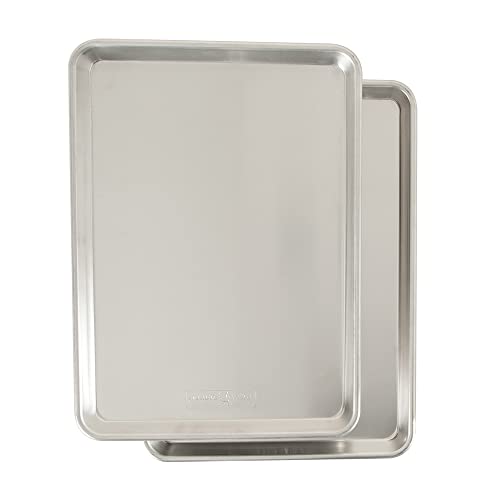
Choose heavy-gauge aluminum or steel for even baking and warp resistance.
- Light-colored sheets prevent over-browning; dark sheets require temperature adjustments.
- Half-sheet pans are the most versatile size for home bakers.
- Use parchment paper or silicone mats for easy release and cleanup.
- Avoid thermal shock to prevent warping; let sheets cool before washing.
What to Look for in a Cookie Baking Sheet
Material matters most. Aluminum heats quickly and evenly. Steel is durable but heavier. Insulated sheets prevent burning but slow browning. Gauge thickness affects warp resistance. A 16-gauge sheet is sturdy. Lighter sheets may bend in the oven. Size also counts. Half-sheet pans fit most home ovens. Rimmed edges catch spills and make handling easy. Flat sheets work for delicate cookies. Nonstick coatings ease release but scratch over time. Uncoated aluminum needs greasing or parchment.
Aluminum vs Steel vs Nonstick: Which Material Is Best?
Aluminum is the top choice for even baking. It conducts heat better than steel. Anodized aluminum resists corrosion and is safe for metal utensils. Bare aluminum reacts with acidic ingredients. It can leave a metallic taste in cookies. Steel is stronger and less likely to warp. It heats more slowly but holds heat steadily. Carbon steel is a common option. It requires seasoning to prevent rust. Nonstick sheets are convenient. They release cookies without greasing. The coating can chip or peel over time. Ceramic-coated sheets are more durable but heavier. Silicone mats turn any sheet nonstick. They are reusable and easy to clean. Avoid dark finishes. They absorb heat and can over-brown cookie bottoms.
Best Baking Sheets for Different Cookie Types
Drop cookies like chocolate chip need a sheet that promotes even browning. A heavy aluminum sheet works well. Sugar cookies benefit from a light-colored surface. It prevents over-browning on the bottom. Delicate cookies like madeleines require a nonstick or well-greased pan. They need easy release without breaking. Bar cookies are baked in rimmed sheets. A half-sheet pan with tall sides works for thick bars. Shortbread cookies prefer a heavier sheet for gentle heat. It reduces spreading. Biscotti need a sturdy sheet to hold their shape. A rimmed sheet prevents sliding. For macarons, a flat sheet with a silicone mat is ideal. It provides a smooth, even surface. Avoid dark sheets for macarons. They can cause uneven browning.
How Many Baking Sheets Do You Need and What Size?
Most home bakers need two half-sheet pans. This allows you to cool one batch while baking another. A quarter-sheet pan is useful for smaller batches. It fits in toaster ovens. A jelly-roll pan has taller sides. It works for cookies and roasting. Consider a rimless sheet for baking cookies that need to slide off easily. It is also good for cooling. If you bake large batches, a full-sheet pan may be too big for home ovens. It measures 26 by 18 inches. Check your oven's capacity. Some ovens can handle a half-sheet with room to spare. Always leave space for air circulation. Overcrowding leads to uneven baking. Buy sheets that nest together for storage. This saves cabinet space.
Common Baking Sheet Mistakes and How to Avoid Them
Using a dark sheet can burn cookie bottoms. Choose a light or medium finish. Overcrowding the sheet causes cookies to spread into each other. Leave at least 2 inches between cookies. Using too much grease makes cookies spread too thin. Follow the recipe's instructions. Not preheating the oven leads to uneven baking. Always preheat for at least 15 minutes. Placing a cold sheet in a hot oven can warp it. Let the sheet come to room temperature first. Using metal utensils on nonstick sheets scratches the coating. Use silicone or wood tools. Washing a hot sheet with cold water can warp it. Let it cool before cleaning. Stacking sheets without protection can scratch them. Place a paper towel between each sheet.