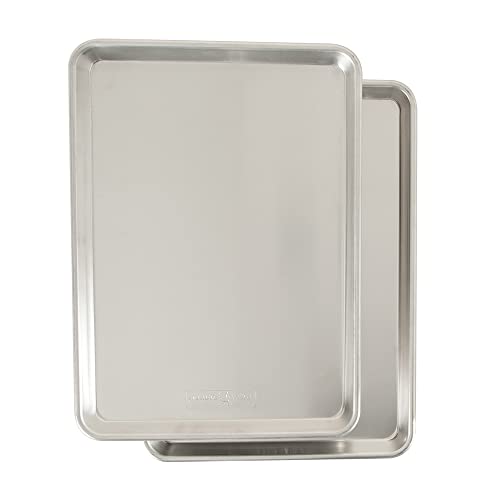
A baking sheet has raised edges on all four sides, while a cookie sheet typically has one or two open sides for easy sliding. The rim prevents drips and makes baking sheets versatile for roasting. Cookie sheets promote even browning and are ideal for cookies. Choose based on your task.
- Baking sheets have raised edges on all sides; cookie sheets have open sides.
- Use baking sheets for roasting and catching drips; use cookie sheets for cookies and pastries.
- You can substitute a baking sheet for a cookie sheet, but not the reverse for liquids.
- Choose based on the task: rimmed for mess, open for easy sliding.
What defines a baking sheet?
A baking sheet is a flat metal pan with raised edges on all four sides. The rim is usually about one inch high. This design contains juices and prevents spills. Baking sheets are also called sheet pans or jelly roll pans. They come in standard sizes like half-sheet and quarter-sheet. The rim makes them suitable for roasting vegetables or catching drips.
What defines a cookie sheet?
A cookie sheet is a flat metal pan with one or two open sides. It has no raised edges, or only a very low lip on one side. The open design lets cookies slide off easily onto a cooling rack. This shape promotes even heat circulation and browning. Cookie sheets are specifically made for baking cookies and similar items. They are not ideal for liquids or foods with drips.
Key differences: rims, materials, and sizes
The most obvious difference is the rim. Baking sheets have a rim on all sides; cookie sheets have open sides. Materials also vary. Both are often made of aluminum, stainless steel, or nonstick coated steel. Aluminum heats quickly and evenly. Cookie sheets are often lighter and thinner, which helps cookies brown faster. Baking sheets are heavier and more durable, suitable for high-heat roasting. Standard sizes include half-sheet (18 by 13 inches) and quarter-sheet (9 by 13 inches). Cookie sheets come in similar sizes but lack the rim.
Best uses for each pan
Use a baking sheet for roasting vegetables, baking sheet pan dinners, or catching drips from pies. The rim prevents juices from spilling onto the oven floor. Use a cookie sheet for baking cookies, biscuits, or pastries. The open sides allow you to slide baked goods off effortlessly. For tasks like baking bacon, a baking sheet is safer because it contains grease. For delicate cookies, a cookie sheet gives better browning and airflow.
Can you substitute one for the other?
You can often substitute a baking sheet for a cookie sheet. Just be aware that the rim may block airflow and cause slightly different browning. For cookies, a rim can also make it harder to slide them off. Substituting a cookie sheet for a baking sheet is riskier. Any liquid or drips will run off the open sides. If you only have a cookie sheet, place it on a larger baking sheet to catch spills. For roasting, always use a baking sheet.