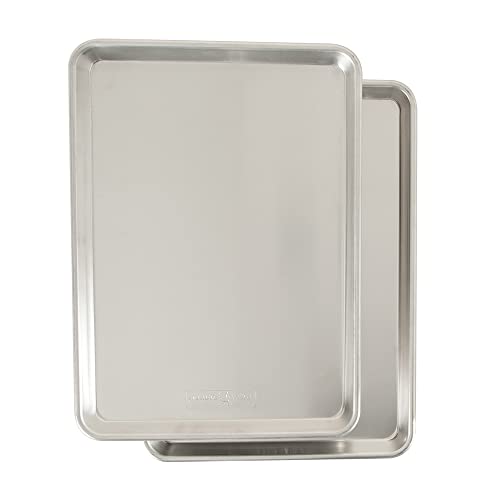
For most home bakers, a heavy-gauge aluminum half-sheet pan with a light finish is the best choice. It heats evenly, resists warping, and produces consistent golden cookies. Avoid dark nonstick sheets, as they brown bottoms too quickly. If you bake frequently, consider a steel pan for durability.
- Choose a heavy-gauge aluminum half-sheet pan for even baking and durability.
- Light-colored sheets prevent over-browning; dark sheets require adjustments.
- Use parchment paper or silicone mats to avoid sticking without nonstick coatings.
- Hand wash and store sheets properly to extend their lifespan.
What to Look for in a Cookie Baking Sheet
Material matters most. Aluminum conducts heat well and is lightweight. Steel is heavier and more durable but can be prone to rust. Nonstick coatings release cookies easily but may scratch or degrade over time. Gauge thickness affects heat distribution; thicker sheets warp less. A rimmed half-sheet pan (about 18 by 13 inches) fits most ovens and holds cookies without sliding off.
Aluminum vs. Steel vs. Nonstick for Cookies
Aluminum sheets heat quickly and evenly, making them ideal for cookies. Light-colored aluminum reflects heat, preventing over-browning. Dark nonstick sheets absorb more heat, causing cookie bottoms to brown faster. Steel pans are heavier and retain heat well, but they require seasoning or oiling to prevent sticking. For crisp edges and soft centers, aluminum is the most forgiving.
Best Baking Sheets for Different Cookie Types
For thin, crispy cookies like tuiles, a light-colored aluminum sheet promotes even spreading. For thick, chewy cookies like chocolate chip, a heavier sheet prevents burning the bottom. Use a dark nonstick sheet only if you adjust baking time by a minute or two. For macarons, a flat, light-colored sheet with a silicone mat ensures even baking. A rimmed sheet is essential for bars or cookies with filling.
How to Choose the Right Size and Shape
Half-sheet pans are the most versatile for home ovens. Quarter sheets work well for small batches or toasting nuts. Jelly-roll pans have low sides, ideal for easy cookie removal. Ensure the pan fits your oven with at least an inch of clearance on all sides. A rimmed edge prevents drips and makes handling easier. Consider buying two identical sheets to rotate batches.
Caring for Your Baking Sheets to Make Them Last
Hand wash aluminum and steel sheets to prevent warping and rust. Avoid abrasive scrubbers on nonstick surfaces. Store sheets flat or with a cloth between to prevent scratches. Season steel pans with a thin layer of oil after cleaning. Replace nonstick sheets when the coating flakes or peels. Proper care extends the life of any baking sheet.