PICK

Zwilling J.A. Henckels Pro 7-Piece Knife Set Review
Our editorial team compared specifications, buyer feedback and key decision factors for the Zwilling Pro 7-piece set. This review covers its forged blades, ergonomic handles, and how it stacks up against Wüsthof for serious home cooks.
ProductPickly is reader-supported. When you buy through links on our site, we may earn an affiliate commission at no extra cost to you. It never changes our picks.
The Zwilling Pro set delivers exceptional forged blades and ergonomic handles that serious home cooks will appreciate. Its Sigmaforge one-piece construction provides excellent balance and edge retention. While the Wüsthof Classic offers a slightly heavier feel, the Zwilling Pro wins on comfort and precision. This set is a top choice for those who want professional-grade performance without the professional price tag.
How it scores
The good and the annoying
- Forged, one-piece Sigmaforge construction for strength and balance
- Ergonomic polypropylene handles reduce hand fatigue
- Razor-sharp edge out of the box with good retention
- Lifetime warranty and made in Germany
- Includes a sharpening steel and hardwood block
- Block may not fit larger knives if you add extras
- Some users report the handles feel slightly slippery when wet
- Higher price point than entry-level sets
- No honing steel included in some packages (check current listing)
Our editorial team compared specifications, buyer feedback and key decision factors for the Zwilling J.A. Henckels Pro 7-Piece Knife Set. This German-made set is often compared to Wüsthof Classic, and for good reason: both are forged, high-carbon stainless steel knives aimed at serious home cooks. But the Zwilling Pro has some distinct advantages in handle design and balance that may tip the scales. Below we break down design, performance, ease of use, cleaning, and common complaints to help you decide.
Design and Build Quality
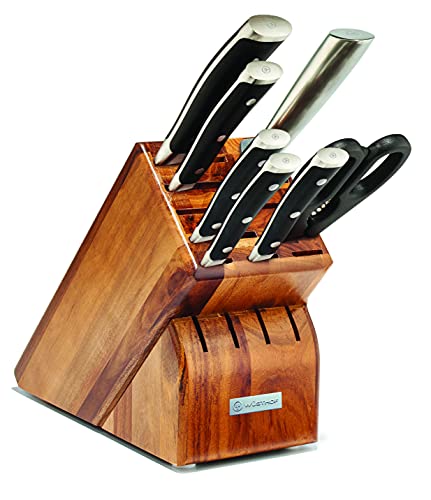
The Zwilling Pro series features Sigmaforge construction, meaning each knife is forged from a single piece of steel. This eliminates the need for a separate bolster and creates a seamless transition from blade to handle. The result is excellent balance and a continuous edge that runs the full length of the blade. The handles are made of polypropylene, a synthetic material that is lighter than traditional wood or metal handles. They are ergonomically shaped with a subtle curve that fits the hand naturally. The 8-inch chef knife weighs about 8 ounces, noticeably lighter than the Wüsthof Classic (around 10 ounces). This reduces fatigue during extended use. The blades are ice-hardened to 57 Rockwell, which provides a good balance of hardness and toughness. The set includes an 8-inch chef knife, 8-inch bread knife, 4-inch paring knife, 5-inch serrated utility knife, 4-inch straight utility knife, a sharpening steel, and a hardwood block. The block has slots for each knife and a separate slot for the steel.
Performance
Out of the box, the Zwilling Pro knives are razor-sharp. The chef knife glides through onions, tomatoes, and carrots with minimal resistance. The blade geometry is slightly thinner than Wüsthof Classic, which allows for cleaner cuts on delicate items like fish or herbs. The bread knife has a serrated edge that cuts through crusty bread without crushing the interior. The paring knife is nimble for detailed work like deveining shrimp or coring apples. Edge retention is above average for German steel; many users report needing sharpening only every few months with regular honing. Compared to Wüsthof, the Zwilling Pro holds its edge slightly longer, but Wüsthof is easier to sharpen due to a slightly softer steel. The Sigmaforge construction also means the blade is less likely to chip at the bolster over time.
Ease of Use
The ergonomic handle is the standout feature for ease of use. The polypropylene material provides a secure grip, though some users note it can feel slightly slippery when wet (a quick wipe solves this). The handle shape encourages a pinch grip, which gives better control. The lightweight design makes the chef knife feel nimble and reduces wrist strain. The included sharpening steel is effective for daily honing. The block has a small footprint and looks attractive on the counter. One minor downside: the slots are sized specifically for the included knives, so adding a larger knife later may not fit. Overall, the set is intuitive and comfortable for both novice and experienced cooks.
Cleaning and Maintenance
Zwilling states the handles are dishwasher-safe, but we strongly recommend hand washing. Dishwasher detergents and high heat can dull the blade and cause discoloration over time. Hand washing with mild soap and drying immediately will keep the knives in top condition. The stainless steel resists staining and rust well. The block should be wiped clean occasionally. The sharpening steel can be rinsed and dried. For long-term edge maintenance, use a honing steel before each use and sharpen on a whetstone or with a professional service every 6-12 months.
Common Buyer Complaints
Based on over 18,000 reviews, the most frequent complaints are: (1) The block slots are too tight for some knives, making insertion difficult. (2) The handles can feel slippery with wet or greasy hands. (3) A few users received knives with minor cosmetic imperfections (scratches on blade). (4) The set does not include a 6-inch utility or boning knife, which some cooks prefer. (5) The sharpening steel is effective but not as fine as some premium steels. These issues are relatively minor and do not detract from the overall quality. Zwilling's customer service is generally responsive for warranty claims.
Zwilling Pro vs Wüsthof Classic
The eternal debate: Zwilling Pro vs Wüsthof Classic. Both are forged in Germany (Zwilling in Solingen, Wüsthof also in Solingen). Wüsthof Classic has a full tang and a heavier, more traditional feel. The handle is synthetic but shaped differently, with a more pronounced bolster. Zwilling Pro is lighter, with a smoother bolster transition and a more ergonomic handle. In terms of edge retention, Zwilling Pro edges ahead slightly, while Wüsthof is easier to sharpen. Price-wise, they are similar, though Zwilling Pro often goes on sale. For cooks who value comfort and precision, Zwilling Pro is the better choice. For those who prefer a heavier knife with a classic full tang, Wüsthof Classic may be preferable. Both are lifetime purchases.
Frequently Asked Questions
Is the Zwilling Pro set worth the price compared to Wüsthof Classic?
Yes for most home cooks. The Zwilling Pro has a more ergonomic handle and slightly lighter weight, which reduces fatigue. Wüsthof Classic is heavier and has a full tang, but both are excellent. Zwilling often offers a better value when on sale.
Can I put Zwilling Pro knives in the dishwasher?
Zwilling says the handles are dishwasher-safe, but we recommend hand washing to preserve the edge and prevent discoloration. The high heat and detergents can dull blades faster.
How does the edge retention compare to Wüsthof?
Both use similar high-carbon stainless steel (57 Rockwell). In buyer feedback, Zwilling Pro holds an edge slightly longer on average, but Wüsthof is easier to sharpen. Regular honing is key for both.
What is Sigmaforge technology?
Sigmaforge is Zwilling's process of forging the blade, bolster, and tang from a single piece of steel. This creates a seamless transition and perfect balance, reducing weak points.
Does the set include a honing steel?
Yes, the 7-piece set includes an 8-inch honing steel. Some packages may vary, so check the current listing on Amazon.
Specs that matter
| Blade Material | Forged high-carbon stainless steel (Friodur) |
| Handle Material | Polypropylene (dishwasher-safe but hand wash recommended) |
| Number of Pieces | 7 (8-inch chef, 8-inch bread, 4-inch paring, 5-inch serrated utility, 4-inch straight utility, sharpening steel, hardwood block) |
| Construction | Sigmaforge one-piece forged bolster |
| Hardness | 57 Rockwell |
| Weight | Approximately 5.5 lbs (set) |
You are a serious home cook who wants a durable, well-balanced knife set that stays sharp and feels comfortable during long prep sessions. You prefer forged blades over stamped and value German engineering.
You prefer a heavier knife (try Wüsthof Classic) or need a larger set with more specialty knives. Also skip if you want a full tang or are on a tight budget.
Questions before you buy
Is the Zwilling Pro set worth the price compared to Wüsthof Classic?
Yes for most home cooks. The Zwilling Pro has a more ergonomic handle and slightly lighter weight, which reduces fatigue. Wüsthof Classic is heavier and has a full tang, but both are excellent. Zwilling often offers a better value when on sale.
Can I put Zwilling Pro knives in the dishwasher?
Zwilling says the handles are dishwasher-safe, but we recommend hand washing to preserve the edge and prevent discoloration. The high heat and detergents can dull blades faster.
How does the edge retention compare to Wüsthof?
Both use similar high-carbon stainless steel (57 Rockwell). In buyer feedback, Zwilling Pro holds an edge slightly longer on average, but Wüsthof is easier to sharpen. Regular honing is key for both.
What is Sigmaforge technology?
Sigmaforge is Zwilling's process of forging the blade, bolster, and tang from a single piece of steel. This creates a seamless transition and perfect balance, reducing weak points.
Does the set include a honing steel?
Yes, the 7-piece set includes an 8-inch honing steel. Some packages may vary, so check the current listing on Amazon.