A good bookshelf does more than hold books. It shapes a room, carves out storage in a tight corner, and keeps the things you reach for every day within arm's length. The hard part is matching a shelf to your actual space: a tall narrow footprint for a studio wall, a wide unit for a shared office, a spinning corner tower for an awkward nook, or a simple freestanding ladder for a bedroom. To make that choice easier, we pulled together five bookshelves that each solve a different storage problem, and we explain who each one is really for.
Every pick below is an editorial selection drawn from current Amazon listings. We have not assembled, loaded, or measured these units ourselves, so tier counts, dimensions, materials, and weight limits are manufacturer listing claims that you should confirm on the product page before you buy. What we can do is read those listings closely, compare the designs side by side, and point you toward the shelf whose shape and capacity fit the way you live.
How we chose these bookshelves
We started with the storage job each shelf is built to do, because footprint and shape matter more than brand. We looked for a clear spread across the main bookshelf formats: a tall tree style that uses vertical height instead of floor space, wide display units for people with a lot to shelve, a rotating corner tower for small or oddly shaped rooms, and a slim freestanding unit for budget-minded setups. We favored designs that are freestanding and self-contained, that offer open shelving for easy access, and that the listing describes as straightforward to assemble. We also kept safety front of mind: taller and top-heavy shelves should be anchored to the wall, and we flag that in every relevant pick. Price was not a factor in ranking, and we do not quote prices here because they change constantly.
Our top picks for the best bookshelf
1. SUNMORY 6 Tier Tree Bookshelf (Top Pick)
The SUNMORY earns our top spot because it balances height and footprint better than anything else in this group. It is a tree-style design with six tiers that step outward, giving you real display and storage room while keeping the base narrow enough to tuck against a wall or beside a desk. The listing pairs the open tree shelving with a small storage cabinet, so you get a spot to hide clutter alongside the books and plants on display. For anyone in a studio, a dorm, or a compact home office who wants vertical storage without a bulky wall of shelving, this is the most flexible starting point. As with any tall unit, plan to anchor it to the wall, especially in a home with children or pets.
2. FACBOTALL Triple Wide Bookshelf (Best Large Capacity)
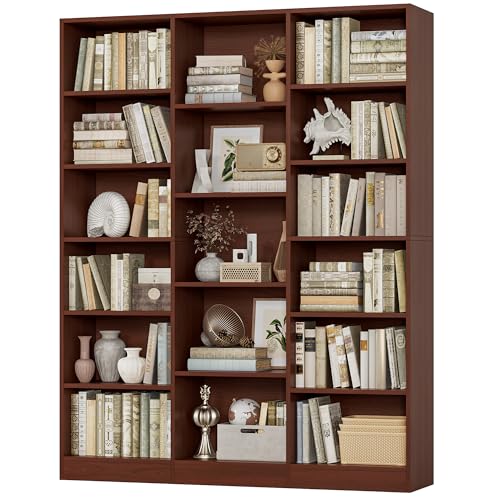
When you simply have a lot to store, the FACBOTALL is the one to look at. The listing describes a triple-wide frame with 17 display shelves, which is the largest cubby count in this roundup. That makes it a natural fit for a home library wall, a classroom, or a shared office where several people need their own shelves. A wide unit like this also doubles as a room divider in open-plan spaces. The trade-off is obvious: it needs a long stretch of wall and a fair bit of floor, so measure your space first. Because it is both wide and tall, anchoring it securely to the wall is not optional, it is part of the setup.
3. SUPERJARE Triple Bookshelf, 11 Open Shelves (Best Wide)
The SUPERJARE sits one notch down from the FACBOTALL in sheer capacity, with a four-tier triple frame and 11 open display shelves. We like it as the more moderate wide option: it still gives you a broad, grid-like display for books, binders, and decor, but it asks for a little less wall than the largest unit. The open-shelf layout keeps everything visible and easy to grab, which suits a working office or a living-room feature wall. If you want the look and function of a wide bookcase without committing to the biggest footprint here, this is the balanced middle choice. Treat the dimensions and shelf count on the listing as the figures to confirm, and anchor it once it is in place.
4. MAHANCRIS 5-Tier Rotating Corner Bookshelf (Best Corner)
Corners are the most wasted space in most homes, and the MAHANCRIS is built to reclaim them. It is a five-tier freestanding tower with a 360-degree spinning base and industrial-style rails to keep items from sliding off. Because it rotates, you can reach every shelf without walking around the unit, which is genuinely useful in a tight bedroom, study, or living-room corner. The industrial look, with wood-tone shelves and a dark frame, works in rustic and modern rooms alike. It is the specialist of this list: if you have a corner that never gets used, this turns it into real storage. Confirm the rotating mechanism and weight guidance on the listing, and anchor the unit if it will sit near seating or walkways.
5. NUMENN 5 Tier Freestanding Bookshelf (Best Compact)
The NUMENN is the simple, space-conscious pick for people who just need honest open shelving. It is a five-tier freestanding unit with a vintage finish, slim enough to slot into a bedroom, entryway, or small office without dominating the room. There is no cabinet, no rotation, and no sprawling width, which is exactly the point: it is a clean, no-frills bookcase that does the basics well. For a first apartment, a kid's room, or a secondary shelf in a space you already furnished, it is the easiest to place. As always, check the listed dimensions against your spot, and anchor taller configurations to the wall for safety.
How to choose a bookshelf
Tall vs wide vs corner vs cube. The format decides almost everything. A tall, narrow unit like the SUNMORY uses height to save floor space and suits small rooms. A wide unit like the FACBOTALL or SUPERJARE spreads storage sideways and works where you have wall length to spare. A corner tower like the MAHANCRIS reclaims dead space and can rotate for access. Cube and grid layouts, seen in the triple-wide display units, make it easy to group books and decor into tidy sections.
Capacity and shelf strength. More tiers and more cubbies mean more storage, but books are heavy. Check the per-shelf weight capacity the listing claims and be realistic about whether you are loading paperbacks or stacks of hardcovers. Open display shelves are great for visibility but spread load differently than enclosed cabinets.
Footprint for your space. Measure the wall and floor before you buy, not after. A wide unit needs a clear run of wall, a corner unit needs the corner angle to match, and a rotating base needs clearance to spin. Write down the listed width, depth, and height and tape it out on the floor if you are unsure.
Material and finish. Most freestanding bookshelves in this class use engineered wood, sometimes with a metal frame or accents, and these are listing claims worth confirming. Engineered wood keeps cost and weight down and comes in many finishes, from vintage oak to black industrial. Match the finish to the room and remember that heavier real-wood looks are often a laminate over board.
Open vs backed. Open-back shelving feels lighter and lets a wall color show through, which suits room dividers and airy spaces. Backed units hide the wall and can feel more solid. None of these picks should be judged on looks alone, so decide which effect you want in the room.
Assembly. Nearly every flat-pack bookshelf requires assembly, and these are no exception. Budget time for it, keep the hardware organized, and follow the sequence in the manual rather than rushing. A squarely assembled unit is also a more stable one.
Anchoring to the wall for safety. This is the step people skip and should not. Tall and top-heavy shelves can tip over, which is a serious hazard around children and pets. Use the included anchor kit or a separate furniture strap to secure the unit to a wall stud. Load heavier items on lower shelves to keep the center of gravity low. Treat anchoring as part of assembly, not an optional extra.
A note on the specs
Tier counts, dimensions, materials such as engineered wood or metal, and weight capacities listed above come from the manufacturers' current Amazon listings. We selected these bookshelves editorially by comparing those listings, not by assembling or load-testing the units in a lab. Always confirm the exact measurements, materials, and weight limits on the product page, because sellers update them, and your space and storage needs are the final judge of fit.
The bottom line
If you want one shelf that adapts to the most rooms, start with the SUNMORY tree bookshelf and its storage cabinet. Need maximum storage on a long wall, reach for the FACBOTALL, or step down to the SUPERJARE for a slightly smaller wide unit. Have an unused corner, the rotating MAHANCRIS turns it into real shelving, and for a clean, compact starter shelf the NUMENN covers the basics. Whichever you choose, measure your space, respect the listed weight limits, assemble it squarely, and anchor it to the wall before you load it up.