A cluttered entryway sets a cluttered tone for the whole home. Shoes pile up by the door, keys vanish into coat pockets, and the first thing you see when you walk in is a mess. The fix is rarely more space; it is smarter use of the slim strip of floor and wall you already have. A good entryway organizer puts shoes on shelves, keys on hooks, and daily items within reach, so the area near your front door stays calm and quick to move through.
This roundup gathers entryway organizers that work for real hallways: multi-tier shoe racks that range from compact two-tier stands to tall ten-tier towers, a narrow double-row rack for slim halls, an enclosed cabinet that hides clutter, and a wall-mounted key holder for the small items that always go missing. Every pick below is an editorial selection based on the current product listings, grouped by the job it does best so you can match a design to your door.
How we chose these entryway organizers
We focused on pieces that solve the common entryway problems: too little floor space, narrow halls, and loose keys. For each option we read the product listing and weighed the stated tier count, pair capacity, material, footprint, and assembly notes, then sorted the field into clear roles so there is a sensible choice whether you have a wide landing area or a slim corner. Capacity figures and dimensions quoted here are claims from the listings, not measurements we took ourselves. We did not try, assemble, or handle these units; the goal is to help you shortlist honestly, then confirm the exact specification on the product page before you buy.
Our top entryway organizer picks
Our overall pick is the four-tier metal shoe rack. An open metal frame is the most adaptable entryway organizer for most homes: it wipes clean, lets shoes air out, and the listing states it holds around 20 to 26 pairs, which is generous for a four-tier unit. It sits flat against a wall and works in a hallway, closet, or garage, which is why it anchors the list.
For homes that are short on floor space but tall on wall, the UrMsun ten-tier tower stacks storage upward on a narrow base. Its non-woven fabric shelves keep the unit light, and the listing highlights quick assembly with no tools, so it is an easy way to store a lot of pairs without widening your footprint.
The Masiunoz seven-tier double-row rack is our narrow-hall choice. The double-row layout holds two columns of shoes without taking extra width, and the neutral grey finish keeps it discreet in a slim entry. Because it is freestanding, you avoid drilling into walls, though the listing does not state the shelf material, so check that detail before buying.
When the entry is genuinely tiny, the YUURO two-tier narrow rack is the right scale. It is pitched for corners and under-desk nooks and keeps only your daily pairs off the floor, which is often all a small apartment entry needs. It will not swallow a large collection, but it keeps sight lines open by the door.
Keys deserve their own spot, and the EARTHLY HOME wooden key holder gives them one. Seven hooks mounted on the wall mean keys land in the same place every time, and the decorative elephant front doubles as entryway decor. The listing gives dimensions of roughly 14 by 4 by 0.5 inch, and it uses no floor space at all.
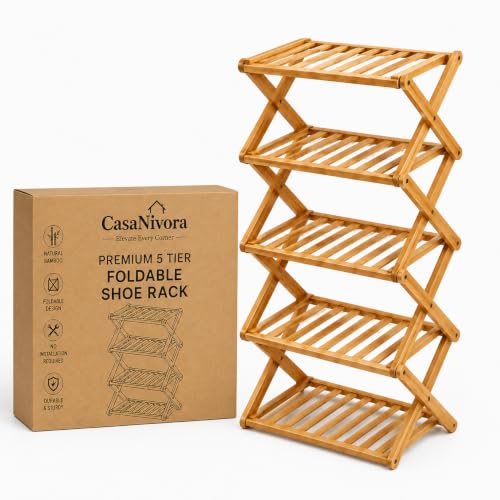
If you want a warmer material than metal, the five-tier foldable bamboo organizer is our value pick. Bamboo looks softer in a hallway, and the listing states it arrives foldable with no installation needed, so setup is fast. Its narrow, tall profile suits corners, though wood asks for a little more care around wet or muddy shoes.
Finally, for anyone who would rather hide clutter than show it, the hidden shoe cabinet with three flip drawers keeps footwear behind closed fronts. The listing quotes a slim 50 by 17 by 112 cm footprint, so it fits a narrow slot, and the open shelves on top hold bags or the pair you are about to step into.
How to choose an entryway organizer
Shoe rack tiers and pair capacity. Tier count is the quickest signal of how much a rack holds, but it is not the whole story. A two-tier stand suits a single person or a daily-only setup, while seven to ten tiers suit a family or a larger collection. Treat any stated pair count as a listing claim: bulky boots and trainers take more room than flat shoes, so a rack rated for a high number of pairs will hold fewer if your footwear runs large.
Footprint for narrow halls. Measure the strip of floor you can spare before you shop. Narrow and double-row designs are built to hug a wall and store more in less width, which matters in a tight hallway where a wide rack would block the path. Tall towers trade floor space for height, so check your ceiling clearance and leave room to pull shoes in and out.
Material: metal versus wood and bamboo. Metal frames wipe clean, shrug off scuffs, and cope well with wet weather near the door. Wood and bamboo look warmer and sit more softly in a decorated hallway, but they need more care around damp or muddy shoes. Fabric-shelf towers are the lightest and easiest to move, though they feel less rigid than a solid frame.
Wall-mounted versus freestanding. Freestanding racks need no tools in the wall and can move with you, which suits renters and anyone who likes to rearrange. Wall-mounted pieces, like a key holder, use vertical space and free up the floor entirely, but they need suitable fixings and a clear patch of wall. Mix the two: a freestanding rack for shoes and a mounted holder for keys often covers an entryway completely.
Key and mail storage. Shoes are only half of entryway clutter. A dedicated key holder with hooks stops the daily hunt for keys, and a model with enough hooks can also carry lanyards, dog leads, or a spare set. If mail and small items pile up too, look for a piece that pairs hooks with a shelf or tray so everything lands in one spot.
Assembly. Open racks and fabric towers often go together quickly, and several listings here note no tools or no installation. Enclosed cabinets with drawers usually take longer to build because there are more parts and panels. If you want the fastest path to a tidy entry, a foldable or tool-free design gets you there soonest.
Stability. Tall and narrow units are the most useful in small entryways and also the easiest to knock off balance, so place the heaviest shoes on the lowest tier to keep the center of gravity low, and set the unit against a wall. Enclosed cabinets with tipping drawers are inherently stable but suit flatter shoes better than tall boots.
Final word
The best entryway organizer is the one that matches your door, not the one with the most tiers. If you want a single do-everything piece, start with the open metal four-tier rack. Tight on floor but tall on wall, reach for the ten-tier tower; stuck with a slim hall, the double-row narrow rack earns its place; and if a clean, hidden look matters most, the enclosed cabinet keeps shoes out of sight. Pair whichever shoe storage you choose with the wall-mounted key holder, and the first few feet of your home will finally stay in order. As always, confirm the current dimensions, capacity, and material on each product page before you commit, since those details come from the listings rather than from our own handling.