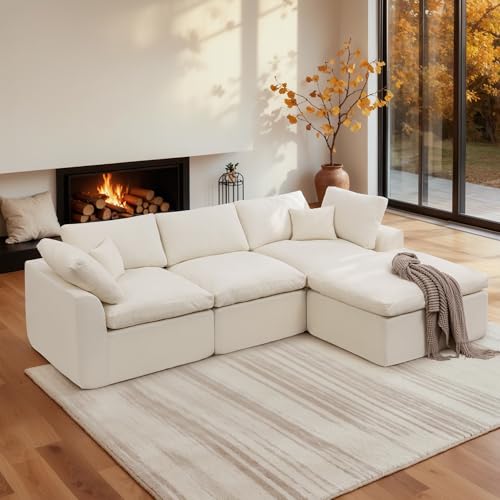
If you want one sofa that fits most living rooms without agonizing over the decision, the Korser 110-Inch Boneless Modular Sectional with Chaise is our top pick. Its modular corduroy build, deep cushioned seats, and no-assembly design make it the most adaptable choice in this roundup, and it reads just as well pushed against a wall as floated in an open-plan space. The six other sofas below branch off into bigger U-shaped layouts, overnight-guest duty, tight apartments, and plush cloud-style seating, so there is a strong match here whatever your room is asking for.
Our top picks: sofas
Buying a sofa online is a leap of faith. You cannot sit on it first, the photos are flattering, and the listing titles pile on so many adjectives that it becomes hard to tell a genuinely roomy sectional from a loveseat wearing a costume. We went through the current sofa and sectional listings on Amazon and shortlisted seven that stand out on the things that actually matter day to day: real seating space, upholstery you can live with, a shape that fits a normal room, and an honest account of how much assembly you are signing up for.
The lineup is deliberately varied. There are oversized U-shaped and L-shaped sectionals for households that entertain, a convertible futon for a studio or guest room, a sleeper with a pull-out bed, and a couple of soft, boneless cloud-style couches for people who treat the sofa as the main event of the room. None of these are delicate heirloom pieces. They are practical, modern, mostly modular couches designed to be lived on, and we have matched each one to the kind of buyer it genuinely suits rather than crowning a single winner for everybody.
How we evaluated these products
We want to be plain about this up front: we select from current Amazon listings based on their published features, materials, dimensions, and fit, and we have not physically sat on or stress-tested every unit in this guide. There is no warehouse full of sofas behind this page. What we can do, and what we think is genuinely useful, is read these listings critically, compare them against each other, and flag the trade-offs that the marketing copy tends to gloss over.
For each pick we looked at the stated dimensions and seating layout, the upholstery material and whether it suits homes with kids or pets, the structure of the frame and how the sofa is supposed to hold its shape, and the assembly story, which for most modular couches here is a genuine selling point because the sections connect without tools. We also weighed how flexible each design is, since a modular or reversible chaise is far more forgiving of a room you might rearrange later. Where a listing leaves something out, such as a specific weight capacity or fill density, we say so rather than inventing a number. Our ratings are editorial judgments meant to help you compare these options at a glance, not lab scores.
What to look for in sofas
Sofas: sizing and fit
Width is the number everyone fixates on, and it matters, but the depth of the seat and the footprint of the chaise matter just as much. A 110-inch to 112-inch sectional like the Korser, TROMIRY, or ROWHY will dominate a mid-size living room, and a U-shaped design needs clearance on three sides, so measure the open floor, not just the wall. Deep boneless and cloud-style seats are wonderful for lounging but eat into legroom, which is worth knowing if your coffee table is close. For smaller rooms, a 78-inch convertible futon or a single L-shape without a double chaise will leave you far more breathing room. Always check that the piece will actually clear your doorways and hallways on the way in.
Sofas: materials and durability
Most of the couches here wear corduroy or chenille, both of which are soft, forgiving fabrics that hide everyday wear reasonably well and feel warm to sit on. Corduroy tends to resist pilling and brushes clean easily, while chenille has a plusher, more textured hand. Neither is as spill-proof as performance leather, so households with young kids or pets should think about removable, washable covers and darker colors. The frame and fill decide how the sofa ages: boneless and memory-foam designs trade some long-term structure for immediate softness, so look for listings that describe a supportive base rather than fill alone. A stated weight capacity, when the listing provides one, is a useful durability signal, and its absence is worth noting.
Sofas: style, value, and assembly
Style is personal, but neutral tones like dark grey, beige, and warm white are the easiest to build a room around and the easiest to keep looking current. Think about whether you want the sofa to recede into the room or anchor it. Value, in a sofa you will keep for years, comes down to comfort that holds up and a shape that survives your next furniture rearrangement, which is exactly why the modular designs here score well. Finally, assembly: the strongest practical advantage shared by most of these picks is that the sections are boneless and connect without tools, so a couch arrives compressed and is pieced together by hand. A pull-out sleeper or convertible futon adds a mechanism, which is extra function but also one more moving part to consider.
The bottom line
There is no single best sofa for every home, which is why this guide is built around fit. If you want the safest all-around choice, the Korser modular sectional with chaise covers the most ground. If your room is big and sociable, the U-shaped TROMIRY or the four-seat ROWHY will fill it comfortably. For guests, the pull-out sleeper and the convertible futon each earn their place, and the cloud-style Korser and Shintenchi deliver the soft, sink-in feel that a lot of shoppers are really after. Measure your space, be honest about how you live on your couch, and pick the one whose trade-offs you can happily live with.