If you keep a bin of emergency supplies in a closet, a garage, or the trunk of your car, a small folding stove is one of those items that sits quietly for years and then earns its place the first time the power goes out or a trip runs long. Coghlan’s Emergency Stove is built around exactly that idea. This is an editorial overview based on the current Amazon listing and the published product description, not a hands on account, so the aim here is to help you read the listing clearly, understand what a compact solid fuel stove can and cannot do, and decide whether this particular one belongs in your kit.
What it is
The Coghlan’s Emergency Stove is a compact, foldable stove designed as a backup cooking option rather than a full daily camp kitchen. According to the listing, it is a lightweight and portable camping stove aimed at backpacking, survival, and general outdoor cooking, with a foldable design and a compact form meant for travel and storage. The listing title also states that it ships with 24 fuel tablets included, which is worth confirming on the current page because included quantities and bundles can change over time.
The working idea behind a stove like this is simple. You unfold the frame into a small stand, place a solid fuel tablet in the base, light the tablet, and set a cup, a small pot, or a mess tin on top. The stove itself is just the structure that holds your container above the flame and shields it a little from wind, while the fuel tablet is the actual heat source. There is no pressurized gas, no pump, and no liquid fuel to pour, which is a large part of why this style of stove shows up so often in emergency and survival kits.
Key features
Reading only what the listing claims, the headline features are a foldable design, a lightweight and portable build, a compact size meant for travel and storage, and the 24 fuel tablets stated as included. It is positioned for backpacking, survival, and outdoor cooking rather than as a high output burner for large meals. The listing does not spell out every hard specification in the title, so treat the points below as the marketing frame and confirm the exact numbers on the product page before you rely on them.
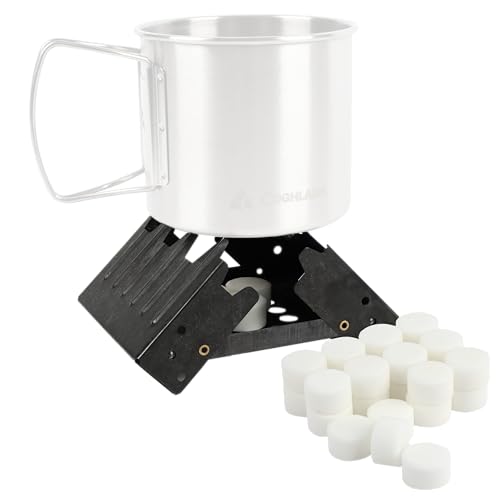
Coghlan's Emergency Stove - Lightweight, Portable Camping Stove for Backpacking, Survival, and Outdoor Cooking - Foldable Design with 24 Fuel Tablets Included (Compact for Travel and Storage)
Compact folding solid fuel stove the current listing describes as lightweight and portable, with 24 fuel tablets stated as included. Verify the current details on the listing.
Check price on AmazonNotice what the title does and does not tell you. It names the foldable design, the portability, the compact storage, and the included tablet count, but it does not commit to a folded dimension, a weight, a burn time per tablet, or a boil time for a given volume of water. Those are the figures that decide whether a stove is genuinely useful for your situation, so they belong at the top of your checklist when you open the listing.
Who it is for
A stove like this fits a narrow but genuinely useful set of roles. The clearest fit is the home emergency kit, where you want a way to boil water or warm a small amount of food if the gas or electricity is down for a while. It also works as a backpacking backup, the lightweight extra you tuck in a side pocket in case your primary canister stove fails or runs dry far from a resupply. And it is a natural candidate for car kits and bug out kits, where space and weight are tight and you want something that will still work after months of sitting untouched.
It is less suited to anyone who needs to cook full meals quickly for a group, or who wants precise flame control for simmering. For that kind of daily cooking, a canister or liquid fuel stove is a better tool. Think of this one as insurance and as a light secondary option, not as your main kitchen.
Strengths on paper
On paper the appeal is mostly about simplicity and reliability of the format rather than raw power. A folding solid fuel stove has very little to go wrong. There are no moving valves to seize, no o rings to dry out, and no pressurized canister to find in the right size. It packs close to flat, which is why the compact and portable framing in the listing matters for kit builders who count every cubic inch.
Solid fuel tablets also tend to store for a long time and travel well, and because the stove ships with tablets according to the listing, it can be ready to use out of the package without a separate fuel purchase, assuming the bundle arrives as described. The low part count is the real strength here. In an emergency, the gear that works is usually the gear that is simplest, and this format leans hard into that principle.
Things to check
Before you buy, open the listing and confirm the details the title leaves open. First, check the fuel tablet type and whether tablets are actually included in the version you are ordering, since the title says 24 are included but bundles and sellers can vary. Second, look for the folded size and the weight so you know it will fit the kit you have in mind. Third, keep expectations realistic on performance, because boil times with small solid fuel tablets are generally modest and wind sensitive, so this is better for a cup of water than for a fast group dinner.
On safety, use the stove outdoors or in a genuinely well ventilated area only. Never use it inside an enclosed space or inside a tent, because of the fire risk and the fumes a burning fuel tablet produces. Keep anything flammable well clear of the flame, set the stove on a stable, non flammable surface, and let it cool completely before you pack it away for storage. No stove is a safety device, and this overview is not a safety endorsement, so follow the instructions printed on the product and the fuel packaging. Finally, verify the full specifications on the listing rather than taking any single marketing phrase at face value.
How it compares
The useful comparison is a solid fuel emergency stove like this one against a canister stove. A solid fuel stove is the simpler, more compact, more storage friendly choice. It has almost nothing to fail, it packs flat, and the fuel tablets sit happily in a kit for a long time. The trade off is output. Solid fuel burns at a modest rate, the flame is not adjustable in the way a gas valve is, and boiling a full pot can take a while, especially in wind.
A canister stove flips those trade offs. It lights quickly, puts out far more heat, and lets you dial the flame up and down for actual cooking, but it depends on a pressurized gas canister that you have to buy in the right fitting, store with a little more care, and keep from running empty. For a primary camp kitchen, the canister stove usually wins. For a backup that lives in a kit and just needs to work when nothing else does, the solid fuel format earns its place. Many careful kit builders simply carry both, using the canister stove day to day and keeping a folding solid fuel stove in reserve.
Verdict
Judged purely on how the current listing presents it, Coghlan’s Emergency Stove reads as a sensible, low complexity backup rather than a do everything burner. If your goal is a compact, foldable stove that can boil a cup of water or warm a small amount of food when your main cooking method is unavailable, and you value a format with very little to break, it fits that brief well, particularly with fuel tablets stated as included. If you need speed, high heat, or fine flame control for regular cooking, look to a canister or liquid fuel stove instead and keep something like this as the backup. Confirm the folded size, the weight, the fuel tablet details, and the included quantity on the page, then decide. You can check the current listing to confirm the latest details, availability, and exactly what is in the box before you commit.
This is an editorial overview written from the current Amazon listing and published specifications, not a hands on review, and nothing here was first hand cooked with or used. ProductPickly may earn a commission from qualifying purchases made through links on this page.