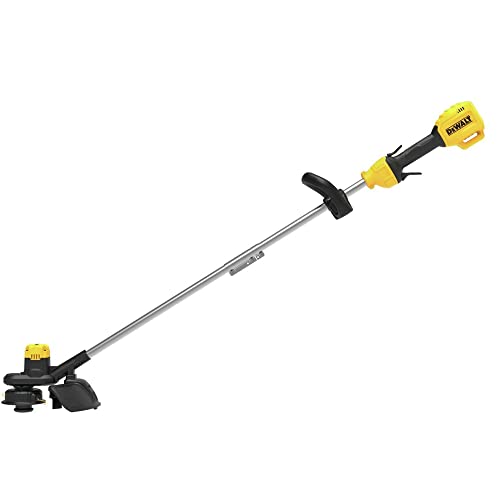
Choosing the right string trimmer can feel overwhelming with so many options on the market. Our editorial team compared specifications, buyer feedback, and key decision factors to help you understand the essential features. This guide breaks down power source, shaft type, cutting width, line feed system, and handle design so you can match a trimmer to your specific lawn conditions.
Power Source Options
The power source is the most important decision because it affects weight, run time, maintenance, and cost. There are three main types: corded electric, cordless battery, and gas.
- Corded electric trimmers are lightweight, quiet, and always ready to go. They plug into an outlet, so you need a long extension cord and access to power. They are best for small to medium yards where the cord can reach all areas. They require minimal maintenance and have no fuel or battery costs, but the cord can be a hassle to manage.
- Cordless battery trimmers offer the convenience of no cord and no gas. They run on rechargeable batteries, typically 18V to 60V. They are quieter than gas and produce no emissions. Run time varies from 20 to 60 minutes depending on the battery and cutting conditions. They are ideal for medium yards, and many use the same battery as other tools in a brand's ecosystem. The downside is that batteries can be expensive to replace, and heavy use may require extra batteries.
- Gas trimmers provide the most power and longest run time. They are ideal for large properties, thick weeds, and heavy brush. They are more durable and often have professional-grade features. However, they are heavier, louder, and require more maintenance like mixing fuel, changing spark plugs, and cleaning air filters. They also produce emissions and need proper storage for fuel.
Consider your yard size and how often you trim. For a small city lot, a corded electric or battery trimmer is often sufficient. For a sprawling rural property, a gas trimmer might be the best investment. Many homeowners choose a battery trimmer for everyday use and keep a gas trimmer for heavy-duty tasks.
Shaft Type and Cutting Width
The shaft connects the motor to the cutting head. It comes in two main styles: curved and straight. The shaft type affects weight, balance, and reach.
- Curved shaft trimmers have a bent shaft that positions the cutting head closer to your body. This design makes them lighter and easier to maneuver, especially under bushes, around flower beds, and along fences. They are often less expensive and suitable for small to medium yards. However, the curved shaft can reduce reach and make edging more difficult.
- Straight shaft trimmers have a straight shaft that provides better reach and leverage. They are more durable and often used for heavy-duty work. The straight design makes edging easier because you can hold the trimmer at a consistent angle. They are typically more expensive and slightly heavier, but they offer better balance and are preferred by professionals.
Cutting width is the diameter of the circle that the trimmer line covers. It ranges from about 10 to 18 inches. A wider cutting width covers more ground per pass, which speeds up work on large open areas. However, a wider head can be heavier and harder to control in tight spaces. A narrower width offers more precision for trimming around plants and obstacles. Choose a cutting width that matches the size of your lawn and the type of trimming you do. For a typical suburban yard, a cutting width of 15 to 16 inches is a good balance.
Line Feed System and Handle Design
The line feed system determines how the trimmer line is advanced as it wears down. There are three common types: bump feed, automatic feed, and fixed line.
- Bump feed is the most common. You tap the cutting head on the ground to release more line. It is simple and reliable, but it requires stopping to tap, which can interrupt your rhythm. Some models have a bump knob that is easy to use with your foot.
- Automatic feed advances the line automatically when the engine or motor speed changes. This means you never have to stop to bump, but it can waste line if it feeds too often. It is convenient for large areas where you want to keep moving.
- Fixed line systems use a single piece of line that you replace manually. They are often found on small electric trimmers. They are lightweight and inexpensive, but you have to stop to replace the line when it wears out.
Handle design affects comfort and control. There are two main types: loop handle and bike handle.
- Loop handles are a simple D-shaped or loop grip near the top of the shaft. They are common on curved shaft trimmers and are lightweight. They offer basic control but can be less comfortable for long sessions.
- Bike handles are two handles that resemble bicycle handlebars. They provide better ergonomics and control, especially for heavier gas trimmers. They allow you to grip with both hands and reduce fatigue. They are often found on straight shaft trimmers and are preferred for edging and heavy trimming.
Also consider the weight of the trimmer. Heavier trimmers can cause fatigue, especially for larger yards. Look for a trimmer with a comfortable grip and a harness or strap if it is heavy. Many gas trimmers come with a shoulder strap to distribute weight.
Matching Features to Your Lawn
Now that you understand the key features, you can match them to your specific lawn conditions. Here are some scenarios to help you decide.
- Small lawn with flower beds: Choose a corded electric or battery trimmer with a curved shaft and loop handle. A cutting width of 12 to 14 inches is enough. Bump feed is fine, but automatic feed may be more convenient.
- Medium lawn with edging needs: A battery trimmer with a straight shaft and bike handle is a good choice. A cutting width of 15 to 16 inches helps finish faster. Automatic or bump feed both work well.
- Large property with thick weeds: A gas trimmer with a straight shaft and bike handle is best. Look for a cutting width of 16 to 18 inches and a bump feed system for reliability. A harness will reduce fatigue.
Always consider the terrain. If you have slopes or uneven ground, a lighter trimmer with a curved shaft may be easier to control. If you have lots of obstacles like trees and rocks, a narrower cutting width gives you more precision. For edging along sidewalks and driveways, a straight shaft with a bike handle allows you to hold the trimmer vertically with ease.
Final Tips for Choosing
Before you make a purchase, read user reviews to see how the trimmer performs in real-world conditions. Look for comments about battery life, line feeding reliability, and ease of starting. Check the warranty and customer support. Also, consider the availability of replacement parts and line spools. Some brands offer universal spools, while others require specific ones.
Think about your future needs. If you plan to expand your lawn or take on more landscaping projects, a more powerful trimmer might be worth the investment. Conversely, if you only trim occasionally, a budget-friendly corded model may be all you need.
Finally, remember to check the current price on Amazon for the models you are considering. Prices can vary, and there are often deals on bundles that include extra batteries or spools. With the right string trimmer, you can keep your lawn looking neat and healthy all season long.