If you want one chainsaw that covers the broadest mix of yard jobs without much fuss, the Greenworks 80V 18-inch brushless cordless saw is our top pick. It pairs a long guide bar with a battery platform that starts on a trigger pull, runs reasonably quiet, and skips the fuel mixing that trips up casual users. The rest of this guide lines up both gas and battery options so you can match a saw to the trees, limbs, and firewood you actually cut, rather than to whatever happens to be on sale.
Our top picks: chainsaw
Chainsaws fall into three broad families: compact battery saws for pruning and cleanup, full-size cordless saws that handle most homeowner felling, and gas saws built for sustained, heavy cutting. Our lineup deliberately spans all three so the guide stays useful whether you are tidying a suburban yard or clearing acreage after a storm.
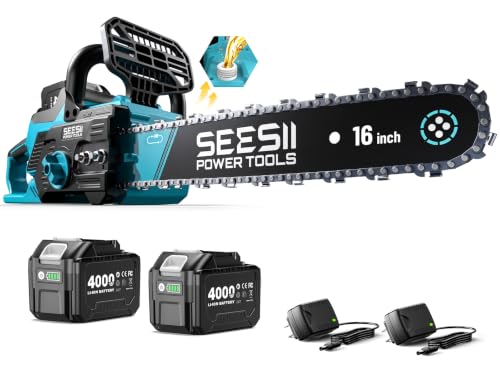
The Greenworks 80V 18-inch leads because it gives a cordless saw more reach than most, which makes it a sensible daily driver for felling, limbing, and firewood around a typical property. For people who cut a lot of wood, the Husqvarna 450 Rancher steps up with a 50.2cc two-cycle engine and a 20-inch bar, trading convenience for raw cutting capacity. The SEESII 40V 16-inch sits in the middle as a cordless all-rounder, offering a full-size bar without the gas routine.
From there the picks branch by job. The Husqvarna 120 Mark III is an entry gas saw for occasional users who still want a familiar brand. The compact SEESII 12-inch is the lightweight choice for pruning and quick limb work. The Husqvarna 460 Rancher stretches to a 24-inch bar for the largest trees, and the 68cc gas saw targets buyers who want maximum bar length and displacement from a value-minded setup. None of these is the right answer for everyone, which is exactly why matching the saw to your workload matters more than chasing the biggest number.
How we evaluated these products
We build this roundup by selecting from current Amazon listings and comparing them on features, published specifications, and fit for a clearly defined job. That means we look at bar length, power type, motor or engine details, included accessories, and how each saw is described for felling, pruning, or firewood. We then rank the saws by how well they suit a specific kind of buyer, not by a single overall score.
To be clear and honest about our method: we have not physically tested every unit in this guide. We do not run controlled cutting trials on each saw, and we do not pretend to. Instead, we read the listing details carefully, cross-check how a saw is positioned against its specifications, and flag where a product is better suited to light duty than heavy use. Where a brand is less established or support may vary, we say so plainly rather than papering over it. Our aim is to help you shortlist quickly and then verify the current listing details yourself before buying.
What to look for in a chainsaw
Bar length. The guide bar sets the largest cut you can make comfortably in a single pass. A 12 to 14-inch bar suits pruning and small limbs, 16 to 18 inches covers most homeowner felling and firewood, and 20 inches or more is for large trees and heavy bucking. Longer bars add weight and demand more power, so bigger is not automatically better.
Power type. Battery saws start instantly, run quieter, need no fuel mixing, and are easy to pick up for short sessions, which fits most homeowners. Corded electric saws offer steady power for stationary work near an outlet. Gas saws give the longest continuous runtime and the most power for demanding, all-day cutting, at the cost of fuel mixing, noise, and routine maintenance. Choose based on how long you cut at a stretch and how far you work from power.
Chain tensioning. A correctly tensioned chain sits snug against the bar but still turns freely by hand. Many modern saws use tool-free tensioning so you can adjust it without carrying a scrench, which is convenient in the field. Whatever the system, check tension often, because a loose chain is both a cutting problem and a safety hazard.
Weight and balance. A saw you can control is safer than a powerful one you cannot. Heavier gas saws reward strength and experience, while lighter cordless saws are easier for newer users and for overhead work. If you will hold the saw up for limbing, favor a lighter model and a shorter bar.
Safety features and gear. Chainsaws are among the most dangerous yard tools, so treat protection as mandatory, not optional. At a minimum, wear cut-resistant chaps, gloves, eye protection, and ear protection. Keep both hands on the saw, stay alert to kickback when the bar tip contacts wood, and always read and follow the manufacturer manual before your first cut. Look for a chain brake and low-kickback chain, keep the chain sharp and properly tensioned, and never cut above shoulder height or on a ladder. For large trees, high limbs, anything near power lines, or wood under tension, hire a professional. The cost of a pro is small next to the risk of a saw you cannot control.
The bottom line
For most homeowners, the Greenworks 80V 18-inch is the best place to start: it is capable, low-maintenance, and easy to live with. Step up to a gas saw like the Husqvarna 450 Rancher only if you regularly cut large volumes, and drop down to the compact SEESII 12-inch if your work is mostly pruning and cleanup. Whichever you choose, match the bar length and power type to the wood in front of you, gear up properly, and start with smaller cuts while you learn the tool. See more options in our chainsaw guides or browse the full lawn and garden tools hub.