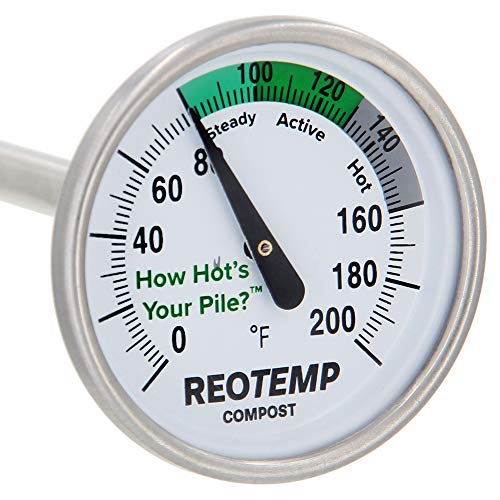
If you only want one answer, get the REOTEMP 20 Inch Backyard Compost Thermometer. It is the length and build most home gardeners settle on: a 20 inch dial probe that reaches the hot core of a typical pile, a stainless face that survives a damp heap, and a composting guide that turns the number on the dial into something you can act on. The rest of this roundup exists because not every pile is a standard backyard pile, and the right thermometer is the one whose stem actually reaches your compost's center.
Why a compost thermometer earns its place
Composting is really a temperature story. A pile that is breaking down well climbs into a warm, active band where the microbes doing the work are happiest, holds there, and then cools as it finishes. Guessing at that by feel is how piles go slimy, stall, or never get hot enough to break down weed seeds. A long stem thermometer lets you read the center of the heap, which is the only part that tells you what is really happening. Everything else about these tools, the dial size, the scale, the materials, is in service of getting an honest reading from deep inside the pile.
That is also why length matters more than the badge on the dial. A beautifully made 16 inch probe tells you nothing useful about a four foot heap, because its tip never reaches the warm core. So the first question is never which brand, it is how deep does my pile get, and the picks below are chosen to cover that range from a compact tumbler to a tall, deep heap.
How we picked
We select from compost and soil thermometers currently listed on Amazon in the United States and compare them on their published features and specifications: stem length, stated temperature range, whether the dial reads in Fahrenheit, Celsius, or both, the dial size and readability, and the build materials such as stainless steel. We have not physically tested every unit, and we are not going to pretend otherwise. There is no lab, no thermal chamber, and no claim of hands-on trials behind this page.
What we do instead is read the listings carefully, weigh the specifications against how real compost piles behave, and flag the honest trade-offs, a shorter stem that will not reach a deep core, an analog face that is rugged but less precise than a digital one, a dual scale dial that is convenient but a little busier to read. Where a brand has a long track record in composting, such as REOTEMP, we say so, and where a listing is newer with less history behind it, we say that too. The goal is a shortlist you can trust, not a wall of identical probes.
Every product shown here is drawn from that current listing set. We do not invent models, specifications, or features, and the picks link out to the live Amazon listing so you can confirm the details and the current standing for yourself before you buy.
What to look for
Probe length. This is the single most important choice. Measure, or honestly estimate, how deep your pile gets at its center, then buy a stem that can reach it. A 16 inch probe is right for tumblers, small bins, and raised beds. Twenty inches is the all-rounder that suits the average backyard heap. A 36 inch stem is for tall or wide piles where anything shorter simply cannot touch the hottest part. Too long is only a minor nuisance, too short makes the thermometer useless.
Temperature range. An active pile moves through a warm band well above room temperature, so you want a dial that comfortably covers from a cold start up to around 200 F. A 0 to 200 F face, like the VIVOSUN carries, spans the whole curve with headroom, so the needle never pins at the top when the pile is at its hottest.
Dial versus digital. Every thermometer here is an analog dial, and that is deliberate. Dials are rugged, need no batteries, and keep working in the wet, dirty environment of a compost heap, which is exactly why they dominate this category. A digital probe gives a crisper number, but it is one more thing to charge and to keep out of the damp. For tracking a pile through its phases, a dependable dial is usually all you need.
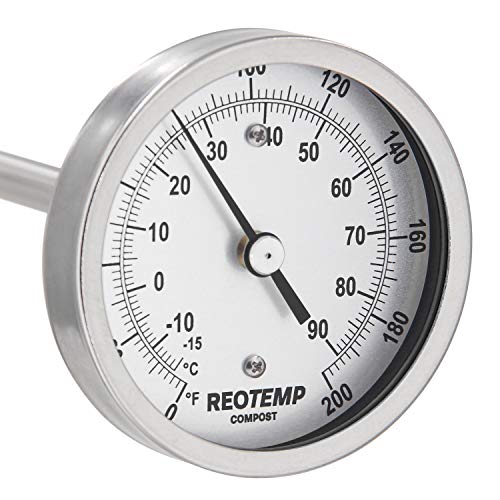
Build and materials. Look for a stainless steel stem and dial housing. Compost is warm, wet, and acidic, and a stainless probe resists the rust that would otherwise claim a cheaper metal. A heavier build, like the heavy duty REOTEMP, also stands up better to being pushed repeatedly into dense, matted material without bending.
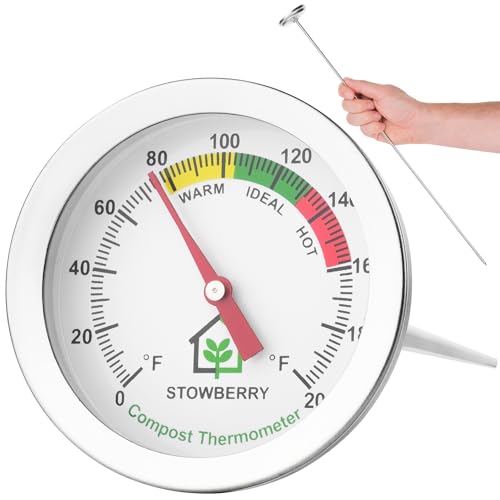
Readability. You will be reading this at arm's length, often in poor light, sometimes with a glove on. A larger dial face, such as the 2 inch STOWBERRY, is simply easier to read at a glance. If you work in Celsius, a dual scale face removes any mental conversion, which is a small thing that matters when you check the pile often.
The short version
Buy the length your pile needs first, then worry about everything else. For a standard backyard heap the REOTEMP 20 inch is the safe, well-proven default. Spend less with the VIVOSUN 20 inch, reach deeper piles with the 36 inch REOTEMP, read in Celsius with the Greenco, or keep things compact with the 16 inch model for a tumbler or bin. Any of these will tell you the one thing that actually matters, whether the center of your compost is as hot as it should be. You can browse the rest of our compost thermometer guides or the wider home and garden tools section for related picks.