A good garden cart turns the heaviest jobs in the yard into a short walk. Instead of carrying bags of mulch, loads of soil, firewood or a pile of pulled weeds by hand, you load once, roll, and empty in one place. The carts below fall into two broad shapes that often get lumped together: tilt dump carts, which pivot to pour a load out, and flatbed utility wagons, which you load and unload by hand but which handle long or awkward items with ease. Both are useful, and the right one depends on what you move most.
These are editorial picks drawn from current Amazon listings for garden carts and dump carts. We did not build a yard course or run a stopwatch on them. Instead we read the listings closely and compared the claims that actually change how a cart performs: rated load capacity, tub volume in cubic feet, tire type, whether the bed dumps, and the frame and tub material. Capacity, volume and tire type are listing claims from each maker, so treat them as the manufacturer's numbers rather than independent figures.
How we evaluated these garden carts
Our shortlist leans on a few questions that decide whether a cart earns its space in the shed. First, how much will it carry, and over what kind of ground? A higher rated capacity and larger tires generally cope better with gravel, slopes and roots. Second, does it dump? A tilt bed saves your back on repetitive loads of soil and compost. Third, what are the tires made of? No-flat or flat-free tires never puncture, while pneumatic tires cushion the ride but can go flat. Finally, steel versus poly: steel frames and tubs feel rugged, while poly tubs rinse clean and shrug off rust. We kept a spread so there is a sensible answer whether you want maximum capacity, a pure dump cart, puncture-free wheels, big volume or a smaller value pick.
The best garden carts
Each pick below lists the maker's rated capacity, the tub volume where the listing states it, the tire type and whether the bed dumps. Use the comparison to narrow things down, then match the cart to the loads you actually move week to week.
Top Pick: VEVOR 680 Lbs Steel Garden Cart
The VEVOR 680 is our overall pick because it is the most flexible everyday wagon here. Rated at 680 Lbs with removable mesh sides, it carries loose material with the sides up and long or bulky items with the sides off. The 180-degree rotating handle lets it follow you around beds and corners without fighting the steer. It is a pull-behind wagon rather than a dump cart, so it rewards gardeners who load and carry more than they tip.
Best Heavy-Duty: VEVOR 1200 Lbs 7 Cu.Ft Dump Cart
For the heaviest hauling, the VEVOR dump cart posts the highest listed capacity in the group at 1200 Lbs over a 7 Cu.Ft tub, and the bed tilts so you can pour out soil or gravel in one motion. A cart this large takes more room to store and gets genuinely heavy when full, which is a fair trade for the capacity on tap.
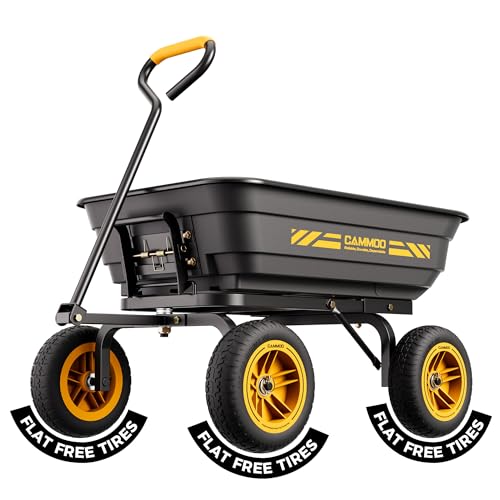
Best Dump Cart: CAMMOO 900 Lbs No-Flat Dump Cart
The CAMMOO 900 is a focused dump cart with a listed 900 Lbs capacity and 10 in no-flat tires, and it converts between a dump cart, a wheelbarrow and a wagon. The puncture-free wheels are the draw here for anyone tired of fixing flats after rolling across gravel or thorns.
Best No-Flat Tires: BILT HARD 880 Lbs Flat Free Garden Cart
If never fixing a flat is the goal, this BILT HARD leads with 10 in flat-free tires on a steel frame, a listed 880 Lbs capacity and a 4 Cu.Ft bed. Removable sides and a 180-degree rotating handle make it an easy loader. It is a utility wagon rather than a tilt cart, so it is built for carrying rather than quick tip-outs.
Best Large Capacity: BILT HARD 7 Cu.Ft Poly Dump Cart
This BILT HARD matches a big 7 Cu.Ft poly tub with a listed 1200 Lbs capacity, no-flat tires and a quick-release dump. The poly tub rinses clean and will not rust or dent, and the 2-in-1 convertible handle swaps between towing and pushing. It is the pick when volume matters as much as weight rating.
Best Value: CAMMOO 600 Lbs No-Flat Dump Cart
The CAMMOO 600 keeps the useful features in a compact form: a listed 600 Lbs capacity, a 4 Cu.Ft bed, 10 in no-flat tires and a dump function. It is the lightest-duty cart here, which is the right call for potting mix, leaves and a few bags of mulch rather than a load of stone.
How to choose a garden cart
Load capacity and tub volume for your tasks. Start with the two numbers on every listing: rated capacity in pounds and tub volume in cubic feet. Capacity tells you how much weight the cart is built to carry, while volume tells you how much loose material fits before it spills. Dense loads like wet soil, sand and gravel hit the weight limit long before they fill the tub, so lean toward a higher rated capacity for those. Bulky, light material like leaves or mulch is about volume, so a larger cubic-foot bed earns its keep.
Dump function. A tilt dump cart pivots the bed to pour a load out, which saves real effort on repetitive trips of soil or compost. A flatbed wagon does not dump, so you unload by hand, but it carries long or awkward items better. Decide which you do more.
Pneumatic versus flat-free tires. Pneumatic air tires cushion the ride and roll softly over rough ground, but they can puncture and need the occasional top-up. Flat-free or no-flat tires never go flat, which removes a chore, though they ride a touch firmer. If your ground is full of thorns, nails or sharp gravel, flat-free wheels are the low-maintenance choice.
Steel versus poly tub. Steel tubs and frames feel rugged and handle sharp or heavy loads well, but they add weight and can rust or dent over time. Poly tubs are lighter, rinse clean and resist rust, which many gardeners prefer for wet or muddy material. Neither is simply better; it depends on your loads and storage.
Tow behind versus push. A pull-behind handle lets you tow a heavier cart with less strain and, on some models, hitch it to a mower. A push or wheelbarrow-style handle is nimbler in tight beds. Convertible handles that do both add flexibility if you switch between jobs.
Handle and dumping ease. A rotating or 180-degree handle helps the cart track through corners and turn in place, and a quick-release latch makes dumping a one-hand job. If you will tip the bed often, an easy release is worth prioritizing.
Storage. Bigger carts carry more but take more room, and a steel cart is heavier to move when empty. Measure your shed or garage space and be honest about how much cart you can park before you buy the largest one on the list.
A note on the specs
Treat the capacity, tub volume and tire type in this guide as listing claims from each manufacturer rather than independently verified figures. Do not exceed a cart's rated capacity, because overloading risks bending the frame, buckling the tub or losing control on a slope. And remember the tire trade: flat-free tires avoid punctures and the hassle that comes with them, but they ride firmer than pneumatic air tires, which cushion a load better over rough ground.
The bottom line
For most gardens, the VEVOR 680 Lbs steel wagon is the most adaptable everyday choice, carrying loose and bulky loads alike. Step up to the VEVOR 1200 Lbs dump cart when weight is the limiting factor, or the BILT HARD 7 Cu.Ft poly cart when you need both volume and an easy dump. Choose the CAMMOO or BILT HARD no-flat models if puncture-free tires matter most, and the CAMMOO 600 for a lighter, compact pick. Match the capacity, volume and tire type to the loads you actually move, keep inside the rated numbers, and the right cart will quietly take the strain out of yard work for years.