Reader-supported: we earn a commission on some links, at no extra cost to you. It never changes our picks. How this works
Indoor Grow Lights

Best Indoor Grow Lights

ProductPickly is reader-supported. When you buy through links on our site, we may earn an affiliate commission at no extra cost to you. It never changes our picks.

The short answer

The LEOTER 80 LED Gooseneck Grow Light is our overall pick for indoor plants, combining a full spectrum white output with red and blue diodes, three switch modes, ten dimming levels, and a repeating timer. For a simple single plant setup the GooingTop clip lamp is the easy value choice, while stand lamps and LED bars suit floor plants and seed starting. Match spectrum, mount, and timer to your plants.

?
How we picked

We compare published specifications, safety certifications and thousands of verified owner reviews, and we do not physically test every unit. Read the full process in our review methodology.

At a glance

PickStandoutBest for
LEOTER 80 LED GooseneckSwitchable spectrum with full controlsMost desk and shelf plants
GooingTop 6000K ClipSimple natural white clip lampA single houseplant
LBW 642 LED StandAdjustable floor standTall and floor plants
Barrina T5 Bars (4 Pack)Linkable under-shelf barsSeed starting and shelves
168 LED 2 Head, 2 PackFour heads from two clipsSeveral plants at once
Bloom Lume Clip GooseneckRed, white, and blue modesTuning spectrum on one plant
yadoker Height AdjustableRises with a growing plantOne larger single plant
1
LEOTER 80 LED Gooseneck Grow Light
★★★★★ 4.8 / 5 Best Overall
Check price on Amazon

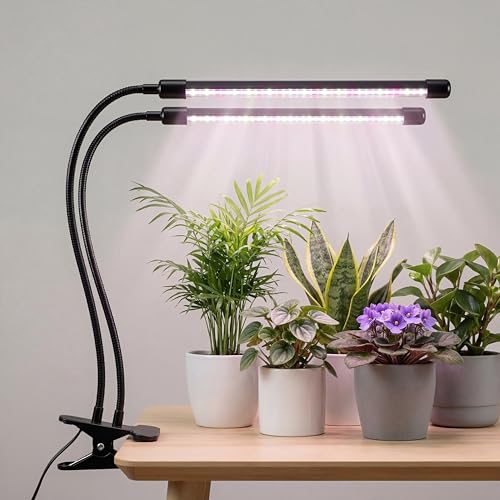
A flexible all rounder that covers the needs of most indoor growers. Its 80 diodes mix full spectrum white with dedicated red and blue, and three switch modes let you choose white, red and blue, or a combined output. Ten dimming levels and a repeating three, nine, or twelve hour timer round out a lamp that is easy to live with on a desk or shelf.

Diodes 80 LEDs, full spectrum plus red and blueModes 3 switch modesDimming 10 levelsTimer 3/9/12 hour repeating
  • Switchable white and red-blue spectrum suits display and growth
  • Ten dimming levels and a repeating timer add real control
  • Dual gooseneck arms aim light at one or two plants
  • Coverage is limited to a plant or two up close
  • Headline wattage reflects diode rating, not wall draw
Best for: Most people with one or a few desk or shelf plants
2
GooingTop 6000K Full Spectrum Grow Light
★★★★★ 4.3 / 5 Best Value
Check price on Amazon

A simple, popular clip lamp for a single plant. Its single gooseneck head puts a natural 6000K full spectrum white over a monstera, a pothos, or an herb pot without any fuss. There is not much to configure here, which is exactly the appeal for a reader who wants one tidy light and nothing to think about.

Color temperature 6000K full spectrum whiteForm Single head clip gooseneckSpectrum White, daylight style
  • Natural white light looks good in a living space
  • Compact clip design fits a shelf or desk edge
  • Very little to set up or manage
  • Single head covers only one plant
  • No red-blue mode for a flowering focus
Best for: A single houseplant in a room you live in
3
LBW 642 LED Grow Light with Stand
★★★★★ 4.5 / 5 Best for Floor Plants
Check price on Amazon

A floor standing light for plants that a clip lamp cannot reach. The adjustable stand raises a dense 642 LED head over tall or floor based plants, and the height adjusts as the plant grows. This is the pick for a fiddle leaf fig in a dim corner or a cluster of larger pots on the floor.

Diodes 642 LEDs, full spectrumMount Adjustable floor standHeight Adjustable as plants growTarget Tall and floor plants
  • Stand reaches tall and floor standing plants
  • Dense LED head spreads light over a wider area
  • Adjustable height keeps pace with growth
  • Takes up floor space next to the plant
  • Larger footprint than a clip lamp
Best for: Tall or floor plants in a dim corner
4
Barrina T5 Full Spectrum Grow Light (4 Pack)
★★★★★ 4.6 / 5 Best for Seed Starting
Check price on Amazon

Slim LED bars built for shelves and seed trays. The 5000K full spectrum T5 bars mount under a shelf or along a rack and link together, spreading even light across rows of seedlings. For anyone starting seeds or running a propagation shelf, this is the form factor that actually fits the job.

Form T5 LED bars, 4 packLength 1 foot per barColor temperature 5000K full spectrumMount Under shelf or rack
  • Even coverage across trays and rows
  • Links together and mounts under shelves
  • Full spectrum suited to seedlings and greens
  • Needs a shelf or frame to mount to
  • Less focused than a single clip lamp
Best for: Seed starting and propagation shelves
5
168 LED Gooseneck Clip Grow Light (2 Head, 2 Pack)
★★★★★ 4.2 / 5 Best for Multiple Plants
Check price on Amazon

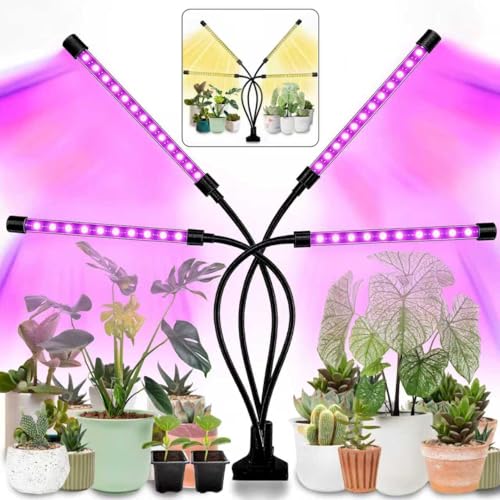
A multi head set for people growing several plants at once. Each clip holds two flexible gooseneck heads, and the pack includes two clips, so you can light a small spread of pots from different angles. Three spectral modes, ten dimming levels, and a four, eight, twelve, or eighteen hour timer give it the controls of a single lamp across more plants.

Heads 2 heads per clip, 2 clipsDiodes 168 LEDs, full spectrumModes 3 spectral modesTimer 4/8/12/18 hour
  • Four heads total cover several plants
  • Three spectral modes and ten dimming levels
  • Longer timer options than many clip lamps
  • More arms to position and manage
  • Each head is smaller than a single large lamp
Best for: Lighting several plants from different angles
6
Bloom Lume Clip-On Gooseneck Grow Light
★★★★★ 4.4 / 5 Best for Color Control
Check price on Amazon

A clip lamp focused on color control. Alongside a 6000K full spectrum white, it offers red, white, and blue multi mode output plus dimming and an auto timer, so you can tune the look and the growth bias from one gooseneck head. A good fit for a reader who wants to experiment with spectrum on a single plant.

Spectrum 6000K full spectrum, red/white/blue modesMount Clip-on gooseneckDimming DimmableTimer Automatic
  • Multiple color modes for display or growth
  • Dimmable with an auto timer
  • Clip gooseneck aims easily at one plant
  • Single head suits one plant at a time
  • Color modes add a small learning curve
Best for: Experimenting with spectrum on one plant
7
yadoker Full Spectrum Grow Light (Height Adjustable)
★★★★★ 4.1 / 5 Best for Large Plants
Check price on Amazon

A full spectrum light built around a single larger plant. A height adjustable design lets the lamp rise with the plant, it runs on a low 5V supply, and an automatic timer keeps the schedule steady. It is aimed at giving one sizeable specimen consistent overhead light rather than covering a whole shelf.

Spectrum Full spectrumMount Height adjustableVoltage 5V low voltage supplyTimer Automatic
  • Height adjusts to follow a growing plant
  • Low voltage supply for everyday safety
  • Automatic timer keeps a steady cycle
  • Built around one plant, not a group
  • Coverage narrows as the plant gets large
Best for: One larger single plant

After combing through the current crop of indoor LED grow lights on Amazon, the LEOTER 80 LED Gooseneck Grow Light is our top pick for most people. It pairs a full spectrum white output with dedicated red and blue diodes, three switch modes, ten dimming levels, and a repeating timer, which is the kind of flexible, all around setup a windowsill herb garden or a shelf of leafy houseplants actually needs.

Our top picks: indoor grow lights

Indoor plants rarely get the light they would see outdoors, especially through the short, gray stretch of winter. A good grow light fills that gap by delivering the wavelengths plants use for photosynthesis, right where you need them. The lights in this roundup are small, consumer friendly fixtures, clip lamps, gooseneck lamps, floor stands, and slim LED bars, rather than the large ceiling panels built for dedicated grow tents. They suit seedlings, herbs, succulents, leafy houseplants, and the occasional flowering plant on a desk, a shelf, or a plant stand.

Because every home setup is different, we picked for range rather than a single winner that fits everyone. Some readers want one tidy clip lamp for a single monstera. Others are starting trays of seedlings on a wire rack, or trying to keep a tall fiddle leaf fig happy in a dim corner. The lights below cover those jobs, and the comparison and buying notes further down explain how to match a fixture to your plants rather than simply chasing the biggest number on the box.

How we evaluated these products

We build these roundups by researching what is currently available and well reviewed on Amazon, then reading each product listing closely and comparing the stated features, specifications, and owner feedback. We have not physically tested every unit in a lab, and we are upfront about that. Where we cite a wattage, a spectrum rating, a diode count, or a coverage figure, that number comes from the manufacturer listing and should be treated as a claim rather than a measurement we verified with instruments.

What we do bring is a consistent checklist. We favor lights that are honest about their spectrum, that offer useful controls like dimming and a timer, that mount securely for the plants they target, and that owners report holding up over months of daily use. We set aside listings with vague or contradictory claims, and we try to spread our picks across real use cases so the list stays useful whether you have one plant or a whole rack. When two lights are close, the one with clearer documentation and steadier long term feedback takes the spot.

What to look for in indoor grow lights

Full spectrum versus red and blue

You will see two broad styles. Full spectrum lights emit a white, daylight like glow, often rated around 5000K to 6000K, that looks natural in a living room and covers the wavelengths most plants use. Red and blue lights produce that familiar pink or purple glow by combining diodes aimed at foliage growth and flowering. Many of our picks offer both, letting you run a pleasant white for everyday display and switch to the red and blue blend when you want to push growth. For plants in a space you actually live in, a full spectrum or switchable light is usually the easier choice to live with.

Real wattage versus inflated claims

Grow light listings are notorious for headline wattage numbers that describe the theoretical rating of the diodes rather than the power the fixture actually pulls from the wall. A lamp advertised with a big number may draw far less in practice. Rather than chase the largest figure, look at the number and size of the diodes, the listed coverage area, and consistent owner feedback about whether plants responded. Treat every wattage and output claim on these listings, ours included, as a manufacturer statement rather than a tested result.

Coverage area and distance

A small clip lamp throws usable light over one or two plants a short distance away, while a floor stand or a set of LED bars spreads light across a tray or a shelf. Light falls off quickly with distance, so a fixture that looks bright up close may do little for a plant placed well below it. Match the coverage to your plants, and keep the light within the range the maker suggests so the leaves that need it are actually in the beam.

Mounting style: clip, gooseneck, stand, or bar

Clip and gooseneck lamps are the most flexible for one or a few plants, bending to aim light exactly where you want it. Floor stand models raise the light over tall or floor standing plants. Slim LED bars mount under shelves or inside a cabinet and are ideal for seed starting and tight rows of seedlings. Think about where the plant lives before you pick a form factor, because the best spectrum in the world is wasted if you cannot aim it well.

Timer and dimming

Plants do best with a consistent day length, and a built in timer that repeats every day, commonly on a three, nine, or twelve hour cycle, takes that off your hands. Dimming levels let you dial brightness down for seedlings or low light plants and up for hungry growers. These two features turn a basic lamp into something close to set and forget, and most of our picks include them.

The bottom line

For most homes, the LEOTER 80 LED Gooseneck Grow Light is the pick that balances a usable spectrum, real controls, and a flexible mount, which is why it leads our list. If you want something smaller and simpler, the GooingTop full spectrum clip lamp covers a single plant with very little fuss. Growers with floor plants or a shelf of seedlings should look at the stand and bar options instead. Whichever you choose, aim the light well, keep it on a steady daily schedule, and give your plants a few weeks to respond. You can browse more of our indoor grow light guides or the rest of our home and garden tool picks for related recommendations.

Questions people ask

How do I choose indoor grow lights?

Start with the plants and the spot. Match the spectrum, full spectrum white for everyday rooms or switchable red and blue for growth, pick a mount that aims light where the plant lives, and look for dimming and a repeating timer so the light runs on a steady schedule. Favor clear listings and steady owner feedback over the biggest wattage number.

Are full spectrum grow lights better than red and blue?

Neither is strictly better. Full spectrum white looks natural in a living space and suits most houseplants, while red and blue blends target foliage and flowering and are efficient for dedicated growing. Many lights here do both, which is the most flexible option for a home.

How many hours a day should a grow light run?

Most houseplants and seedlings do well with roughly twelve to sixteen hours of light a day, followed by darkness. Listings commonly offer three, nine, or twelve hour repeating timers to help, so match the cycle to your plant and keep it consistent.

Can I leave a grow light on all the time?

It is not recommended. Plants need a dark period for healthy development, so a daily on and off cycle is better than constant light. A built in timer makes that easy to maintain.

How close should a grow light be to my plants?

Follow the distance the maker suggests, since light drops off quickly with range. Clip and gooseneck lamps usually sit a short distance above the canopy, while stronger stand lamps and bars can be mounted higher. If leaves look bleached, raise the light; if growth stretches and gets leggy, lower it.

Do LED grow lights use a lot of electricity?

Consumer LED grow lights are generally modest users of power, and the real draw is often lower than the headline wattage on the listing. Running one on a timer for part of the day keeps usage low, though we have not metered individual units.

Will a grow light work for flowering plants?

It can. Flowering plants tend to want more intensity and often benefit from the red heavy part of the spectrum, so a switchable red and blue light or a stronger stand model is a better bet than a small white clip lamp.

Are these lights checked in a lab?

No. We select from current Amazon listings based on features, specifications, and owner feedback, and we read each listing closely, but we have not physically evaluated every unit. We treat all spectrum, wattage, and coverage figures as manufacturer claims.

The bottom line

So which one?

Most homes are best served by a flexible full spectrum light with real controls, which is why the LEOTER 80 LED Gooseneck leads our picks. Choose a clip lamp for one plant, a floor stand for tall plants, and LED bars for a shelf of seedlings.