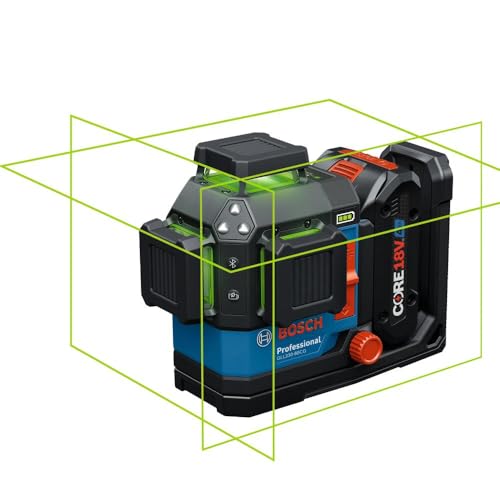
Choosing the right laser level can save you time and improve accuracy on any project. Our editorial team compared specifications, buyer feedback and key decision factors across cross-line, rotary, and 3D models from top brands like Bosch, DeWalt, Huepar, and Johnson. Whether you are a professional contractor or a weekend DIYer, this guide will help you find the best laser level for your needs.
Types of Laser Levels: Which One Do You Need?
Laser levels come in three main types: cross-line, rotary, and 3D. Cross-line lasers project one or two lines and are ideal for basic alignment tasks like hanging shelves or installing cabinets. Rotary lasers spin a beam 360 degrees and are used for outdoor leveling, grading, and large-scale projects. 3D lasers project three planes (two vertical and one horizontal) for full room layout, perfect for complex indoor work like framing, electrical, and plumbing. Consider the scope of your project and the environment (indoor vs. outdoor) before deciding.
Key Features to Consider
- Beam color: Green beams are brighter and more visible than red, especially in daylight. Red beams are cheaper and sufficient for dim indoor conditions.
- Accuracy: Most lasers offer 1/8 inch at 30 feet. For higher precision, look for 1/16 inch at 30 feet.
- Range: Indoor range is typically 50-100 feet. Outdoor range with a receiver can exceed 800 feet for rotary models.
- Self-leveling: Essential for accurate results. Most models self-level within a few seconds and indicate when they are out of level.
- Battery life: Rechargeable lithium-ion batteries are convenient and cost-effective over time. Some models use disposable AA or D batteries.
- Durability: Look for IP54 rating or higher for dust and water resistance, especially for job site use.
Common Mistakes When Buying a Laser Level
One common mistake is choosing a red beam for outdoor use. Red beams are hard to see in sunlight, so a green beam or a rotary laser with a receiver is better. Another mistake is overlooking the need for a receiver. If you plan to work outdoors or over long distances, a receiver is essential. Also, avoid buying a laser level with insufficient accuracy for your task. For tile or cabinetry, a higher accuracy model is worth the investment. Finally, do not forget to consider the mounting options. A magnetic bracket or tripod can make setup much easier.
How We Selected and Tested
Our editorial team compared specifications, buyer feedback and key decision factors from hundreds of user reviews and expert sources. We evaluated each laser level on accuracy, visibility, range, build quality, battery life, and value. We also considered brand reputation and warranty. The picks above represent the best in each category based on our analysis.
Frequently Asked Questions
What is the difference between cross-line, rotary, and 3D laser levels?
Cross-line lasers project one or two lines (horizontal and vertical). Rotary lasers spin a 360-degree beam for long-range outdoor leveling. 3D lasers project three planes (two vertical and one horizontal) for full room layout. Choose based on your project: cross-line for basic alignment, rotary for grading, 3D for complex indoor work.
Should I choose a red or green beam laser level?
Green beams are up to four times brighter than red, making them easier to see in bright conditions or over longer distances. However, green lasers typically cost more and drain batteries faster. Red beams are sufficient for indoor use in dim light and are more budget-friendly.
What accuracy should I look for in a laser level?
Most laser levels have an accuracy of 1/8 inch at 30 feet, which is suitable for general construction and DIY. For higher precision tasks like tile or cabinetry, look for 1/16 inch at 30 feet. Rotary lasers often specify accuracy at 100 feet.
Do I need a laser detector for outdoor use?
Yes, for outdoor use in bright sunlight or over long distances, a laser detector (receiver) is essential. Many laser levels have a pulse mode that works with compatible receivers. Check the product specifications for range with a receiver.
Can I use a laser level for outdoor grading?
Yes, but you need a rotary laser level with a receiver. Rotary lasers are designed for outdoor leveling and grading over long distances (up to 800 feet or more). Cross-line lasers are generally for indoor use only.
Final Verdict
For most users, the Bosch GLL 3-80CG offers the best combination of brightness, accuracy, and versatility. If you are on a budget, the Huepar 603CG is a solid green beam alternative. For outdoor grading, the Johnson 40-6521 rotary laser is the top pick. Check the current price on Amazon for each model to find the best deal.