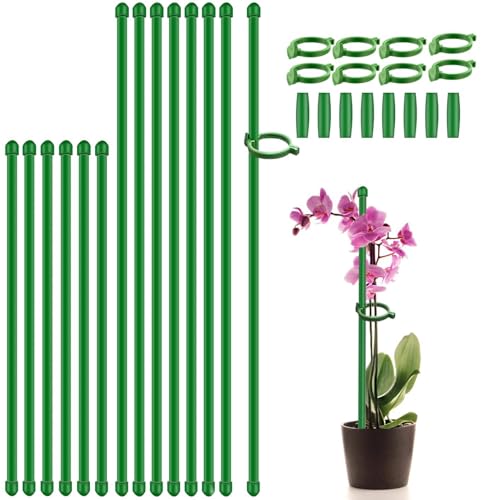
If you want one plant support that handles the widest range of top heavy flowers and vegetables, the 12 Pack Tall Half Round Peony Support Stakes is our top pick. The tall 24 inch half round rings link together to hoop a floppy peony, a leaning tomato, or a heavy hydrangea, and a 12 pack is enough to work a whole bed in one afternoon. The rest of this guide covers cages, clips, ties, and adjustable stakes so you can match the support to the plant rather than settle for a single compromise.
Getting plants to stand up straight
Almost every garden problem that looks like a disease or a pest turns out, on closer inspection, to be a plant that simply fell over. A peony loads itself with blooms heavier than its stems can carry, a tomato branch bends under a cluster of ripening fruit, and a young monstera flops sideways reaching for light. A plant support does one quiet job: it holds stems upright so flowers stay clean, fruit stays off the soil, and air keeps moving through the foliage to fend off mildew.
The catch is that the phrase plant support covers several very different tools. Half round peony rings hoop a clump from the outside. Cage style rings surround a single plant. Stem clips and soft ties fasten a vine to a stake or a pole. Adjustable stakes grow with a potted plant on a windowsill. The best choice depends far more on what you are growing than on the brand printed on the box, which is why this guide is organised around plant type and support style rather than crowning one winner for everyone.
How we picked
We build these roundups by working through the plant support listings currently available on Amazon and comparing them on the details that actually decide whether a support works: pack size, ring or stake height, the diameter of the hoop, the material and any coating, and the plants each maker says the product is designed to hold. We read the specifications, study the product photos, and weigh how each item is described against what a gardener realistically needs for peonies, tomatoes, hydrangeas, roses, and common houseplants.
To be clear about what this is and is not: we have not physically installed and stress loaded every unit in our own garden, because there are too many near identical multipacks for that to be an honest claim. What we can do is read the listings carefully, flag the trade offs, and steer you toward the style of support that fits your plant and your pot. Where two products are close, we tell you what separates them so you can decide for yourself, rather than pretending a lab verdict settled it.
What to look for in a plant support
Match the type to the plant. Half round linking rings, like our top pick, are made for clumping perennials such as peonies and for bushy plants that want to splay outward; you place several around a clump and connect them into a ring. Full cages surround a single tomato or pepper. Thin stakes with clips or ties are for vines and single stemmed houseplants that need to be fastened as they climb. If you are growing tomatoes in particular, a dedicated tomato cage is often the easier call, and our plant supports hub links through to that guide.
Height and width. A support that is too short is worse than none at all, because the plant flops over the top and kinks. For peonies and bushy perennials, a ring in the 15 to 24 inch range covers most clumps, and the taller 24 inch option in our list suits plants that get big. Check the stated width of the hoop too, since a 10 inch ring that is right for a peony will be lost around a sprawling tomato.
Material and coating. Most of the supports here are metal. Look for a powder or plastic coating, which slows rust on anything left outside through wet weather and is gentler on stems than bare wire. Soft hook and loop ties are the exception; they are fabric, reusable, and will not bite into a stem the way thin wire can.
Stability. A support is only as good as its grip on the soil. Longer legs and a wider base hold better in loose beds and windy spots. Half round rings that link together brace each other, which is part of why they carry heavy blooms so well. In pots, an adjustable stake that pushes deep into the mix stays put better than a short stub.
Which plants it suits. Read the maker's plant list rather than guessing. Peony rings, tomato cages, orchid stakes, and houseplant clips are not interchangeable, and buying the wrong style is the most common reason a support ends up forgotten in the shed.
The bottom line
For most gardens, the tall half round peony stakes are the easiest single buy: they arrive in a generous pack, link into rings of several sizes, and hold up the top heavy flowers that need the most help. If you grow mainly houseplants, lean toward the clips and adjustable stakes instead, and keep a roll of soft ties on hand for everything else. Whatever you choose, set the support in place early in the season, while the plant is still small, so the stems grow up through it rather than being forced into it after they have already flopped. Browse the rest of our guides in the home and garden hub to match a support to each plant you grow.