Planters and raised beds do the same basic job in very different ways. A planter lifts a single plant or a tidy grouping to a height you can reach, while a raised bed gives roots a deep, open run of soil for vegetables, herbs, and cut flowers. This guide pulls together a focused set of garden planters, pots, and raised garden beds so you can match the right container to the plant, the spot, and the way you like to garden.
Every pick below is an editorial selection drawn from current Amazon listings. We did not plant in them or run them through a season in the yard. Instead we read the listing details closely and chose options that cover the jobs most home gardeners actually face: a deep metal raised bed for crops, tall floor planters for patios and entryways, drainage-friendly indoor pot sets, a decorative barrel look, a strong value multipack, and a self-watering option for people who travel or forget to water.
How we chose these planters and raised beds
We started with the plant. Root crops and most vegetables want depth and a large soil volume, so a raised bed leads the list. Houseplants and patio displays want the right diameter, a saucer or reservoir, and reliable drainage, so pots and tall planters fill out the rest. From there we weighed the listing claims that matter most for containers: material and how well it holds up outdoors, whether drainage holes are included, the stated size, and how many pieces come in the pack. Material, drainage, and capacity are listing claims, so treat the figures as the manufacturer states them and confirm anything critical before you buy. We avoided ranking on price and focused on fit for a job.
Our top picks
1. Acurax 24 Inch Tall Plastic Planters, Set of 2 (Top Pick)
This pair of 24 inch tall plastic planters is our overall pick because it is the most broadly useful container here. The height raises plants off the ground for porches, patios, and indoor corners, the listing states drainage holes so excess water can escape, and you get two matching pieces for a symmetrical look by a door or along a wall. The black finish stays neutral with almost any plant or facade. Being plastic it is light, which is easy to move but can catch wind when tall plants sit up top, so weight the base or shelter it in gusty spots.
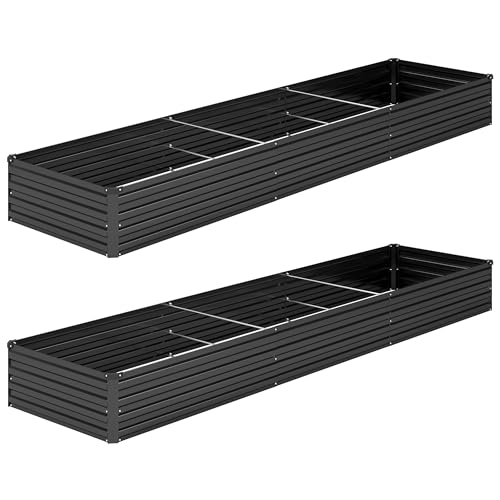
2. DIIYIV Galvanized Raised Garden Bed Kit, 2 Pack (Best Raised Bed)
For growing food this galvanized steel raised bed kit is the standout. The listing describes two rectangular beds at roughly 12 x 2 x 1 ft each, which gives long rows for vegetables, fruit, and herbs. Galvanized steel is coated to resist rust better than bare metal, and the open bottom of a raised bed frame lets water drain down into the soil below. It arrives as a kit, so plan for assembly, and remember that metal can heat the soil in strong, direct sun. In very hot, exposed sites, mulch the surface and keep the bed watered.
3. Devoko Resin 24 Inch Tall Tapered Planter (Best Tall Planter)
When you want a single statement container, this large tapered resin planter stands 24 inches tall and reads as a floor centerpiece for an entry, deck, or large room. Resin is lighter than ceramic or concrete of the same size, so it is easier to reposition, and the tapered shape suits shrubs, small ornamental trees, or a tall grass. The listing frames it as an outdoor planter. Drainage is not spelled out in the title, so check for holes and add them or use a liner and gravel layer before planting.
4. Indoor Plant Pots with Drainage, 5 Pack Multi-Size, White (Best Indoor Pots)
This five pack covers the everyday houseplant lineup in one order. The sizes step up from small to medium, so you can pot seedlings, succulents, and mid-size foliage without buying separately, and the listing states drainage for each pot. The clean white finish keeps the focus on the plant and blends with most interiors. Confirm the material details on the listing, and because these lean toward indoor use, pair heavier outdoor plants with a sturdier container.
5. Quarut Whiskey Barrel Style Planters, 3 Pack 10 Inch with Saucers (Best Decorative)
If you want character without the weight of real wood, this trio of 10 inch barrel style planters delivers the look of a wine or whiskey barrel in plastic. The listing includes drainage holes and saucers, which protects floors and shelves indoors while still letting roots breathe, and it is rated for indoor and outdoor use. Three matching pots group well on a porch or patio. Just know the barrel staves are an imitation finish, not solid oak, and all three share the single 10 inch size.
6. Quarut 12 Inch Plant Pots, 4 Pack with Drainage (Best Value)
For gardeners who need several roomy pots at once, this four pack of 12 inch containers is the value play. Twelve inches is a genuinely useful diameter for mid-size plants, small shrubs, and larger herbs, and the listing notes a drainage hole in each. Buying four at a time makes it easy to plant a matched set across a balcony or patio. Material specifics are worth confirming on the listing, and all four come in the one 12 inch size, so plan your plantings around that.
7. KUGAZ Self Watering Pots, 3 Pack 12, 10 and 8 Inch (Best Self-Watering)
For busy schedules or frequent travel, this three pack of self-watering pots adds a deep reservoir and a water level indicator per the listing, so you can see when it is time to refill rather than guessing. The sizes run 12, 10, and 8 inches for a graduated set, drainage holes are listed, and the plastic build keeps them light for indoor or outdoor use. Self-watering still needs attention: check the indicator, do not let the reservoir sit stagnant, and top off during hot spells.
How to choose planters and raised beds
Raised bed vs planter vs pot. A raised bed is a large, usually bottomless frame that joins your containers to the ground and holds a big volume of soil, which is ideal for vegetables and root crops. A planter is a free-standing vessel, often tall, that holds a feature plant or a grouping and sits on a surface. A pot is the smaller everyday container for a single plant. Pick the format by how much soil the roots need and where the container will live.
Material and longevity. Galvanized steel is coated to shrug off rust and lasts for years outdoors, which is why it is popular for raised beds, though metal conducts heat. Plastic and resin are light, affordable, and easy to move, and they resist cracking in cold better than ceramic, but very thin plastic can become brittle after long sun exposure. Fabric grow bags, a common alternative, breathe well and fold away but dry out faster. Weigh durability against weight and the look you want.
Drainage holes. Drainage is the single most important feature for plant health. Standing water drowns roots, so make sure each container drains. Several picks here list drainage holes and some add saucers or reservoirs; where a listing does not confirm holes, plan to drill them or add a gravel layer and a liner. Treat stated drainage as a listing claim and verify before planting.
Depth for root crops vs herbs. Match depth to the plant. Leafy greens and most herbs are happy in 6 to 8 inches of soil, while carrots, potatoes, and other root crops want a foot or more, which is where a deep raised bed earns its keep. Tall floor planters also give surprising depth for a single shrub or small tree.
Indoor vs outdoor. Indoors, prioritize a saucer or reservoir to protect floors and a size that suits the room. Outdoors, prioritize weather resistance, stability in wind, and enough mass that a tall plant will not topple. Several picks here are rated for both, but confirm the listing before you commit a container to a harsh spot.
Size and number for your space. Measure the spot first, then choose diameter and height to fit. Multipacks make it easy to create a matched, repeating look across a balcony or patio, while a single large planter works as a focal point. For raised beds, leave a walking path between beds so you can reach the center without stepping on the soil.
Assembly. Kits like the galvanized raised bed need building, so set aside time and check whether tools are required. Pots and most planters arrive ready to fill.
A quick note before you plant
Whatever you choose, make sure the container actually drains, match the size to both the plant and the space you have, and remember that metal raised beds can heat the soil in full sun. In hot, exposed sites, mulch the surface, water consistently, and consider afternoon shade for heat-sensitive crops. None of these containers guarantees a harvest on its own, but the right fit makes good gardening a lot easier.
Closing thoughts
There is no single best container for every garden, only the best fit for the plant and the place. Start with what you want to grow, let depth and drainage lead the decision, then choose a material and size that suit your space and the weather it will face. Any of the planters, pots, and raised beds above can anchor a practical, good-looking setup when matched to the right job.