Reader-supported: we earn a commission on some links, at no extra cost to you. It never changes our picks. How this works
Wire Strippers

Best Wire Strippers

ProductPickly is reader-supported. When you buy through links on our site, we may earn an affiliate commission at no extra cost to you. It never changes our picks.

The short answer

For most home and light professional electrical work, the Klein Tools 11061 Self-Adjusting Wire Stripper is our top pick. It sizes itself to the wire, strips a wide band of solid and stranded gauges, handles common Romex, and still cuts cleanly. If you want a premium forged tool, the KNIPEX 13 72 8 is the upgrade, while the WGGE WG-015 is a sensible budget all in one for a starter kit.

?
How we picked

We compare published specifications, safety certifications and thousands of verified owner reviews, and we do not physically test every unit. Read the full process in our review methodology.

At a glance

PickStandoutBest for
Klein 11061Self-adjusting jawsMost everyday jobs
KNIPEX 13 72 8Forged precisionDaily pro use
Klein 11055EPUSA made simplicityCut and strip basics
WGGE WG-015Three tools in oneStarter DIY kit
haisstronica 3 in 1Self-adjusting valueMixed gauge work
IRWIN Vise-GripComfort gripsLong runs
Klein 1025Long reach noseTight boxes
1
Klein Tools 11061 Self-Adjusting Wire Stripper
★★★★★ 4.8 / 5 Best Overall
Check price on Amazon

The 11061 strips a wide band of solid and stranded wire automatically, so you squeeze once and it sizes the cut for you. It is rated for 10 to 20 AWG solid and 12 to 22 AWG stranded, handles Romex 12/2 and 14/3, and still shears wire cleanly at the nose. For most home and light pro work, it takes the guesswork out of stripping.

Type Self-adjustingSolid wire 10 to 20 AWGStranded wire 12 to 22 AWGRomex 12/2 and 14/3
  • Self-adjusting, so there is no dial to set
  • Wide solid and stranded range plus Romex
  • Cuts cleanly at the nose
  • Bulkier than a basic plier stripper
  • Can be less exact on very fine gauges
Best for: Most home and light pro electrical jobs
2
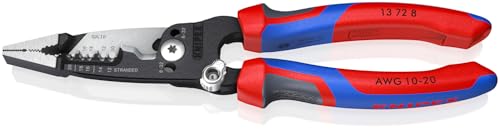
KNIPEX 13 72 8 Forged Wire Stripper
★★★★★ 4.7 / 5 Premium Pick
Check price on Amazon

KNIPEX built this 8 inch stripper with a forged body, and that construction is why it feels so solid and precise in hand. It is a premium choice for electricians who want a tool that holds its edge and alignment over years of daily use rather than a do everything gadget.

Type Wire stripperLength 8 inchesBuild Forged
  • Forged body feels precise and durable
  • Compact 8 inch size
  • Trusted brand for daily pro use
  • Premium tier, not a budget buy
  • Fewer combined functions than a 3 in 1
Best for: Electricians who want a precise, durable daily tool
3
Klein Tools 11055EP Wire Cutter and Stripper
★★★★★ 4.6 / 5 Made in USA
Check price on Amazon

Made in the USA, this cutter and stripper is a classic for a reason. It cuts both stranded and solid copper and strips cleanly, with the kind of simple, durable design that earns a permanent spot in a tool bag and keeps working long after flashier tools wear out.

Type Cutter and stripperOrigin Made in USACuts Stranded and solid copper
  • Made in USA build quality
  • Cuts stranded and solid copper
  • Simple and long lasting
  • Manual stripping needs the right notch
  • No crimping function
Best for: DIYers who want a simple, long lasting USA made tool
4
WGGE WG-015 Wire Stripper, Cutter and Crimper
★★★★★ 4.3 / 5 Budget Pick
Check price on Amazon

This 8 inch tool combines a stripper, cutter, and crimper in one plier style frame, which makes it a sensible first set for a new DIY kit. It covers the everyday strip, cut, and crimp tasks without asking you to buy three separate tools, so it is an easy on ramp for light work.

Type Stripper, cutter, crimperLength 8 inchesStyle Plier style
  • Strips, cuts, and crimps in one tool
  • Approachable for new DIYers
  • 8 inch plier style frame
  • Jack of all trades rather than specialist
  • Crimp quality trails a dedicated crimper
Best for: A first all in one tool for a new DIY kit
5
haisstronica 3 in 1 Self-Adjusting Wire Stripper
★★★★★ 4.4 / 5 Great Value
Check price on Amazon

A self-adjusting 3 in 1 that sizes itself to the wire across a 24 to 10 AWG band. It is a strong value option for anyone who strips mixed gauges and does not want to reset a dial between cuts, and the combined functions keep a light kit tidy.

Type Self-adjusting 3 in 1Wire range 24 to 10 AWGFunctions Strip, cut, crimp
  • Self-adjusting across 24 to 10 AWG
  • Three functions in one body
  • Good value for mixed work
  • Lighter build than pro tools
  • Very heavy gauges sit outside its range
Best for: Stripping mixed gauges without resetting a dial
6
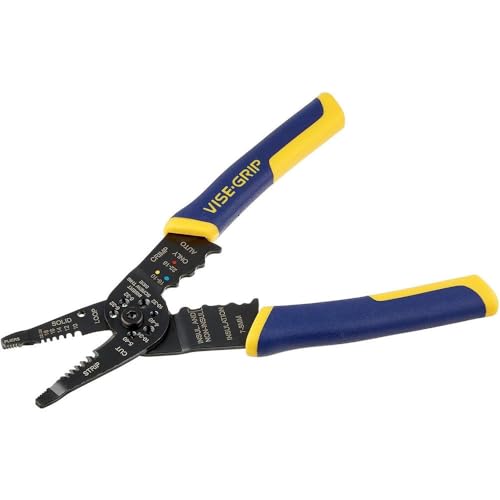
IRWIN Vise-Grip Plier Style Wire Stripper
★★★★★ 4.5 / 5 Comfort Grip
Check price on Amazon

The Vise-Grip plier style stripper cuts 10 to 22 AWG and leans on IRWIN ProTouch grips for comfort during long runs. It is a familiar, no nonsense manual tool that many electricians learned on, and the clear gauge markings make it easy to grab the right notch.

Type Plier style stripperLength 8 inchesWire range 10 to 22 AWGGrip ProTouch
  • Comfortable ProTouch grips
  • Clear 10 to 22 AWG markings
  • Familiar plier style feel
  • Manual, so you match the notch
  • Nose less refined than premium tools
Best for: Long jobs where grip comfort matters
7
Klein Tools 1025 Long Nose Wire Stripper
★★★★★ 4.2 / 5 Precision Pick
Check price on Amazon

The 1025 pairs a long nose with stripping, crimping, and cutting in one Made in USA tool. The extended nose helps you reach into boxes and position fine work, and it handles 10 to 20 AWG solid and 12 to 22 AWG stranded wire for a wide spread of everyday tasks.

Type Long nose multi-purposeOrigin Made in USASolid wire 10 to 20 AWGStranded wire 12 to 22 AWG
  • Long nose reaches tight boxes
  • Strips, crimps, and cuts
  • Made in USA
  • Long nose adds length to carry
  • Learning curve to find the right notch
Best for: Fine work and reaching into crowded boxes

If you want one wire stripper that handles the most common household and light electrical jobs with the least fuss, the Klein Tools 11061 Self-Adjusting Wire Stripper is the tool we keep coming back to. It grips and sizes the strip for you without a dial to set, covers the solid and stranded gauges most people actually use, and still shears wire cleanly at the nose. That blend of speed, range, and a clean cut is why it anchors the top of this list, with a forged KNIPEX option for anyone who wants a premium daily driver and a budget all in one for a first kit.

Our top picks for wire strippers

A wire stripper looks simple, but the one that suits you depends on the work you do and how often you do it. This list spans the main styles you will see on Amazon right now. Self-adjusting strippers, like the Klein 11061 and the haisstronica 3 in 1, clamp the wire and set the strip length automatically, which is fast when you move between gauges all day. Manual strippers, such as the Klein 11055EP and the IRWIN Vise-Grip, use sized notches that you match to the wire by hand, trading a little speed for control. Combined tools fold stripping, cutting, and crimping into one body, and a long nose design helps you reach into crowded boxes. We weighted each pick toward the people most likely to use it, so a homeowner, a hobbyist, and a working electrician will all find something here that fits.

Throughout the list we lean on the wire ranges, build notes, and functions stated in each product listing rather than on marketing adjectives. Where a tool is a specialist, we say so, and where it is a sensible all rounder for a starter kit, we say that too. The goal is to help you buy once and buy the right thing, not to push the most expensive option on the page.

How we picked

We build this roundup from current Amazon listings. That means we read the published specifications, the documented wire gauge ranges, the stated functions, and the pattern of verified owner feedback, then we weigh those against the price band and the kind of work each tool is designed for. We have not physically tested every unit in a workshop, and we will not pretend otherwise. Instead of staging a lab demo, we focus on what can be verified from the listing and from the track record of each brand and model, and we flag the honest trade-offs rather than hiding them.

We favored tools with a clearly stated wire range, a build that matches the job, and a design that does one thing well or combines functions without obviously cutting corners. Brand history matters here. Klein, KNIPEX, and IRWIN have long records in electrical hand tools, while value brands can still earn a place when the listing is specific about range and function. When two tools were close, we gave the edge to the one that would frustrate the fewest people, because a wire stripper is a tool you reach for dozens of times a day and small annoyances add up fast.

What to look for in a wire stripper

Type: manual versus self-adjusting. A manual stripper has sized notches, and you place each wire in the notch that matches its gauge. It is precise and simple, and it rarely goes wrong once you learn the notches, but it is slower when you jump between sizes. A self-adjusting stripper grips the wire and sets the strip for you across a range, which is faster for mixed work and gentler on your hands, though it can be less exact on very fine wire. If you strip the same gauge all day, either works. If you move across gauges constantly, a self-adjusting tool earns its keep.

Wire gauge range. Match the tool to the wire you use most. Household and lighting circuits often sit in the heavier band, while electronics and signal work run much finer. Check the listed solid and stranded ranges before you buy, because a tool tuned for one can struggle with the other. Several picks here state both ranges clearly, which takes the guesswork out of matching the jaws to the job.

Combined cutter and crimper. Decide whether you want a dedicated stripper or an all in one. If you terminate connectors or use heat shrink, a tool that strips, cuts, and crimps in one frame saves you from carrying extra pliers and keeps a starter kit light. For pure stripping, a dedicated tool usually leaves a cleaner result, so think about how often you actually crimp before you pay for the extra function.

Build and grip. The feel of the tool matters more than the spec sheet suggests. Forged construction, as on the KNIPEX, tends to hold its edge and alignment over years of daily use. Cushioned handles, like the IRWIN ProTouch grips, reduce fatigue on long runs. A tool that is comfortable and well made will get used, and a tool that pinches or flexes will sit in the drawer, so weigh the handle and the hinge alongside the cutting notches.

One more point that is easy to skip. Think about where the tool will live. A long nose design reaches into tight boxes and helps with fine positioning, but it adds length to carry. A compact plier style tool slips into a pouch and travels well. There is no single right answer, only the one that matches your hands and your bag.

The bottom line

For most people, the Klein Tools 11061 is the easiest wire stripper to recommend. It sizes itself to the wire, covers the gauges most homes and light pro jobs use, handles common Romex, and cuts cleanly, which removes the guesswork from everyday work. Step up to the KNIPEX 13 72 8 if you want a forged tool for daily professional use, or start with the WGGE WG-015 if you want an affordable all in one for a new kit. Whichever you choose, work safely. De-energize the circuit and confirm the wire is dead before you cut or strip it, and always match the tool to the correct gauge so the jaws bite the insulation and not the conductor. A good wire stripper lasts for years, so buy the one that fits your work and treat every wire as live until you have proven it is not.

For more electrical gear, browse our wire stripper guides and the full home improvement tools hub.

Questions people ask

What is the difference between a manual and a self-adjusting wire stripper?

A manual stripper has sized notches, so you place the wire in the notch that matches its gauge. A self-adjusting stripper grips the wire and sizes the strip for you across a range, which is faster for mixed gauges but can be less precise on very fine wire.

What wire gauge range do I need?

Match the tool to the wire you use most. Household wiring often falls in the heavier band, while electronics and signal wire run much finer. Several picks here, like the Klein 11061, cover both solid and stranded ranges, so check the listed range before buying.

Do I need a combined stripper and crimper?

If you make connections with terminals or heat shrink, a combined stripper, cutter, and crimper such as the WGGE WG-015 or the Klein 1025 saves you from carrying extra tools. For pure stripping, a dedicated stripper usually gives cleaner results.

Are self-adjusting strippers worth it?

For most people, yes. They speed up repetitive work and reduce nicked conductors because you do not hunt for the right notch. On very fine or unusual wire, a manual stripper can still give more control.

How do I strip wire without damaging the conductor?

Use the notch or setting that matches the gauge, apply steady pressure, and pull straight. If strands break or the insulation drags, step to the next size. The aim is to cut the insulation only and not score the metal.

Is it safe to strip a wire that is connected to power?

Always de-energize the circuit and confirm it is dead before you cut or strip any wire. Match the tool to the correct gauge so the jaws do not slip. Treat every wire as live until you have verified otherwise.

What makes a wire stripper durable?

Look at the build. Forged tools like the KNIPEX, and USA made Klein strippers, tend to hold their edge and alignment. Comfortable grips, such as the IRWIN ProTouch handles, also help the tool last through long jobs.

The bottom line

So which one?

The Klein Tools 11061 is the one to buy first. It removes the guesswork with self-adjusting jaws, covers the gauges most people actually use, and cuts cleanly, which makes it the easiest wire stripper to recommend across home and light pro work.