Compost Tumblers
Best Compost Tumblers for Faster Composting
7 picks compared
9 min read
ProductPickly is reader-supported. When you buy through links on our site, we may earn an affiliate commission at no extra cost to you. It never changes our picks.
The short answerA compost tumbler speeds composting by letting you aerate a sealed drum in seconds, so batches finish in weeks instead of the months a static pile takes. For most gardeners the VIVOSUN 43 Gallon Dual Chamber tumbler is the best all-round choice, because its two chambers let one batch cure while you keep filling the other. If you have limited space, a compact single-chamber drum like the VEVOR 18.5 Gallon is easier to turn and store. Match the capacity to how much waste you actually produce, since a drum too heavy to spin when full slows you down.
?How we pickedWe compare published specifications, safety certifications and thousands of verified owner reviews, and we do not physically test every unit. Read the full process in our review methodology.
VIVOSUN Outdoor Tumbling Composter Dual Rotating Batch Compost Bin (43 Gallon)
★★★★★ 4.6 / 5 Best overall
Two 21.5 gallon chambers let you fill one side while the other finishes, so you always have a batch working. The octagonal drum tumbles easily by hand and the internal fins break clumps apart as it turns.
Type Dual chamberTotal capacity 43 gallonFrame Powder-coated steelTurning Hand roll drum
- Two chambers keep a finished batch and a fresh batch separate
- Internal aeration fins mix material as you spin it
- Sturdy steel stand keeps the drum off the ground
- Assembly of the many panels takes patience
- A full chamber is heavy to turn
Best for: gardeners who want a steady supply of finished compost
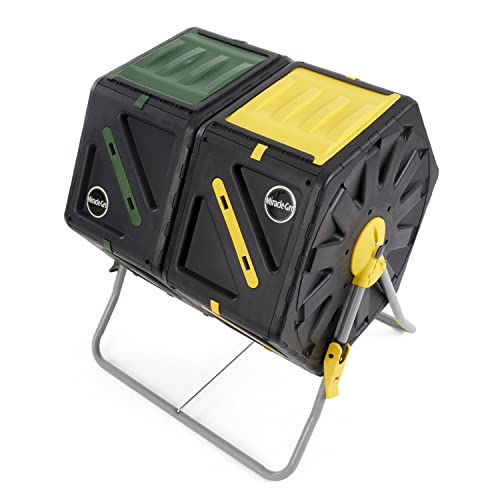
Miracle-Gro Dual Chamber Compost Tumbler (2 x 18.5 Gallon)
★★★★★ 4.5 / 5 Trusted brand pick
A compact dual-chamber design from a name most gardeners already know, with two sliding doors and a heavy-duty build. The smaller per-chamber size makes it easy to spin even when a side is close to full.
Type Dual chamberTotal capacity 37 gallon (2 x 18.5)Doors Two sliding doorsTurning Hand roll drum
- Lighter chambers are easy to rotate
- Two doors make loading and harvesting simple
- Familiar brand with wide parts availability
- Smaller total volume than 50 gallon rivals
- Panels can flex if overpacked
Best for: small households and first-time composters
VEVOR Dual Chamber Composting Tumbler (43 Gallon)
★★★★★ 4.4 / 5 Best large-capacity value
A roomy dual-chamber barrel on a welded steel frame with two sliding doors and a BPA-free drum. It handles a big influx of yard and kitchen waste without needing a second bin.
Type Dual chamberTotal capacity 43 gallonFrame SteelMaterial BPA-free PP
- Large capacity for a mixed yard and kitchen stream
- Two sliding doors ease loading and emptying
- Solid steel frame feels stable when loaded
- Numbered panels make first assembly slow
- Heavy once both chambers are full
Best for: busy yards that generate a lot of waste
FCMP Outdoor HOTFROG Rolling Single Chamber Tumbler (19 Gallon)
★★★★★ 4.5 / 5 Best rolling design
Instead of a stand, this half-size barrel rolls along the ground, so mixing is as easy as pushing it a few feet. The compact size suits balconies, patios, and small plots.
Type Single chamberCapacity 19 gallonTurning Roll on the groundPorts Twin aeration vents
- Rolling design needs no lifting or cranking
- Small footprint fits tight outdoor spaces
- Easy to move to where you need it
- Single chamber means batches overlap unless you pause loading
- Small volume fills quickly in an active garden
Best for: patios, balconies, and small gardens
VEVOR Small Single Chamber Composting Tumbler (18.5 Gallon)
★★★★★ 4.3 / 5 Best for small spaces
A single compact drum on a steel frame for anyone who does not need a full dual-chamber unit. The light barrel spins with one hand and the sliding door keeps loading tidy.
Type Single chamberCapacity 18.5 gallonFrame SteelDoor One sliding door
- Very easy to turn even when nearly full
- Small footprint for compact yards
- BPA-free drum and stable frame
- One chamber limits continuous batching
- Modest capacity for larger households
Best for: small kitchens and starter composting
Lifetime 60072 Dual Compost Tumbler (50 Gallon)
★★★★★ 4.4 / 5 Best for durability
A thick double-wall drum with internal mixing bars and a large 50 gallon dual-chamber volume built for years outdoors. The heavier construction resists warping in sun and cold better than thin-wall barrels.
Type Dual chamberTotal capacity 50 gallonDrum Double-wall panelsMixing Internal bars
- Rugged double-wall drum holds up outdoors
- Internal bars mix material as it tumbles
- Large volume for two rotating batches
- Heavier and bulkier than budget barrels
- Turning a full chamber takes effort
Best for: gardeners who want a long-lasting unit
Good Ideas Compost Wizard Jr. Tumbler (7 Cubic Foot)
★★★★★ 4.2 / 5 Best simple single-drum
A center-mounted single drum you spin on its axle, with a large lid opening for easy loading of bulky material. The straightforward design has few parts to assemble or fail.
Type Single chamberCapacity About 7 cubic feetTurning Spin on center axleOpening Large lid
- Simple center-axle spin is intuitive
- Wide opening swallows bulky trimmings
- Few parts means quick setup
- Single chamber needs a fill-then-finish routine
- No separate stand doors for harvesting
Best for: gardeners who prefer a no-fuss single drum
A compost tumbler turns kitchen scraps and yard waste into finished compost far faster than a pile left to sit, because you can aerate the whole batch in seconds by spinning a sealed drum. The picks below cover single and dual-chamber designs across a range of sizes so you can match one to your space and how much waste you actually produce.
How a tumbler speeds composting compared with a static bin
Composting is driven by aerobic microbes that need oxygen to break material down and generate heat. In an open static pile, the core runs out of air within days and decomposition slows to a crawl unless you dig in with a fork every week. A tumbler solves this by sealing the material inside a drum you rotate, so a few turns fold fresh air through the entire batch in seconds. That constant aeration keeps the microbes active and the pile warm, which is why a well-managed tumbler can finish a batch in weeks rather than the many months a neglected pile takes.
Single chamber versus dual chamber
Single-chamber tumblers are simpler, lighter, and easier to spin, but they have one drawback: every time you add fresh scraps you reset the batch, so you have to stop loading and wait for the whole drum to finish. Dual-chamber units fix that by giving you two sealed sides. You fill one while the other cures, then harvest the finished side and switch. If you generate waste year round and want a continuous supply of compost, a dual chamber is worth the extra bulk. If you compost in occasional batches or have limited space, a single chamber keeps things cheaper and lighter.
Capacity and placement
Size the drum to your waste stream rather than to the biggest unit you can find. A patio gardener does well with an 18 to 20 gallon barrel, while a large yard with heavy trimmings benefits from 40 to 50 gallons or a dual-chamber design. Remember that a full drum gets heavy, so a capacity you cannot comfortably turn works against you. For placement, choose a level, well-drained spot that gets some sun to help retain heat, with enough clearance around the frame to spin the drum and slide the doors open. Standing it near the kitchen door makes daily scrap runs less of a chore.
How to use a tumbler for good compost
Balance is everything. Aim for a rough mix of carbon-rich browns such as dry leaves, shredded cardboard, and straw with nitrogen-rich greens such as vegetable scraps, coffee grounds, and fresh grass, leaning toward more browns by volume. Add moisture until the contents feel like a wrung-out sponge, then give the drum several full rotations every two or three days to keep oxygen moving. If it smells sour or looks soggy, add browns and turn more often; if it looks dry and dusty, add greens and a little water. Stop loading a chamber once it is about three-quarters full so it has room to tumble, and let it finish before you harvest.
Questions people ask
How much faster is a compost tumbler than a static bin?
A well-managed tumbler can produce usable compost in a few weeks to a couple of months, while an unturned static pile often takes six months to a year. The speed comes from frequent aeration and heat retention, not magic, so results still depend on your browns-to-greens balance and moisture.
Should I choose a single or dual-chamber tumbler?
A single chamber is simpler and cheaper but forces you to stop adding material while a batch finishes. A dual chamber lets you fill one side while the other cures, so you always have compost in progress. Most active gardeners prefer dual chamber for the steady output.
What size compost tumbler do I need?
Match capacity to your waste stream. A small household with a patio garden is well served by an 18 to 20 gallon drum, while a busy yard with lots of trimmings benefits from 40 to 50 gallons or a dual-chamber unit. Oversizing is fine, but a drum you cannot turn when full defeats the purpose.
How often should I turn the tumbler?
Turning every two to three days keeps oxygen moving and speeds decomposition. Give the drum a few full rotations each time so material folds over itself. During peak breakdown the contents warm up, and regular turning keeps that heat even.
What can I put in a compost tumbler?
Combine nitrogen-rich greens such as vegetable scraps, coffee grounds, and fresh grass with carbon-rich browns such as dry leaves, shredded cardboard, and straw. Avoid meat, dairy, oily food, and pet waste, which cause odor and pests and are not suited to a sealed tumbler.
Why is my tumbler compost wet and smelly?
A soggy, sour smell usually means too many greens and not enough air. Mix in dry browns like shredded cardboard or leaves, give it a good turn, and leave the vents clear. The material should feel like a wrung-out sponge, not a slurry.
Do compost tumblers work in winter?
Decomposition slows sharply in cold weather because the microbes go dormant, so expect little progress until temperatures rise. You can keep loading a chamber through winter and it will restart in spring. Placing the tumbler in a sunny, sheltered spot helps retain warmth.
Do I need a compost starter or accelerator?
You do not strictly need one. A handful of finished compost or garden soil introduces the same microbes. A commercial accelerator can give a new batch a head start, but a good browns-to-greens balance, moisture, and regular turning matter far more.
The bottom lineSo which one?
For most gardeners the VIVOSUN 43 Gallon Dual Chamber tumbler is the best balance of capacity, easy turning, and continuous output. Tight on space, the compact VEVOR 18.5 Gallon single chamber is simpler to spin and store. Whichever you pick, the browns-to-greens balance and regular turning matter more than the brand on the drum.