Electric Water Heaters
Best Electric Water Heaters for Every Home
6 picks compared
10 min read
ProductPickly is reader-supported. When you buy through links on our site, we may earn an affiliate commission at no extra cost to you. It never changes our picks.
The short answerThere is no single best electric water heater, only the best one for your setup. For most homes wanting flexible placement without major wiring, a plug-and-play 120 volt tank like the GE 18 gallon is the easiest all-rounder. If you want endless hot water for a whole home and have the electrical capacity, a high-output 240 volt tankless is the better path. For a single sink or a remote bathroom, a small point-of-use heater beats oversizing. Match the unit to your peak demand, your incoming water temperature, and the electrical service you actually have.
?How we pickedWe compare published specifications, safety certifications and thousands of verified owner reviews, and we do not physically test every unit. Read the full process in our review methodology.
GE Appliances 18 Gallon Plug and Play Electric Water Heater
★★★★★ 4.6 / 5 Best overall
This 18 gallon tank runs on a standard 120 volt outlet, so it can go in a closet, garage, or utility space without new high-voltage wiring. The adjustable thermostat and plug-and-play design make it the most flexible option for the widest range of homes.
Type Storage tankCapacity 18 gallonsVoltage 120 volt plug-inControl Adjustable thermostat
- Plugs into a standard outlet, no 240V circuit needed
- Flexible placement in tight or remote spaces
- Simple thermostat control anyone can set
- 18 gallons and 120V means slower recovery under heavy use
- Not intended as a sole heater for a large busy household
Best for: Flexible, low-hassle placement in most homes
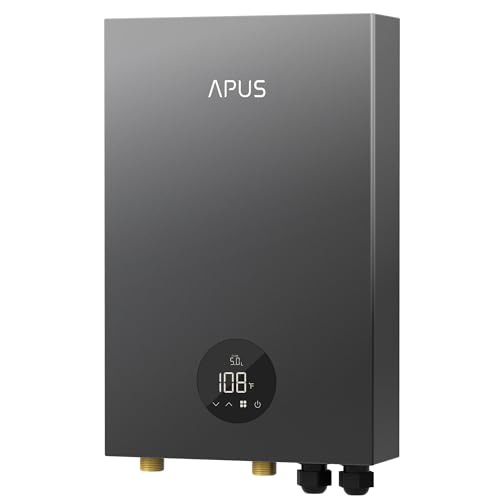
APUS 27kW Electric Tankless Water Heater, 240V
★★★★★ 4.4 / 5 Whole-home tankless
With up to 6.5 GPM and near-instant heating, this high-output unit is built to serve multiple fixtures in a whole home. That capacity comes with a serious electrical appetite, so a 240V install with adequate panel capacity is essential.
Type Tankless on demandPower 27kWFlow Up to 6.5 GPMVoltage 240 volt
- High flow rate suits whole-home use
- Endless hot water with no tank to drain
- Fast heat response when a tap opens
- Very high amperage draw needs strong panel capacity
- Effective GPM drops in cold-water climates
Best for: Whole-home demand where 240V capacity exists
Westinghouse 14kW Tankless Water Heater, 240V, WiFi
★★★★★ 4.3 / 5 Smart control
This 14kW tankless unit adds WiFi so you can set temperature and monitor the heater from a phone, which is handy for a primary bathroom. It is ETL listed and sized for a single active fixture rather than heavy simultaneous demand.
Type Tankless on demandPower 14kWVoltage 240 voltExtras WiFi control, ETL listed
- App control for temperature and monitoring
- ETL listed for safety compliance
- Good fit for a main bathroom shower
- 14kW output limits simultaneous multi-fixture use
- Still requires a dedicated 240V circuit
Best for: A bathroom where app control matters
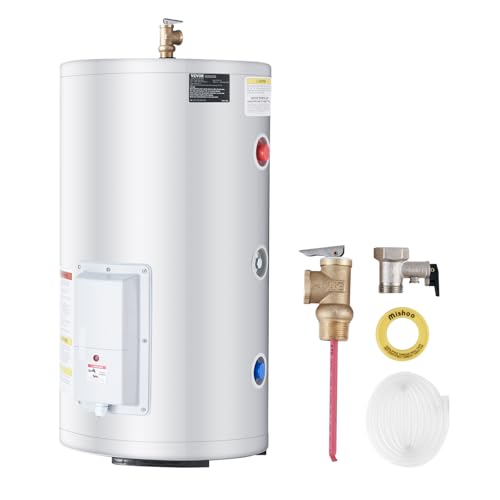
VEVOR 18 Gallon Electric Water Heater, 1.6kW
★★★★★ 4.2 / 5 Compact tank
This compact 18 gallon tank uses a modest 1.6kW element and simple knob control, with an IPX4 rating for splash resistance. It suits a small bathroom, cabin, or side connection where a low electrical draw is the priority.
Type Storage tankCapacity 18 gallonsPower 1.6kW elementRating IPX4 splash resistant
- Low wattage draw is easy on wiring
- Simple knob control and side connection
- IPX4 splash resistance for damp spaces
- 1.6kW means slow reheat after heavy draw
- Not suited to high or simultaneous demand
Best for: A small space with limited electrical draw
ThermoMate 4.5kW Tankless Under Sink Water Heater
★★★★★ 4.3 / 5 Point-of-use
Mounted right under a sink, this 4.5kW tankless unit delivers hot water without the wait of a long pipe run from a central heater. It is ETL approved and best hardwired for a single fixture such as a kitchen or bathroom sink.
Type Tankless point-of-usePower 4.5kWInstall Under sinkListing ETL approved
- Near-instant hot water at one fixture
- Compact under-sink footprint
- ETL approved for safety
- Serves a single fixture, not a whole home
- Hardwiring is best left to an electrician
Best for: A remote sink that waits too long for hot water
3000W 110V Tankless Under Sink Water Heater
★★★★★ 4.2 / 5 Easy plug-in
This 3000W unit runs on a standard 110V circuit with a digital display, making it the simplest point-of-use option to add without new high-voltage wiring. Its low power means it is meant for handwashing and light single-tap use rather than long hot showers.
Type Tankless point-of-usePower 3000WVoltage 110 voltDisplay Digital readout
- Standard 110V setup, no new circuit required
- Digital display for temperature
- Compact for kitchen or bathroom sink use
- 3000W output is low, best for light use
- Not enough for a full shower in cold climates
Best for: A single sink where wiring should stay simple
The right electric water heater depends less on brand and more on how you plan to use hot water. A storage tank keeps a reservoir hot and ready, a whole-home tankless unit heats water only when a tap opens, and a small point-of-use heater feeds a single sink or shower. Matching the heater to your household demand, your available electrical service, and where the unit will live is what separates a good buy from a frustrating one.
Tank vs tankless vs point-of-use
A tank heater stores a fixed volume of hot water, often 18 to 50 gallons, and reheats it on a thermostat. It handles simultaneous demand well until the tank runs low, then needs recovery time. A tankless unit heats water on demand and never runs out, but its output is capped by flow rate and incoming water temperature. A point-of-use heater is a compact tank or tankless unit installed close to one fixture, so hot water arrives almost instantly without traveling through long pipe runs. Many homes end up using a combination, such as a main heater plus a small point-of-use unit at a remote bathroom.
Sizing to household demand and GPM
For a tank, size by first-hour rating and by the number of people using hot water at peak times. For tankless, the key number is gallons per minute, or GPM, at your target temperature rise. A single shower needs roughly 1.5 to 2.5 GPM, and running two fixtures at once can push demand past 4 GPM. Colder incoming water means a bigger temperature rise, which lowers the effective GPM a unit can deliver. Buy for your coldest month and your realistic peak, not for a mild day with one tap open.
Electrical requirements
Electric water heaters split sharply by voltage. Plug-in models on a standard 120 volt outlet are limited in power and best for light or single-point use. Whole-home tankless units commonly need 240 volt service and can draw very high amperage, sometimes requiring multiple dedicated breakers and heavy-gauge wiring. Before buying, confirm your panel has the spare capacity and the correct breaker size the unit specifies. An undersized circuit will trip, underperform, or create a safety hazard.
Installation and professional fitting
Some point-of-use and plug-in units are designed for straightforward do-it-yourself setup with basic plumbing connections. High-wattage 240 volt tankless heaters and any hardwired unit are a different matter. Running new circuits, upgrading a panel, and making permanent plumbing and electrical connections often require permits and are safest handled by a licensed electrician and plumber. When in doubt, treat the wiring and the water connections as professional work rather than a weekend project.
Questions people ask
Is a tankless electric water heater better than a tank?
Neither is universally better. Tankless units give endless hot water and save space, but their output is capped by flow rate and incoming water temperature. Tanks handle simultaneous demand well until they run low, then need recovery time. Choose based on your peak demand and electrical capacity.
How many GPM do I need?
A single shower needs roughly 1.5 to 2.5 GPM, and running two fixtures at once can exceed 4 GPM. Add up the fixtures you expect to run together at peak, then size for your coldest incoming water since a bigger temperature rise lowers the GPM a unit can deliver.
Can I plug an electric water heater into a normal outlet?
Some do. Plug-in 120 volt tanks and small 110 volt point-of-use tankless units run on standard outlets but are limited in power. Whole-home tankless heaters need 240 volt service and dedicated high-amperage circuits, which is not a standard outlet.
What electrical service does a whole-home tankless need?
High-output tankless units commonly require 240 volt service and can draw very high amperage, sometimes across multiple dedicated breakers with heavy-gauge wiring. Always confirm your panel has spare capacity and the exact breaker size the model specifies before buying.
Do I need a professional to install one?
Small plug-in and point-of-use units are often designed for do-it-yourself setup. Hardwired units, new 240 volt circuits, and panel upgrades are usually best handled by a licensed electrician and plumber, and may require permits.
What is a point-of-use water heater?
It is a compact heater installed close to a single fixture, so hot water arrives almost instantly without traveling through long pipe runs. It is ideal for a remote bathroom or a sink far from the main heater.
Why does hot water take so long at a far sink?
The water sitting in the pipe between your main heater and the tap has cooled and must be flushed out first. A point-of-use heater near that fixture eliminates the wait by heating water right where it is used.
How do I size a tank heater?
Size a tank by its first-hour rating and by how many people use hot water at peak times. A small tank suits light or single-point use, while a busy household running multiple fixtures needs more capacity or faster recovery.
The bottom lineSo which one?
For most homes, the GE 18 gallon plug-and-play tank is the easiest and most flexible choice because it needs no special wiring and can go almost anywhere. If you want truly endless hot water across a whole home and have the electrical capacity, step up to a high-output 240 volt tankless like the APUS 27kW. For a single sink or a remote bathroom, a point-of-use unit beats oversizing a central heater.