Pruning Shears
Best Pruning Shears for Clean Cuts on Every Branch in the Garden
7 picks compared
8 min read
ProductPickly is reader-supported. When you buy through links on our site, we may earn an affiliate commission at no extra cost to you. It never changes our picks.
The short answerFor most gardeners the Felco F2 is the standout pick, a Swiss-made bypass pruner that cuts cleanly and can be fully rebuilt with replaceable blades, springs and parts, so one pair lasts for years. If you want dependable everyday value the Fiskars 5/8 inch bypass pair covers deadheading and light pruning without fuss, while the gonicc 8 inch titanium bypass is a smart mid-range all-rounder with a sap groove and safety lock. For woodier growth the Kynup SK5 leans heavy duty, the MEPEREZ Germany pair uses a leverage design to help arthritic or weaker hands, the Haus and Garten ClassicPRO delivers a premium bypass feel, and the larger 1 inch Fiskars handles thicker stems. Choose by cutting mechanism, blade steel, cut capacity and grip comfort rather than by price.
?How we pickedWe compare published specifications, safety certifications and thousands of verified owner reviews, and we do not physically test every unit. Read the full process in our review methodology.
Felco F2 Pruning Shears
★★★★★ 4.8 / 5 Best overall
The Felco F2 is the pruner we would hand to anyone who wants one pair to last for years, because its Swiss-made bypass blade cuts cleanly and almost every part, from the blade to the spring, can be replaced instead of binning the tool. The forged aluminium body keeps weight down without feeling flimsy, though the classic handle is a fixed size that suits medium to larger hands best.
Type Bypass hand prunerCut capacity Up to about 1 in (25 mm)Body Forged aluminium, 9.25 inGood to know Replaceable blade, spring and parts
- Clean bypass cut that stays sharp with basic care
- Nearly every part is replaceable, so it is repairable for life
- Light forged body handles long pruning sessions
- Sits at the premium end for a hand pruner
- Fixed handle size suits medium to large hands more than small
Best for: gardeners who want one rebuildable pair for the long haul
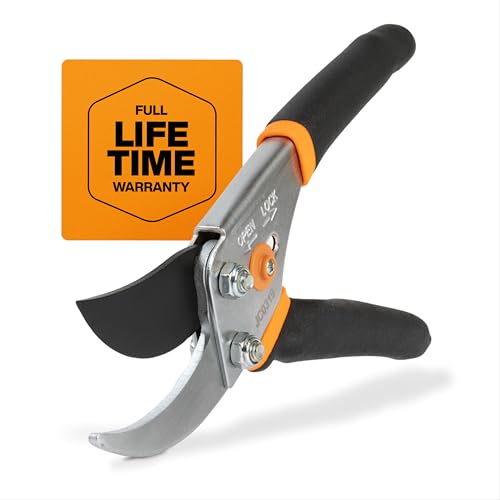
Fiskars Bypass Pruning Shears (5/8 in)
★★★★★ 4.7 / 5 Best value
This is the pair we would suggest for most home gardens, a straightforward bypass pruner with a low-friction coated blade that slices green stems and thin branches without fuss. It will not rebuild like a Felco, but it is easy to find, comfortable to hold, and does the everyday jobs of deadheading and light trimming well.
Type Bypass hand prunerCut capacity 5/8 inBlade Coated steel, low frictionGood to know Easy squeeze, wide availability
- Reliable clean cut on green stems and small branches
- Comfortable grip that is easy to squeeze
- Widely stocked and simple to replace
- Not built to be fully rebuilt like premium pairs
- 5/8 in limit means thicker wood needs loppers
Best for: everyday deadheading and light pruning around the yard
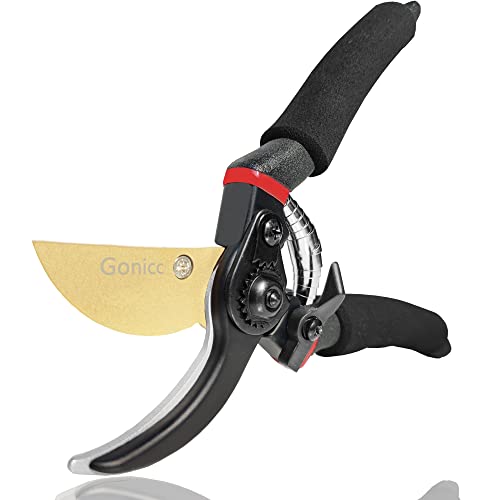
gonicc 8 in Titanium Bypass Pruning Shears
★★★★★ 4.6 / 5 Best all-rounder
The gonicc GPPS-1003 lands in a friendly middle ground, pairing a titanium-coated bypass blade with a sap groove and a rotating handle option that some gardeners find easier on the wrist. It cuts up to around 3/4 inch and includes a safety lock, making it a sensible step up from a basic pair without the premium outlay.
Type Bypass hand prunerCut capacity Up to 3/4 inBlade Titanium-coated steelGood to know Sap groove and safety lock
- Titanium-coated blade resists sap sticking and rust
- Sap groove keeps the cutting action smooth
- Safety lock and comfortable handle for the price bracket
- Coating wears with heavy use over time
- Not as fully serviceable as a rebuildable pair
Best for: an affordable step up with a smoother, cleaner cut
Kynup Heavy Duty Pruning Shears (SK5 Steel)
★★★★★ 4.5 / 5 Best heavy duty
Built around a hard SK5 Japanese steel blade, the Kynup leans toward tougher jobs and holds an edge well when you are working through woodier growth. The chunkier handle and stronger spring give it a heavier feel in the hand, which suits bigger cuts more than the fine, repetitive snipping of delicate deadheading.
Type Bypass hand prunerCut capacity Up to about 3/4 inBlade SK5 Japanese steelGood to know Non-slip handle, sturdy spring
- Hard SK5 blade keeps its edge through woodier growth
- Sturdy build feels up to bigger, tougher cuts
- Non-slip handle helps grip in damp conditions
- Heavier feel is less nimble for fine snipping
- Bulkier grip can tire smaller hands sooner
Best for: tougher, woodier cuts where blade strength matters
MEPEREZ Germany Pruning Shears
★★★★★ 4.4 / 5 Best for weak hands
MEPEREZ aims its pruner at gardeners with arthritis or a weaker grip, using a leverage-focused design so each squeeze does more of the work for you. The ergonomic handle and rust-resistant high-strength steel back that up, which makes it worth a look if hand fatigue is the reason pruning becomes a chore.
Type Bypass hand prunerCut capacity Up to 1 inBlade High-strength steelGood to know Leverage design, ergonomic handle
- Leverage design reduces the force each cut needs
- Ergonomic handle eases strain on tired or sore hands
- Rust-resistant steel holds up to regular use
- Extra leverage adds a little bulk to the head
- The marketed cutting-power claims are best treated with care
Best for: gardeners with arthritis or a weaker grip
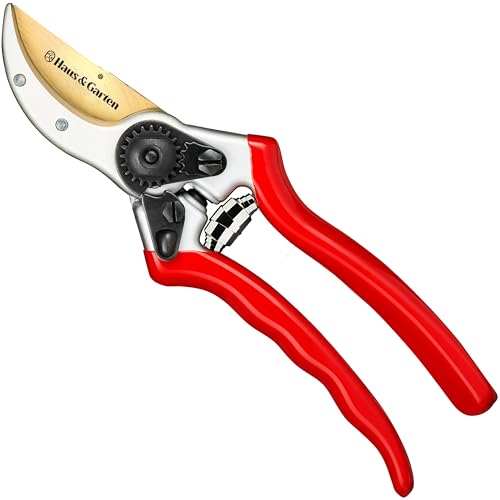
Haus & Garten ClassicPRO Titanium Bypass Shears
★★★★★ 4.5 / 5 Best premium bypass
The ClassicPRO is a well-finished bypass pruner with a titanium-coated blade and a shaped handle that fills the hand comfortably during longer sessions. It sits below the Felco on rebuildability but delivers a clean, precise cut, which makes it a solid choice for keen gardeners who want a professional feel without going fully premium.
Type Bypass hand prunerCut capacity Up to 3/4 inBlade Titanium-coated steel, 8.5 inGood to know Ergonomic handle, safety lock
- Clean, precise cut with a quality feel in hand
- Titanium-coated blade shrugs off sap and rust
- Comfortable shaped handle for longer pruning
- Less repairable than a fully rebuildable pruner
- Premium feel comes with a higher outlay
Best for: a professional-feeling bypass pruner short of top-tier price
Fiskars Bypass Pruning Shears (1 in)
★★★★★ 4.6 / 5 Best for thicker stems
This larger Fiskars bypass pruner steps up to a 1 inch cut capacity and a forged steel blade that can be replaced when it eventually wears, so it copes with thicker stems than the standard 5/8 inch pair. The SoftGrip handle and low-friction coating keep it comfortable, making it a good pick if your garden throws up chunkier growth you would rather not switch to loppers for.
Type Bypass hand prunerCut capacity 1 inBlade Forged steel, replaceableGood to know SoftGrip handle, low-friction coating
- Wider 1 in capacity handles thicker stems
- Replaceable forged blade extends its working life
- SoftGrip handle stays comfortable through the job
- Larger head is less nimble for fine deadheading
- Heavier than a basic 5/8 in pair
Best for: cutting thicker stems without reaching for loppers
The right pair of pruning shears makes clean cuts that heal fast, saves your hands over a long session, and lasts for years instead of rusting shut in the shed. The picks below run from a rebuildable Swiss workhorse to an easy-squeeze pair for sore hands and a wider-jaw option for thicker stems, so you can match the shears to your plants and your grip rather than guessing from a shelf. Below the picks we break down the choices that actually matter when you buy.
Bypass vs anvil vs ratchet
The cutting mechanism is the first and most important choice. Bypass pruners use a sharp blade that slides past a flat hook like scissors, giving a close, clean cut that suits living green stems, and it is the style behind almost every pick in this guide. Anvil pruners press one blade onto a flat plate, so they crush as they cut and are best kept for dead, dry wood. Ratchet pruners add a stepped mechanism to an anvil design so each squeeze bites a little deeper, which helps with tougher branches and weaker hands at the cost of speed. For healthy plants, reach for bypass first.
Blade steel and maximum cut diameter
Two numbers decide how a pruner performs over time: the steel it is made from and the branch size it is rated to cut. Harder steels such as the SK5 blade in the Kynup hold an edge longer through woodier growth, while titanium coatings on the gonicc and Haus and Garten resist sap and rust and keep the action smooth. Cut capacity matters just as much. The Fiskars 5/8 inch pair suits smaller stems, pairs rated to 3/4 or 1 inch cope with chunkier growth, and anything thicker than about an inch belongs to loppers or a saw. Forcing a blade past its rating dulls it and strains the pivot.
Hand comfort and locking
Pruning is repetitive, so how the shears feel in your hand decides whether the job is pleasant or painful. Look for a handle that fills your palm without forcing it wide open, a spring light enough to reopen easily, and a coating or grip that holds fast when your hands are damp. Gardeners with arthritis or a weaker grip benefit from leverage or ratchet designs like the MEPEREZ, which cut the force each snip needs. A safety lock, fitted to the gonicc and Haus and Garten among others, keeps the blades closed in storage so you do not reach into a drawer onto an open edge.
Sap groove and maintenance
A little upkeep is what separates shears that last from ones that seize. A sap groove, the small channel found on pairs like the gonicc and Haus and Garten, lets sticky sap escape so the blades do not gum up mid-session. After that it comes down to habit: wipe the blades clean and dry after use, add a drop of oil to the pivot, and touch up the bevelled edge with a stone or file when the cut starts to tear rather than slice. Rebuildable pairs such as the Felco F2 make this easiest of all, since a worn blade or tired spring is a quick swap rather than a reason to buy a whole new tool.
Questions people ask
What is the difference between bypass and anvil pruners?
Bypass pruners work like scissors, with a sharp curved blade that slides past a flat hook to make a clean, close cut, which is why they suit living green stems and most everyday pruning. Anvil pruners press a single blade down onto a flat plate, so they crush as much as they cut and are better kept for dead, dry wood. For healthy plants a bypass design like most of the picks here causes less bruising and heals faster.
Where do ratchet pruners fit in?
Ratchet pruners are usually an anvil style with a mechanism that grips and cuts in stages, so each squeeze advances the blade a little further through the wood. That extra leverage helps with thicker or tougher branches and eases strain on weaker hands, at the cost of a slower cut. If most of your work is soft green growth, a standard bypass pair is quicker; keep a ratchet or leverage design in mind for harder wood.
What size branch can hand pruning shears cut?
Most hand pruners are rated somewhere between 5/8 inch and 1 inch of cut capacity, and it is worth respecting that number. The Fiskars 5/8 inch pair suits smaller stems, while pairs listed at 3/4 to 1 inch, such as the gonicc, MEPEREZ or larger Fiskars, handle chunkier growth. For anything thicker than about an inch, move up to loppers or a pruning saw rather than forcing the blades.
What does a sap groove do?
A sap groove is a small channel along the blade that lets sticky sap escape as you cut, so the blades are less likely to gum up and stick together. Pairs like the gonicc and the Haus and Garten include one, which keeps the cutting action smoother during a long session. It is a small feature, but if you prune a lot of resinous or sappy plants it genuinely helps.
Which pruning shears are best for arthritis or a weak grip?
Look for a design that reduces the force each cut needs, whether through a leverage mechanism, a ratchet action, or a lighter easy-squeeze spring. The MEPEREZ pair is built around exactly that, using a leverage design and an ergonomic handle to ease hand strain. A rotating handle, as offered on some gonicc models, can also cut down on wrist twisting over repeated cuts.
How do I keep pruning shears sharp and rust free?
Wipe the blades clean after each use, especially of sap, and dry them so moisture does not sit on the steel overnight. A light drop of oil on the pivot and blade keeps the action smooth and holds off rust, and a few passes with a sharpening stone or file on the bevelled edge restores a keen cut. Titanium-coated and rebuildable pairs like the Felco make upkeep easier, since worn parts can be swapped rather than replaced whole.
Are more expensive pruning shears worth it?
It depends on how much you prune. For occasional garden tidying a good value pair such as the Fiskars 5/8 inch will serve you well for years. If you prune often or professionally, a rebuildable pair like the Felco F2 earns its keep because you replace blades and springs instead of the whole tool, so the cost is spread over a much longer life.
How did we choose the pruning shears in this guide?
We compared cutting mechanism, blade steel and coating, rated cut capacity, handle comfort and locking, and features like sap grooves and replaceable parts, then matched each pair to a real need such as everyday value, heavy duty cutting, or an easier grip. Every product shown is a real listing, and these are our chosen picks rather than lab-tested claims.
The bottom lineSo which one?
The Felco F2 is our top choice for a pruner that earns its keep over years rather than seasons, because its clean Swiss bypass cut is backed by parts you can replace instead of throwing the whole tool away. The Fiskars 5/8 inch bypass pair is the value pick for most home gardens, and anyone with a sore or weaker grip should look hard at the leverage-based MEPEREZ. Let cutting mechanism, blade steel, rated cut size and how the handle fits your hand lead the decision, match the pair to the branches you actually cut, and any of these picks will give you cleaner cuts and less strain than a worn-out pair from the shed.