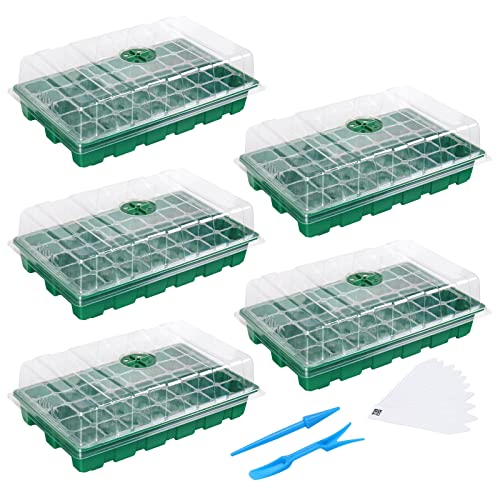
Seed Starter Dome Trays
Best Seed Starter Dome Trays for Germination
7 picks compared
8 min read
ProductPickly is reader-supported. When you buy through links on our site, we may earn an affiliate commission at no extra cost to you. It never changes our picks.
The short answerFor most indoor growers the Gardzen 5-Set is the easiest pick, because its clear domes have adjustable vents that let you hold humidity while seeds germinate and then ease it off afterward to avoid damping off, with 200 cells and drip bases for bottom watering. If you just want a simple roomy tray, the Bonviee 12-cell dome sets are the honest basic choice, while the MIXC 200-cell kit suits sowing many varieties at once. For dim rooms the Bonviee LED dome adds a little supplemental light, and when you need real volume the Mr. Pen 400-cell ten-pack and the larger Gardzen 400-cell propagator set both scale up. The MIXC 120-cell ten-pack is a sensible middle ground. Choose by whether the dome vents, how many cells you need, and how you plan to water and warm the trays, rather than by price alone.
?How we pickedWe compare published specifications, safety certifications and thousands of verified owner reviews, and we do not physically test every unit. Read the full process in our review methodology.
Gardzen 5-Set Seed Starter Tray Kits with Humidity Vented Domes and Bases (200 Cells)
★★★★★ 4.5 / 5 Best overall
This is the set we chose for most growers because it gets the two things that matter for germination right: a clear dome that traps humidity and, crucially, an adjustable vent so you can let heat and moisture out once seeds sprout instead of cooking the seedlings. Five trays give 200 cells across a spread of sowings, and the matching bases catch drainage so you can bottom water without soaking your windowsill.
Pack size 5 traysTotal cells 200Dome Vented, adjustableBase Drip tray included
- Adjustable dome vents prevent damping off after sprouting
- Matching bases make bottom watering tidy
- 200 cells cover several rounds of sowing
- Thin plastic feels light in the hand
- Small cells need transplanting sooner for big seedlings
Best for: most people starting seeds indoors with humidity control
Bonviee 5-Pack Seed Starter Trays with Humidity Dome and Base, 12-Cell (Black)
★★★★★ 4.4 / 5 Best simple pick
If you want the classic dome-and-tray layout with nothing extra to fuss over, this is the pick, giving you five sets of a 12-cell tray, a clear dome, and a base in a simple stack. The black cells absorb a little warmth and hide algae staining better than clear plastic, and the roomy 12-cell grid suits people who want fewer, larger cells rather than a dense 200-cell sheet.
Pack size 5 setsTotal cells 60Dome Clear, no ventBase Solid drip base
- Larger 12-cell grid gives roots more room
- Black trays hide staining and hold a little warmth
- Straightforward dome and base with no learning curve
- Domes are not vented, so you must prop them open manually
- Fewer total cells than the high-count kits
Best for: a no-frills dome tray with roomier cells
MIXC 5 Pack Seed Starter Tray, 200-Cell Mini Propagator Greenhouse Grow Kit
★★★★★ 4.4 / 5 Best high cell count
For anyone sowing a lot at once, this kit packs 200 cells into five mini-greenhouse trays, each with its own dome so you can run different crops on their own timing. It is aimed at the grower who fills flat after flat in spring, and the individual domes mean you can uncover the fast sprouters without disturbing a tray that is still warming up.
Pack size 5 traysTotal cells 200Dome Clear per-tray domeBase Tray with drain holes
- Separate domes let each tray run on its own schedule
- High 200-cell count for large spring sowings
- Compact footprint fits on a shelf or heat mat
- Cells are small, so seedlings move on quickly
- Light plastic needs careful handling when full
Best for: starting many varieties in one big session
Bonviee Seed Starter Trays with 12-LED Grow Lights, Clear, 5 Pack
★★★★★ 4.3 / 5 Best with built-in light
This set folds a small LED grow light into the dome, which is the draw for a dim windowsill or a room with no bright south-facing glass. It still works as an ordinary humidity dome tray, but the built-in lights give young seedlings a little supplemental light to lean toward, which can cut the leggy stretching you get when sprouts reach for a weak window.
Pack size 5 setsDome Clear with 12-LED stripLight Built into domeBase Drip base included
- Built-in LEDs help in low-light rooms
- Clear dome lets you watch progress and add light
- Reduces leggy seedlings from weak windows
- Small LEDs are a top-up, not a full grow light
- Needs a nearby outlet for each dome
Best for: starting seeds in a dim room without strong window light
Mr. Pen Seed Starter Tray Kits, 10 Pack, Total 400 Cells
★★★★★ 4.4 / 5 Best for high volume
When you need to raise a lot of plants, this ten-pack stretches to 400 cells, which suits allotment holders, market growers, and anyone who starts trays for the whole neighborhood. It keeps the familiar dome-and-base format so nothing about the routine changes, you just have far more cells to fill and more domes to manage across a bright shelf.
Pack size 10 kitsTotal cells 400Dome Clear dome per kitBase Drip base per kit
- 400 cells handle very large sowings
- Same easy dome and base routine at scale
- Plenty of spare trays as some wear out
- Needs a lot of shelf or bench space
- Thin cells are best treated as reusable, not lifelong
Best for: allotments and growers raising plants in bulk
Gardzen 10-Set Garden Propagator Set, 400-Cell Seed Trays with Dome and Base
★★★★★ 4.4 / 5 Best big propagator set
This is the other large-volume choice to weigh up, laying out 400 cells as ten trays of 40 in a roomier 15 by 9 inch footprint per tray. The larger tray size and matching propagator domes make it a better fit than tiny mini-kits if you like fewer, bigger flats to move around, and the bases are sturdy enough to lift when loaded.
Pack size 10 traysTotal cells 400 (40 per tray)Dome Propagator dome per trayBase 15 x 9 in base
- Larger 40-cell trays are easy to carry and sort
- Sturdier bases than mini-greenhouse kits
- 400 cells for serious spring propagation
- Big trays take more room on a heat mat
- Overkill if you only start a few plants
Best for: growers who prefer fewer, larger flats at volume
MIXC 10 Pack Seed Starter Tray, 120-Cell Starter Kit with Humidity Dome (Green)
★★★★★ 4.3 / 5 Best mid-size value
This ten-pack sits between the small kits and the 400-cell sets, giving 120 cells with domes across enough trays to spread sowings without overwhelming a small space. The green trays and clear domes handle the everyday job well, and the moderate cell count is a sensible amount for a home gardener who wants variety without a whole greenhouse of flats to water.
Pack size 10 traysTotal cells 120Dome Clear humidity domeBase Tray base included
- 120 cells suit a home garden without excess
- Plenty of trays to separate crops by type
- Domes hold humidity through germination
- No dome vent, so prop open once sprouted
- Cells on the small side for large seedlings
Best for: home gardeners wanting a moderate cell count
The best seed starter dome tray for you comes down to four practical things: whether the dome vents so you can control humidity after sprouting, how many cells you need for the amount you sow, whether the cells drain into a base you can bottom water from, and how durable and reusable the plastic is season to season. Our chosen picks run from a vented 200-cell set for most indoor growers, through a simple roomy-cell dome tray, high-count and bulk 400-cell kits, a dome with built-in LEDs for dim rooms, to a mid-size value pack, so you can match one to how you really garden.
Humidity domes and vents for germination
The dome is the whole point of these trays: it traps warmth and moisture over the cells to create the humid, stable microclimate that seeds need to sprout evenly, and it means you barely have to water in the first week. The feature that separates a good dome from a frustrating one is a vent. Once most seeds have germinated, a sealed dome keeps the air too wet and invites damping off, the fungal collapse that kills seedlings at the soil line, so you want to let air in gradually. An adjustable vent like the one on the Gardzen 5-Set pick lets you dial humidity down without whipping the cover off all at once, while unvented domes such as the Bonviee 12-cell and MIXC 120-cell kits work fine as long as you remember to prop them open a crack after sprouting and remove them once seedlings are established.
Cell count and drainage
How many cells you need depends entirely on how much you grow. A 60 to 120 cell setup, like the Bonviee 12-cell sets or the MIXC 120-cell ten-pack, covers a home gardener sowing a mix of vegetables and flowers, while the 200-cell Gardzen and MIXC five-packs suit anyone filling flat after flat in spring, and the 400-cell Mr. Pen and Gardzen sets are built for allotments and bulk growers. Just as important is drainage. Cells should let water pass through so roots are not sitting waterlogged, and the kits here drain into a base tray you can pour water into for bottom watering. Watering from below keeps the soil surface drier and less moldy and pulls roots downward, which makes for stronger seedlings than splashing water over the top. Whatever the cell count, tip out any water the soil has not soaked up after half an hour so the cells never stay flooded.
Durable reusable trays vs disposable
These trays are light and inexpensive because the plastic is thin, and that thin plastic is the honest trade-off to keep in mind. Treated gently, most of the kits here last several seasons: at the end of the year you empty the cells, wash off the old soil, and rinse the trays and domes in a mild cleaning solution to knock back any lingering fungus before storing them dry. That said, they are closer to reusable than lifelong, and the occasional cell or dome will eventually crack. Buying a multi-pack such as the ten-set Mr. Pen or Gardzen kits builds in spares so a broken tray does not stop your spring, and the sturdier bases on the larger Gardzen propagator set stand up better to being lifted when loaded. If you want something to last many years of heavy use, view these as a low-cost annual workhorse and simply replace the few pieces that give out.
Using trays with a heat mat
For warmth-loving seeds like tomatoes, peppers, and many flowers, pairing a dome tray with a seedling heat mat is the single biggest thing you can do to speed and even out germination. The setup is simple: sit the tray and its base directly on the mat, keep the dome on to hold the gentle bottom heat and the humidity together, and the soil warms into the range those seeds actually want to sprout in. Tray size decides which mat you need. The compact five-pack kits like the Gardzen and MIXC 200-cell sets sit neatly on a standard mat, while the larger 15 by 9 inch trays in the Gardzen 10-set need a bigger mat or more than one to cover them evenly. If you are using the Bonviee LED domes, remember the lights are a top-up for a dim room rather than a heat source, so a mat still does the warming while the LEDs handle light. Once seeds are up, ease off the heat and the dome together so the seedlings harden rather than stretch.
Questions people ask
What does the dome on a seed starter tray actually do?
The clear dome traps warmth and moisture over the cells, creating a mini-greenhouse that keeps the surface of the soil damp and the air humid while seeds germinate. That steady, moist warmth is what most seeds need to sprout evenly, and it means you water far less often in the first week or two. Once seedlings emerge, the dome's job changes and you need to start letting air in, which is why a vented dome like the one on the Gardzen 5-Set pick is so useful.
Why does dome venting matter once seeds sprout?
A sealed dome that stays on after germination traps too much moisture, and that stagnant, damp air is the main cause of damping off, a fungal problem that collapses young seedlings at the soil line. As soon as most seeds have sprouted you want airflow, so a dome with an adjustable vent lets you dial the humidity down gradually. If your dome has no vent, like the Bonviee 12-cell or MIXC 120-cell kits, you simply prop it open a crack and then remove it entirely once the seedlings are established.
How many cells do I actually need?
Match the cell count to how much you sow. A 60 to 120 cell setup, such as the Bonviee 12-cell sets or the MIXC 10-pack, is plenty for a home gardener growing a mix of vegetables and flowers. If you fill flat after flat every spring, a 200-cell kit like the Gardzen or MIXC five-packs saves reloading, and 400-cell sets like the Mr. Pen or Gardzen ten-sets are aimed at allotments and growers raising plants in real bulk. Bigger is not better if the extra trays just sit empty and take up shelf space.
Do seed trays need drainage holes?
Yes, cells should drain so roots are not sitting in waterlogged soil, which starves them of air and rots seedlings. The kits here pair cells that drain into a solid base tray, which lets you water from below by pouring into the base and letting the soil wick moisture up. Bottom watering keeps the surface drier and less prone to mold, and it encourages roots to grow downward. Just tip out any water the soil has not taken up after half an hour so the cells do not stay flooded.
Can I reuse seed starter trays next year?
Most of these trays are reusable for several seasons if you handle them gently, since the thin plastic is the trade-off for the low weight and price. At the end of the season, empty the cells, wash off old soil, and rinse the trays and domes in a mild cleaning solution to kill lingering fungi before storing them dry. Buying a multi-pack like the ten-sets here also means you have spares on hand as the occasional tray cracks, so a kit keeps working even after a few cells give out.
Do these trays work with a seedling heat mat?
Yes, and pairing a tray with a heat mat is one of the best ways to speed up germination for warmth-loving seeds like tomatoes, peppers, and many flowers. Set the tray and its base directly on the mat, keep the dome on to hold the warmth and humidity, and the gentle bottom heat brings the soil into the range those seeds want. The compact five-pack kits sit neatly on a standard mat, while the larger 15 by 9 inch Gardzen trays need a bigger mat or more than one to cover them.
What is the difference between a mini propagator kit and a plain dome tray?
They are largely the same idea with different labels. A plain dome tray is simply cells, a base, and a clear cover, while a mini propagator or greenhouse kit is that same combination often with a per-tray dome and sometimes vents or built-in lights. The MIXC 200-cell kit calls itself a mini propagator, and the Bonviee LED set adds lights to the dome, but at heart all of them do the core job of holding humidity and warmth over your cells until seeds sprout.
How did we choose the seed starter trays in this guide?
We compared each kit on the features that decide germination success: whether the dome vents, the cell count and how it matches different growers, drainage and whether the base allows bottom watering, build quality and reusability, and extras like built-in lights or larger tray sizes. Every product shown is a real listing, and these are our chosen picks based on those features and on how well each suits a specific job, rather than on any lab testing claim.
The bottom lineSo which one?
The Gardzen 5-Set is our top choice for most people, because a vented dome plus drip bases covers what germination really needs: humidity while seeds sprout and airflow once they do, across a useful 200 cells. If you want nothing complicated, the Bonviee 12-cell dome sets are the simple pick with roomier cells, and for sowing lots of varieties at once the MIXC 200-cell kit gives each tray its own dome. The Bonviee LED set is the one to grab for a dim room, while the Mr. Pen 400-cell ten-pack and the larger Gardzen 400-cell propagator set handle bulk growing, and the MIXC 120-cell pack is the sensible middle. Match the tray to your dome venting, cell count, and whether you will run a heat mat, and it will start your seeds for seasons to come.