Shelf Support Brackets
Best Shelf Support Brackets
7 picks compared
8 min read
ProductPickly is reader-supported. When you buy through links on our site, we may earn an affiliate commission at no extra cost to you. It never changes our picks.
The short answerA shelf support bracket is only as strong as the wall behind it, so the first thing to get right is anchoring into studs or with rated masonry fixings, because the load number printed on any bracket assumes the fastener holds. Once that is sorted, the choice comes down to whether you want the bracket hidden behind a floating shelf or on show as a visible L-bracket, how much weight the shelf will carry, and how many brackets the shelf length needs. The 8 Pack Heavy Duty Wall Mount L Bracket is our overall pick because the thick steel and the honest medium size suit most household shelves, and eight in the box covers several runs. The 12 Pack L12 x H8 brackets step up for long, heavily loaded shelves, the Alise white brackets and the 12 Pack hidden L brackets are the two floating-shelf routes, the KOVOSCH closet brackets add rod support for a wardrobe, the 104 piece shelf pin kit handles adjustable cabinet and bookcase shelves, and the pilaster clips fit standard slotted shelf standards. Decide hidden or visible first, match the size and steel to the load, then buy enough brackets for the span.
?How we pickedWe compare published specifications, safety certifications and thousands of verified owner reviews, and we do not physically test every unit. Read the full process in our review methodology.
8 Pack Heavy Duty Wall Mount L Bracket, Metal Floating Shelf Support 3.7"x6"
★★★★★ 4.6 / 5 Best overall
This is the bracket we would reach for first for ordinary shelves because it sits in the sweet spot on size and steel. At 3.7 by 6 inches the vertical leg is long enough to give a shelf real leverage against tipping while the horizontal leg is deep enough to support a normal board without the front edge sagging, and the metal is thick rather than the thin folded stock you find on the cheapest angles. Getting eight in the box is the quiet advantage, since a single shelf usually wants two or three brackets and a run of shelving eats them quickly. It is a visible L-bracket, so it shows under the shelf rather than hiding, and like every bracket here its rated load only holds if the screws bite into studs or a properly rated wall anchor. Drive them into solid framing and this carries a genuinely useful weight; hang it off drywall alone and no bracket on this page will save you.
Pack Eight bracketsSize 3.7 by 6 inchesType Visible L-bracketSteel Thick, powder coated
- Medium size suits most household shelves
- Thick steel resists bending under load
- Eight in the box covers several shelves
- Visible under the shelf, not concealed
- Screws not sized for every wall type
Best for: anyone building normal household shelves who wants one dependable bracket in bulk
12 Pack L12 x H8" Black Heavy Duty Shelf Brackets with Screws, Metal Shelf Support Angle Brackets
★★★★★ 4.6 / 5 Best for heavy loads
When the shelf is long and you plan to load it, a bigger bracket does more than look sturdier. At 12 inches deep and 8 inches tall these support a wide board across most of its depth, so a heavy row of books or tools does not lever the front edge down, and the taller wall leg spreads the pull-out force over a longer line of screws. Twelve brackets is enough to space them properly along a long span rather than stretching two or three too far apart. The screws are included, which is convenient, though as always the wall matters more than the bracket: these are built to carry a lot, but that rating depends entirely on landing every fastener in a stud or a masonry anchor rated for the job. Use them on a deep, long shelf that has to hold real weight, and step down to a smaller bracket for light decorative shelving where this would be overkill.
Pack Twelve bracketsSize 12 by 8 inchesType Visible angle bracketExtras Screws included
- Deep leg supports wide boards fully
- Tall wall leg spreads pull-out force
- Twelve pieces for long spans
- Large size looks heavy on small shelves
- Needs solid framing to earn its rating
Best for: long deep shelves that have to carry serious weight
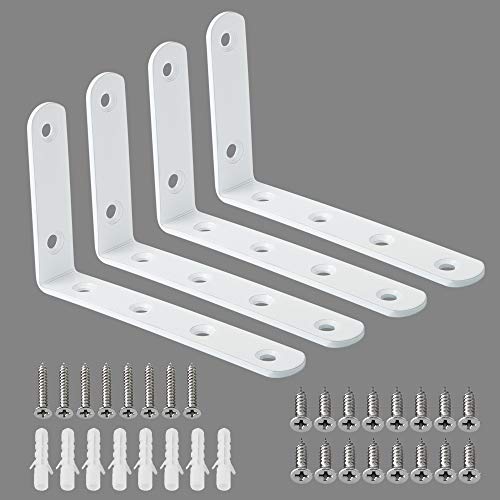
Alise White Floating Shelf Brackets 5x3 Inch, L Brackets for Shelves, 4 Pcs
★★★★★ 4.5 / 5 Best white finish
This is the pick when the bracket has to disappear against a white wall rather than stand out. The clean white finish means a small L-bracket under a painted shelf reads as part of the wall instead of a piece of hardware, which matters in a bedroom or a bathroom where black steel would draw the eye. At 5 by 3 inches these are sized for lighter shelves, so think toiletries, framed photos, or a short row of paperbacks rather than a loaded pantry. Four in the pack covers a shelf or two. The finish is the reason to buy them, so treat the load as light to medium and, as with every bracket, only expect the shelf to hold if the screws reach a stud or a rated anchor. For tidy white shelving that should not shout hardware, these do the job the black brackets cannot.
Pack Four bracketsSize 5 by 3 inchesFinish WhiteType Visible L-bracket
- White finish blends into painted walls
- Compact size suits light shelves
- Clean look for bedrooms and bathrooms
- Small size not for heavy loads
- Only four in the pack
Best for: light shelves on a white wall where the bracket should hide
12 Pack 10 inch Black Hidden L Shelf Bracket, Iron Floating Shelf Brackets, Rustic Industrial Metal
★★★★★ 4.5 / 5 Best concealed mount
This is the true floating-shelf route, where the bracket vanishes inside the shelf instead of sitting under it. The 10 inch blind rod bolts to the wall and slides into holes bored into the back of a solid wood shelf, so once it is on the wall you see only the board, with no visible support at all. That look is the whole appeal, and the thicker iron here is meant to carry more than the flimsy hidden rods that bend under a few books. The trade-off is that a concealed bracket asks more of the install: the shelf has to be solid enough to drill into, the rod has to line up with studs, and the load rides on how deeply and squarely those rods seat in the wood. Twelve pieces let you double up rods on a longer shelf. Choose this when you want the shelf to appear to float, and accept the extra care the mounting demands.
Pack Twelve bracketsLength 10 inch rodType Hidden blind bracketMaterial Thick iron
- Completely concealed inside the shelf
- Thicker iron than flimsy hidden rods
- Twelve pieces for doubling up
- Needs a solid shelf drilled to fit
- Install is fussier than a surface bracket
Best for: solid wood shelves that should look like they float
KOVOSCH 4 Pack Heavy Duty Closet Shelf & Rod Brackets, Wall Mounted, 11 x 10.2 Inch, White
★★★★★ 4.5 / 5 Best for closets
A closet shelf is a special case because it usually carries a hanging rod as well as the shelf itself, and this bracket is shaped for exactly that. The deep 11 by 10.2 inch arm supports a full-depth wardrobe shelf, and the cradle underneath holds a clothes rod, so one bracket does the job two separate pieces of hardware would otherwise share. The white finish suits the inside of a fitted wardrobe or a linen closet. Four in the pack cover a typical closet run. Because it takes both the weight of folded storage above and a rail of hanging clothes below, this is a spot where hitting the studs really is not optional, so mark the framing and drive the screws home properly. For a wardrobe or reach-in closet that needs shelf and rod together, this is the purpose-built pick.
Pack Four bracketsSize 11 by 10.2 inchesFeature Shelf plus rod cradleFinish White
- Holds shelf and hanging rod together
- Deep arm suits full wardrobe shelves
- White finish fits inside closets
- Overkill for a plain wall shelf
- Combined load makes studs essential
Best for: wardrobe and closet shelves that also carry a clothes rod
104Pcs Shelf Pins Kit, 4 Styles Nickel Plated Shelf Support Pegs for Cabinets and Bookshelves (5mm & 1/4 inch)
★★★★★ 4.5 / 5 Best for adjustable shelves
Not every shelf hangs off a wall bracket. Inside cabinets, bookcases, and closet cubbies the shelf usually rests on small pins pushed into a column of pre-drilled holes, and this kit covers that job several times over. The 104 pieces come in four styles, including L-shaped pins and flat-topped pegs, in both 5mm and quarter inch, so it fits the two hole sizes you meet in flat-pack and older furniture alike, and the nickel plating keeps them from rusting inside a damp cabinet. Because a shelf sits on four pins at once, the load spreads across all of them and each pin carries only its share, which is why these work for cabinet shelves that would never take a single L-bracket. This is the pick for replacing lost pins or setting adjustable shelf heights in cabinets and bookcases, not for mounting a shelf onto an open wall.
Pack 104 piecesStyles Four pin shapesSizes 5mm and 1/4 inchFinish Nickel plated
- Fits both common cabinet hole sizes
- Four styles cover most furniture
- Load spreads across four pins
- Only for pre-drilled cabinet shelves
- Not a wall-mount solution
Best for: adjustable cabinet and bookcase shelves that rest on pins
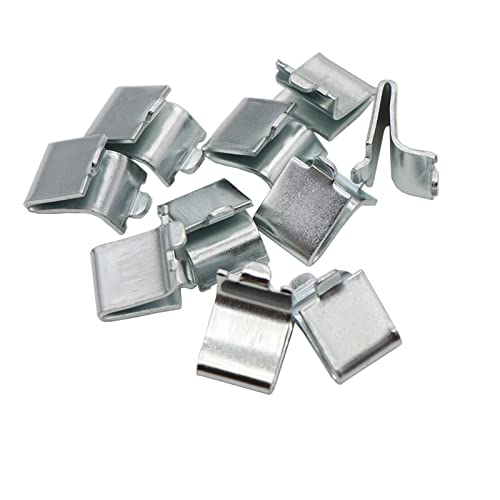
14 Pieces Silver Adjustable Steel Pilaster Shelf Clip Support, Shelving Bracket Clips for Metal and Wood Shelves
★★★★★ 4.4 / 5 Best for slotted standards
If your cabinet or shelving unit uses slotted metal strips rather than drilled holes, you need clips, not pins, and this set fits that system. Pilaster clips hook into the slots of a shelf standard and give the shelf a small ledge to rest on, and being steel they hold up better than the soft plastic clips that often ship with flat-pack units and crack over time. Fourteen pieces cover several shelves or replace a set that has gone brittle. As with the shelf pins, the weight of the shelf spreads across four clips so each carries only a share of the load, which suits the moderate weights these systems are built for. This is a replacement and upgrade pick for anyone with pilaster standards already fitted, whether in a kitchen cabinet or a shop shelving unit, rather than a way to start a shelf from a bare wall.
Pack Fourteen clipsMaterial SteelFits Slotted pilaster standardsUse Metal and wood shelves
- Steel outlasts brittle plastic clips
- Fits standard slotted pilaster strips
- Fourteen pieces for several shelves
- Only works with pilaster standards
- Not for open wall mounting
Best for: shelving units with slotted metal standards that need clip replacements
A shelf support bracket has one job, to hold a loaded shelf level and steady, and the single most important thing about every bracket on this page is that its strength lives in the wall fixing as much as in the metal. This guide sorts our picks by the job they do, from a medium visible L-bracket for everyday shelves to hidden rods for a floating look, pins for cabinets, and clips for slotted standards, so you can match the right support to the shelf, the wall, and the weight you have in mind.
Hidden floating brackets versus visible L-brackets
The first choice is whether the bracket disappears or stays on show, and it shapes everything after it. A hidden floating bracket is a rod that bolts to the wall and slides into holes bored into the back of a solid shelf, so once it is up you see only the board and the shelf appears to float. It is the cleaner look by far, which is why people reach for it in a living room or a modern kitchen, but it asks for a shelf thick and solid enough to drill, careful alignment so the rods seat squarely, and more patience during the install. A visible L-bracket sits under the shelf where you can see it. Some people dislike that, but it buys a lot of practicality: it works with any shelf material including thin boards and glass, it is far quicker to fit, and you can see at a glance that the load is carried on a broad steel angle rather than a pair of concealed pins. Our overall pick is a visible bracket for exactly that reason, and the hidden option is there for anyone who will trade the extra install care for a shelf that looks unsupported. Decide this first, because it rules out half the products before you even think about load.
Weight capacity and finding the studs
Every bracket advertises a load, and every one of those numbers assumes the screw is anchored in something solid. This is the point people skip and regret. A bracket rated to hold a heavy load off a wooden stud will pull straight out of bare plasterboard with a small fraction of that weight hanging on it, because the plasterboard, not the bracket, gives way. So before the bracket rating means anything, the fixing has to be right: screws driven into studs, or wall anchors rated for both the wall type and the weight, whether that is a heavy toggle for a hollow wall or a plug for masonry. Finding the studs is the practical half of this. Run a stud finder slowly across the wall and confirm the edges by tapping for the solid thud that replaces the hollow space between framing, then measure along to the next since studs sit at a regular spacing. Where a bracket has to land off a stud, switch to a rated anchor and match it to the load rather than trusting a plain screw in plasterboard. Treat the printed capacity as a best case that only exists once the mounting is sound, and a modest bracket on studs will outperform a heavy-duty one hung on a poor fixing every time.
Steel gauge and finish
Once the wall is handled, the bracket itself comes down to how thick its steel is and how it is finished. Gauge describes that thickness, and with brackets a lower gauge number means thicker, stronger metal. Thick steel resists bending when a loaded shelf levers down on the front edge, which is why a heavy-duty bracket stays rigid while a cheap thin one flexes and lets the shelf droop over time. Thickness is not the whole story, since the size and shape of the angle and the quality of the folds matter too, but a bracket that is visibly and physically substantial is a good sign it will keep its shape under load rather than slowly deform. Finish does two things. It sets the look, so black brackets suit rustic and industrial shelves, white ones vanish against a painted wall, and a clean plated finish keeps small pins and clips discreet. It also protects the steel, because a powder coat or plating shields it from moisture, which matters in a bathroom, a kitchen, or a garage where bare steel would corrode and stain. Pick the finish for the room by all means, but remember the coating is also what stops the bracket rusting, so it earns its place beyond appearance.
Matching bracket spacing to shelf length
The last piece is how many brackets you use and where they go, because even a strong bracket cannot stop a shelf sagging if they sit too far apart. A short, lightly loaded shelf usually wants two brackets set in from the ends, while a longer or heavier shelf needs a third in the middle, or more, so the board is supported often enough that it cannot bow between them. The heavier the intended load and the more a shelf could flex, the closer the brackets should sit, and every one of them should still land on a stud or a rated anchor rather than being placed purely for looks. Depth matters alongside spacing. A bracket whose horizontal leg reaches only part way under a deep board leaves the front edge unsupported, so weight there levers it down however strong the wall fixing is, which is why front-edge sag is so often a sizing problem rather than a failing bracket. Choose a bracket that supports most of the shelf depth, pick a board stiff enough for the span, and add a middle bracket sooner rather than later. It is always better to fit one more bracket than to stretch too few across a long shelf and watch it bend.
Questions people ask
What actually decides how much weight a shelf bracket holds?
The wall fixing, more than the bracket itself. Every load number a bracket carries assumes the screw is anchored in something solid, so the same bracket that holds a heavy load off a wooden stud will pull straight out of bare plasterboard with a fraction of the weight on it. Drive the screws into studs or use a wall anchor rated for the load and the wall type, and only then does the bracket's own strength, its steel thickness and its size, become the limiting factor. Treat the printed rating as a best case that depends entirely on the mounting.
Should I choose hidden floating brackets or visible L-brackets?
It is a look-versus-simplicity trade. Hidden brackets bolt to the wall and slide into holes bored into a solid shelf, so the shelf appears to float with no support in sight, but they need a shelf thick and solid enough to drill and a careful install to seat the rods squarely. Visible L-brackets sit under the shelf on show, which some people dislike, but they are far simpler to fit, work with any shelf material, and make it obvious the load is spread across the bracket. Pick hidden for the clean look on solid wood, visible for ease and for heavier or thinner shelves.
How do I find studs to screw into?
Use a stud finder run slowly across the wall, and confirm the edges by tapping, since a solid thud replaces the hollow sound between framing. Studs in most homes sit at a regular spacing, so once you find one you can measure along to the next. If a bracket has to land where there is no stud, switch to a wall anchor rated for the material, whether that is a heavy-duty toggle for plasterboard or a masonry plug for brick, and match the anchor rating to the weight the shelf will carry. Never rely on a plain screw in plasterboard for anything but the lightest shelf.
What does steel gauge mean for a bracket?
Gauge describes the thickness of the metal, and with brackets a lower gauge number means thicker, stronger steel. Thick steel resists bending when weight levers down on the front of the shelf, which is why a heavy-duty bracket feels rigid while a cheap thin one flexes and lets the shelf edge droop. Thickness is not the only factor, since the size and shape of the bracket and the quality of the folds matter too, but for a loaded shelf a visibly and physically thicker bracket is a good sign that it will hold its shape rather than slowly deform.
Does the bracket finish matter beyond looks?
It matters for both appearance and rust. A powder-coated or plated finish protects the steel from moisture, which is worth having in a bathroom, a kitchen, or a garage where bare steel would eventually corrode and stain the wall or shelf. On looks, black brackets suit rustic and industrial shelves while white ones disappear against a painted wall, and a clean plated finish keeps small pins and clips from rusting inside a damp cabinet. Choose the finish for the room, but do not ignore that a good coating also extends how long the bracket lasts.
How many brackets do I need for a shelf?
It depends on the length and the load, but a short light shelf usually wants two brackets near the ends, and anything longer or heavier needs a third in the middle, or more, so the shelf does not sag between supports. As a rule, the heavier the load and the more the shelf could bow, the closer together the brackets should sit, and every bracket should still land on a stud or a rated anchor. It is better to add one more bracket than to space too few too far apart and watch the shelf bend over time.
Can I put shelf pins or pilaster clips on an open wall?
No, those are for a different job. Shelf pins push into pre-drilled holes inside a cabinet or bookcase, and pilaster clips hook into slotted metal standards fitted to a unit, so both rely on the furniture or the standards already being there. They let you set and adjust shelf heights inside a cabinet, where the load spreads across four supports. To hang a shelf on a bare wall you need an L-bracket or a hidden floating bracket screwed into the framing, not pins or clips, which have nothing to grip on an open wall.
Why does the shelf sag at the front even with strong brackets?
Usually because the bracket is not deep enough for the shelf, or the shelf material itself is bending. A bracket that only reaches part way under a deep board leaves the front edge unsupported, so weight there levers it down no matter how strong the wall fixing is. Choose a bracket whose horizontal leg supports most of the shelf depth, and for a long shelf make sure the board is thick and stiff enough for the span, adding a middle bracket if needed. Sag is often a sizing and spacing problem, not a sign the bracket is failing.
Are the included screws good enough to use?
Sometimes, but they are sized for a general case and not for your wall. Bundled screws are often fine for wood studs, yet they may be the wrong length or type for masonry, tile, or hollow-wall anchors, and they rarely include the anchors themselves. Before mounting anything that will carry weight, check that the fastener suits both the wall and the load, and buy proper rated anchors or longer screws if the ones in the box do not match. The screw is the weakest link in the whole system, so it is worth getting right.
The bottom lineSo which one?
The 8 Pack Heavy Duty Wall Mount L Bracket is our overall pick because its medium size and thick steel suit the everyday shelves most people are building, and eight in the box means you rarely run short mid project. Step up to the 12 Pack L12 x H8 brackets for long, deep, heavily loaded shelves, choose the Alise white brackets for light shelves that should blend into a painted wall, and the 12 Pack hidden L brackets when you want a solid shelf to look like it floats. The KOVOSCH closet brackets are the answer for a wardrobe shelf with a hanging rod, the 104 piece pin kit handles adjustable cabinet and bookcase shelves, and the pilaster clips replace the clips in slotted shelving standards. Whichever you choose, remember the load rating only holds when the bracket is anchored into studs or rated fixings, so decide hidden or visible, match the size to the weight, and buy enough brackets for the span.